
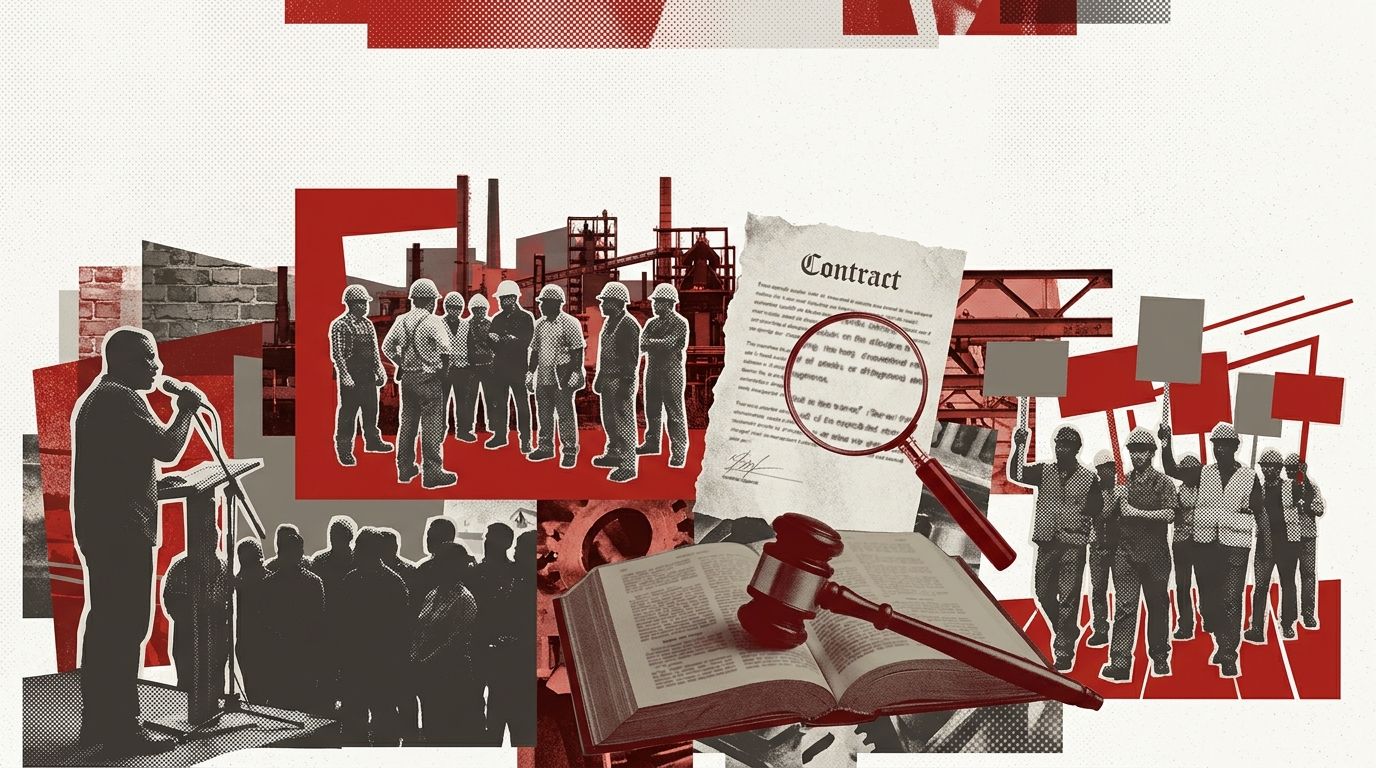
NLRB Wagner Act: What You Need to Know
The National Labor Relations Act of 1935, commonly called the Wagner Act, is the federal statute that guarantees private-sector employees the right to organize unions, bargain collectively, and strike.
Tag
5 articles
The National Labor Relations Act of 1935, commonly called the Wagner Act, is the federal statute that guarantees private-sector employees the right to organize unions, bargain collectively, and strike.

The National Labor Relations Board ruled in a recent decision that employers do not have to disclose attorney-client privileged documents when responding to union information requests, according to a Law360 Employment Authority report published September 25.

The National Labor Relations Board is the independent federal agency that decides whether your employer broke the law when it fired you for talking about wages, interrogated you about a union meeting, or refused to bargain after workers voted to organize.

The Senate HELP Committee placed National Labor Relations Board nominees James Macy and David Prouty on its calendar for a June 15 hearing, setting up votes that could reshape the Board's composition before Congress's August recess, according to Labor Relations Ink.

The Supreme Court will rule on President Donald Trump's authority to remove federal officials in two separate cases involving FTC Commissioner Rebecca Kelly Slaughter and Federal Reserve Governor Lisa Cook, according to Fox News. Legal experts say the Court may draw sharp distinctions between the ag