
Civic Engagement for Workers: Getting Involved Beyond the Picket Line
When most people think of labor activism, they picture picket lines and contract negotiations. But the labor movement has always extended far beyond the workplace.

The Wider Arena of Worker Power
When most people think of labor activism, they picture picket lines and contract negotiations. But the labor movement has always extended far beyond the workplace. From school boards to city councils, from community land trusts to mutual aid networks, working people have shaped civic life in ways that rarely make headlines.
Civic engagement for workers means more than voting or attending a union meeting. It means participating in the decisions that affect daily life — zoning laws that determine where affordable housing gets built, school funding formulas that shape children's futures, transit policies that determine whether workers can reach their jobs, and public health investments that keep communities safe.
Showing Up Where Decisions Get Made
Local government meetings are where many of the most consequential decisions happen. City councils vote on minimum wage ordinances, paid sick leave requirements, and prevailing wage standards. County commissions allocate budgets for healthcare, infrastructure, and public safety. School boards set priorities for education funding and teacher compensation.
Workers who show up to these meetings and speak during public comment periods have an outsized impact. According to research from the National Civic League, fewer than 1 percent of residents typically attend local government meetings. That means a small group of engaged workers can meaningfully influence public decisions.
The Las Vegas Culinary Workers Union, Local 226, provides a model. Members attend city council and county commission meetings not just when labor issues are on the agenda but as a regular practice of civic participation. The union provides transportation to meetings, childcare for members' children, and briefings on agenda items.
Community Organizations and Coalitions

Labor unions have historically been anchor institutions in their communities. They provide meeting space, organizational infrastructure, and trained leaders who can mobilize around issues beyond the workplace.
Workers' centers — community-based organizations that support low-wage and immigrant workers — have expanded the model of worker civic engagement. Organizations like the National Day Laborer Organizing Network and Restaurant Opportunities Centers United combine workplace advocacy with broader civic participation, including campaigns for immigrant rights, environmental justice, and housing affordability.
Coalition work is essential. When the Chicago Teachers Union went on strike in 2012, it did so as part of a broader coalition with parents, community groups, and social justice organizations. The union's demands included not just wages and benefits but also smaller class sizes, more social workers, and equitable school funding — issues that affected the entire community.
Digital Civic Engagement
Technology has created new avenues for worker civic engagement. Online platforms allow workers to participate in public comment periods remotely, track legislation that affects their industries, and coordinate advocacy campaigns across geographic boundaries.
The Communications Workers of America (CWA) has invested in digital organizing tools that enable members to contact elected officials, share policy information, and participate in virtual town halls. These tools are particularly valuable for workers in distributed workplaces — including remote workers, gig workers, and those in the logistics sector — who may not have a central physical workplace for organizing.
Social media has also become a tool for worker civic engagement, though its effectiveness depends on sustained effort rather than viral moments. Labor podcasts, worker-produced newsletters, and online forums provide spaces for political education and community building that supplement traditional in-person organizing.
Running for Office
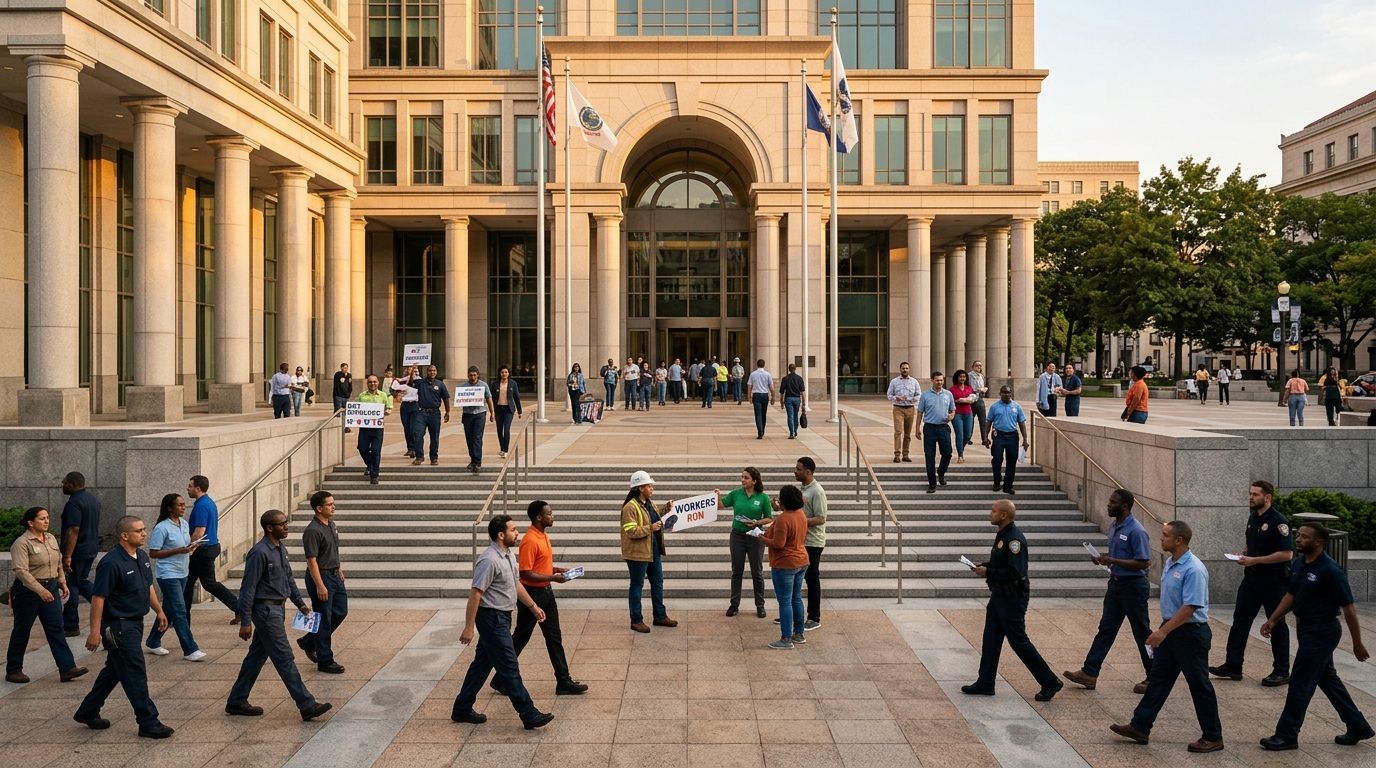
A growing number of workers and union members are running for elected office. According to the AFL-CIO's data, more than 1,000 union members and labor-endorsed candidates ran for state and local office in the 2022 election cycle. Many ran for school boards, city councils, and state legislative seats — positions where labor policy is directly shaped.
These candidacies matter because they bring firsthand experience with workplace issues into governing bodies. A city council member who has worked a night shift understands scheduling policy differently than one who has not. A school board member who has been a paraprofessional understands classroom needs from a perspective that cannot be replicated by reading policy papers.
Organizations like the Labor Campaign Committee and Run for Something provide training and support for workers interested in running for office. Some unions offer paid leave for members who run for local office, recognizing that electoral participation is an extension of the labor movement's core mission.
Mutual Aid and Community Building
Not all civic engagement runs through government channels. Mutual aid — the practice of communities pooling resources to meet shared needs — has deep roots in the labor movement. Union benevolent societies, strike funds, and cooperative enterprises all represent forms of mutual aid that predate modern social safety nets.
Today, workers participate in mutual aid through community fridges, tool libraries, childcare cooperatives, and emergency assistance networks. These efforts build the social infrastructure that makes organized civic participation possible. A worker who has received help from a community network is more likely to become an active participant in that network — and in civic life more broadly.
Getting Started
Civic engagement does not require a large time commitment or special expertise. Here are practical steps any worker can take:
Attend one local government meeting — city council, school board, or planning commission. Most publish agendas online in advance.
Join a community organization that aligns with your interests — whether that is affordable housing, public transit, environmental protection, or education.
Talk with coworkers about issues that affect your community. The conversations that happen in break rooms and on job sites are the foundation of civic engagement.
Contact your elected officials when legislation affects workers. A phone call or email from a constituent carries more weight than most people realize.
Volunteer for a campaign or cause. Campaign volunteering builds organizing skills that transfer directly to workplace and community advocacy.
The labor movement has always understood that worker power does not stop at the factory gate or office door. Every school board meeting attended, every city council hearing testified at, every community organization joined expands the reach of working people's influence. The picket line is one front in a much larger effort to build communities where working families can thrive.
The Union Edge Staff
Also in the paper