
NLRB Wagner Act: What You Need to Know
The National Labor Relations Act of 1935, commonly called the Wagner Act, is the federal statute that guarantees private-sector employees the right to organize unions, bargain collectively, and strike.
Category
Minimum wage, prevailing wage, labor legislation, and executive orders.
49 articles
The National Labor Relations Act of 1935, commonly called the Wagner Act, is the federal statute that guarantees private-sector employees the right to organize unions, bargain collectively, and strike.
The United Steelworkers union declared the right to strike "a red line" on September 22, opposing proposed Canada Labour Code amendments that would grant the federal labour minister discretionary power to end legal strikes without Parliamentary approval, according to a statement from USW National Di
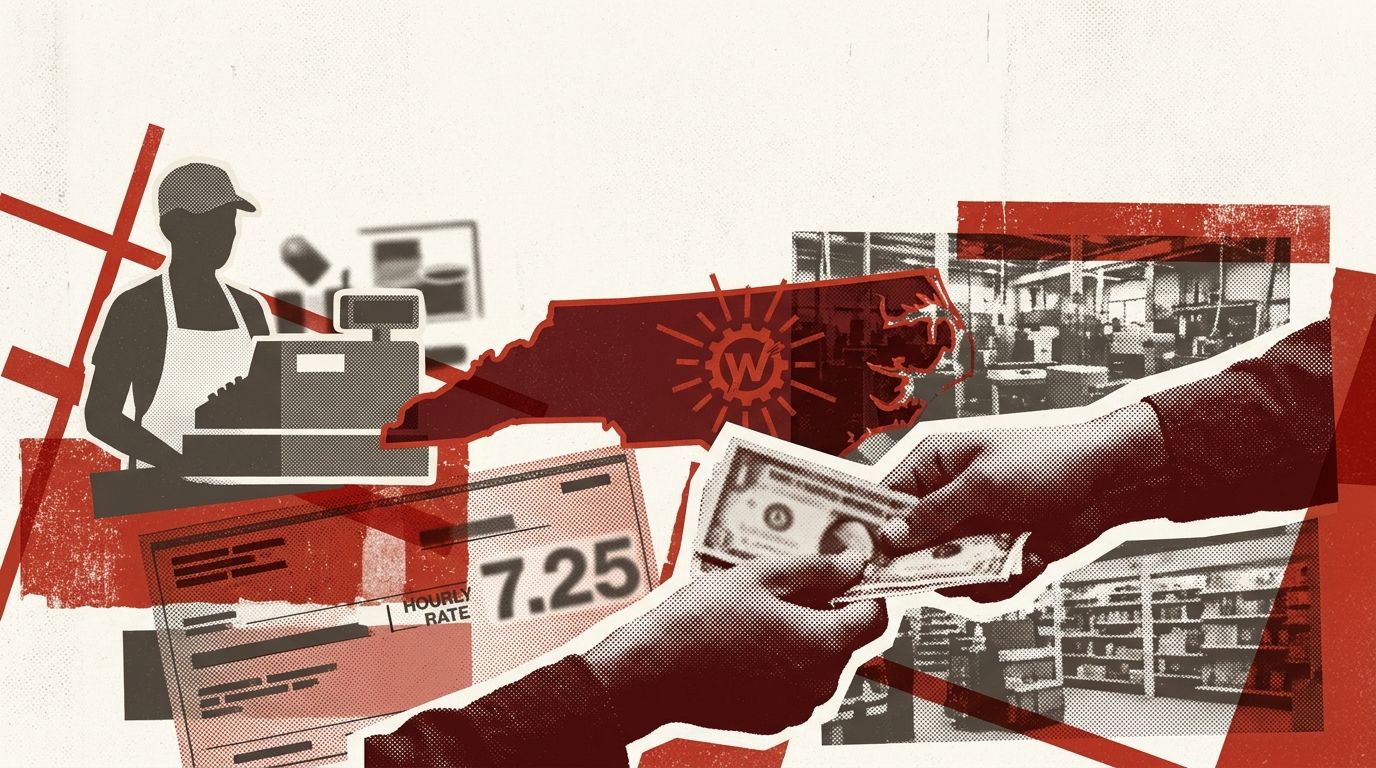
North Carolina is one of 25 states where the minimum wage sits at the federal floor of $7.25 per hour, unchanged since July 2009, with a preemption law that blocks every one of its 553 municipalities from setting a higher rate for private-sector workers.

Maryland's minimum wage is $15.00 per hour for every employer in the state, regardless of business size, a rate that took effect January 1, 2024 under the Fair Wage Act of 2023.

Texas does not set its own minimum wage dollar amount. The state's minimum wage law, administered by the Texas Workforce Commission, defers entirely to the federal Fair Labor Standards Act, which means workers in Texas earn a floor of $7.25 per hour, a rate unchanged since July 24, 2009.

The National Labor Relations Board is the independent federal agency that decides whether your employer broke the law when it fired you for talking about wages, interrogated you about a union meeting, or refused to bargain after workers voted to organize.

Amendment 42, approved by Colorado voters in 2006, turned the state's minimum wage into a self-adjusting constitutional provision indexed to the Consumer Price Index for the Denver-Aurora-Lakewood metro area.

Since July 24, 2009, Pennsylvania has not raised its minimum wage by a single cent. The rate sits at $7.25 per hour, locked to the federal floor, while inflation has eroded its real purchasing power to approximately $6.87 in 2009 dollars.

The federal minimum wage is $7.25 per hour, set by the Fair Labor Standards Act (FLSA) and enforced by the U.S. Department of Labor's Wage and Hour Division. That rate has been frozen since July 24, 2009, making it the longest period without an increase since the FLSA became law in 1938.

Georgia's minimum wage operates through a two-tier legal structure: the state sets one rate at $5.15 per hour, the federal government enforces a higher rate at $7.25, and which number appears on your paycheck depends entirely on whether your employer falls under the Fair Labor Standards Act.

Washington's minimum wage is set by an automatic annual formula tied to the Consumer Price Index for Urban Wage Earners and Clerical Workers (CPI-W), making it one of the few state wage floors in the country that rises without requiring new legislation each cycle. The 2024 rate of $16.

Washington's minimum wage is an inflation-indexed floor set by state law, adjusted each September based on the Consumer Price Index for Urban Wage Earners and Clerical Workers (CPI-W), and effective every January 1 without a legislative vote. The 2024 statewide rate reached $16.28 per hour, a 3.