The WNBA collective bargaining agreement is a seven-year labor contract between the league and the Women's National Basketball Players Association (WNBPA) that sets salaries, working conditions, and player rights for every athlete on a WNBA roster.
The Texas Minimum Wage Act contains no dollar amount. The statute adopts the federal minimum wage rate by reference, making the state of Texas minimum wage identical to the federal floor: $7.
M.G.L. Chapter 151, Section 1 sets the minimum wage in Massachusetts at $15.00 per hour and contains no indexing formula, no inflation trigger, and no scheduled future increase.
Connecticut's minimum wage is an annually auto-adjusting rate tied to the federal Employment Cost Index (ECI), set at $15.69 per hour for 2024 and currently $16.94 as of January 2026.
$12.41 plus ($12.41 × 0.029) equals $12.77. That one-line formula, published by the Virginia Department of Labor and Industry, determines the minimum wage in the state of Virginia taking effect January 1, 2026.
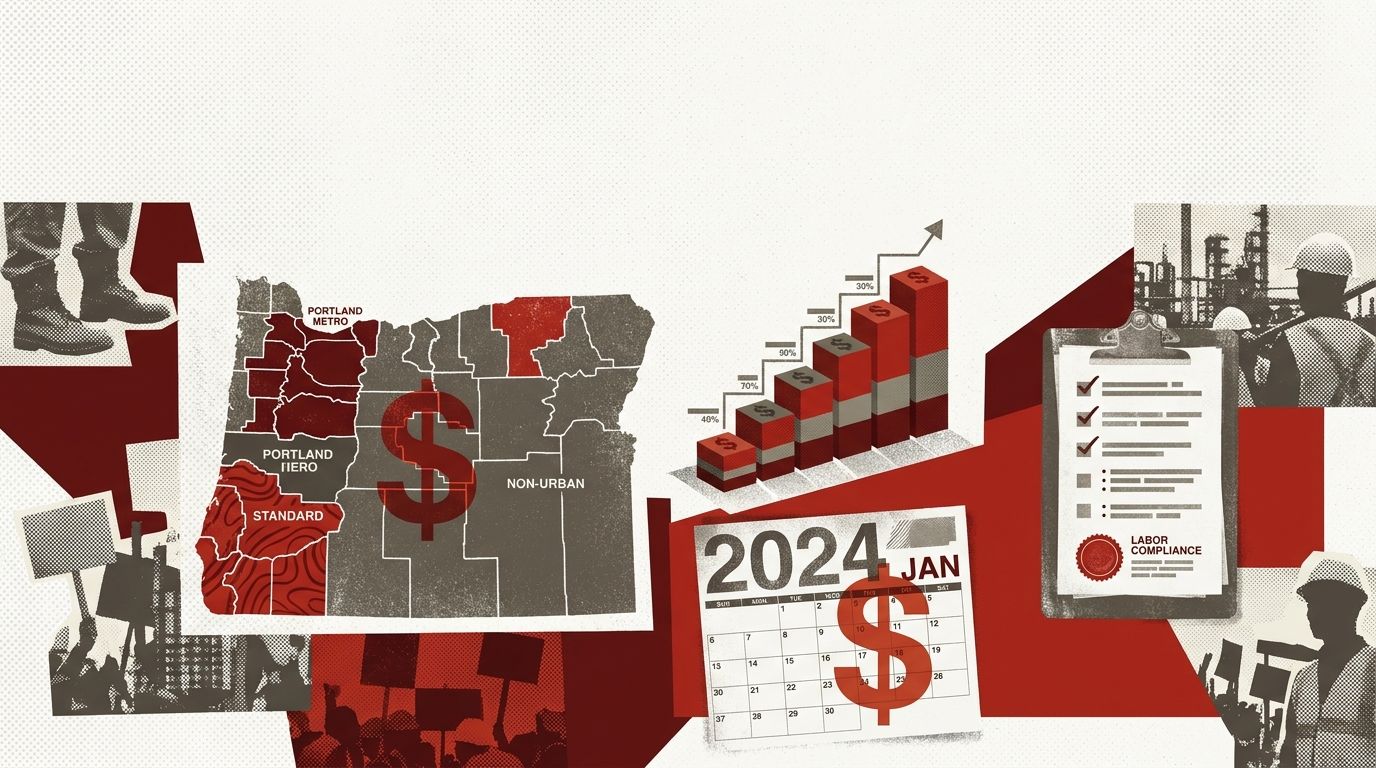
Oregon's minimum wage is set by a CPI-indexed formula that automatically adjusts three separate geographic rates every July 1, making it one of the few state wage systems that tracks inflation without requiring annual legislative action. As of July 1, 2024, those rates stand at $15.
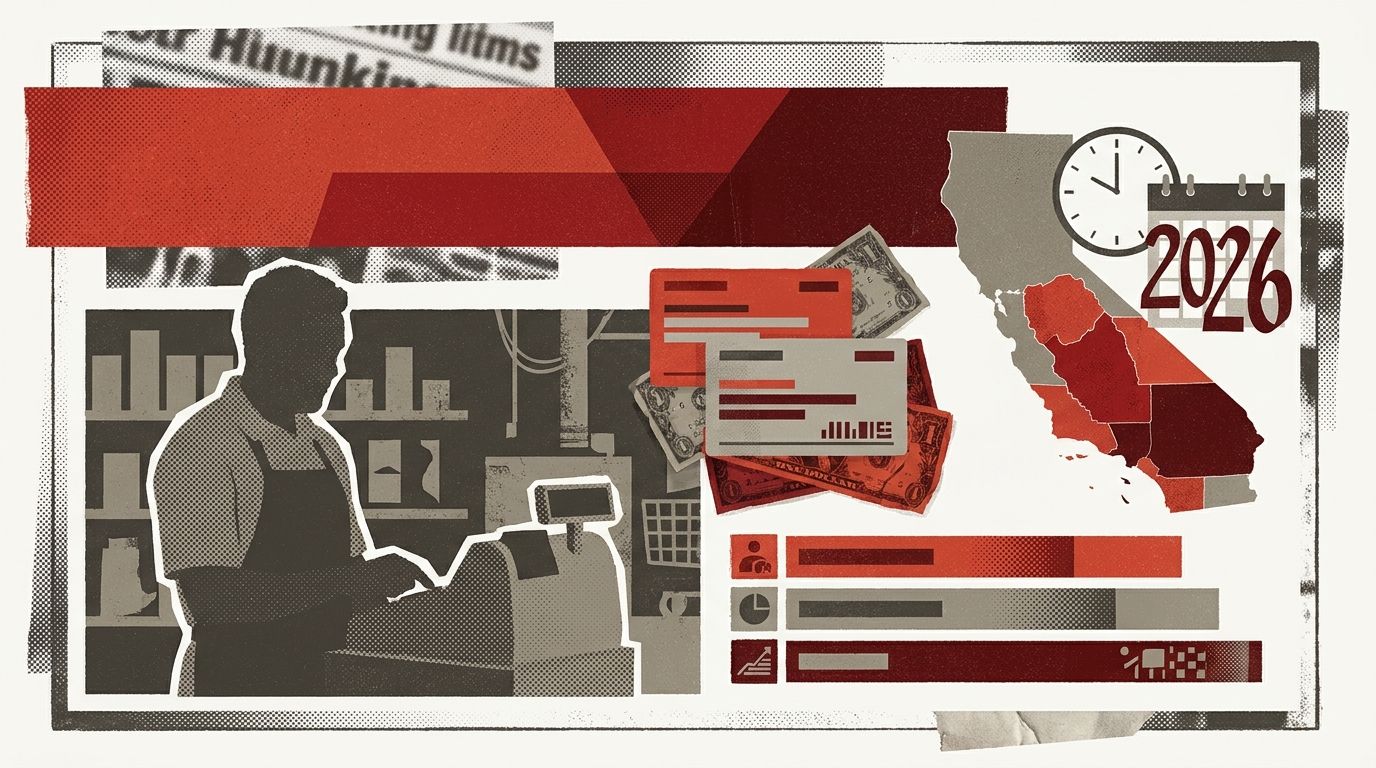
California's minimum wage in 2026 operates as a three-tier system: a CPI-indexed statewide floor of $16.90 per hour, local city and county rates reaching $20.34 in Emeryville, and industry-specific mandates pushing healthcare workers to $25.00 per hour.
Three separate legal floors governed what California employers owed their workers during 2025: a $16.50 statewide baseline, a $20.00 fast-food sector rate, and a healthcare scale climbing as high as $23.00 per hour at large hospital systems.
North Carolina's minimum wage is $7.25 per hour, locked to the federal floor under the Fair Labor Standards Act, and it hasn't moved by a single penny since July 24, 2009.
The Fair Wage Act of 2023 set the minimum wage in the state of Maryland at $15.00 per hour for all employers regardless of size, effective January 1, 2024, pulling an estimated 163,000 workers above the previous $13.25 floor. But $15.00 is the baseline, not the ceiling.
Michigan's minimum wage is $13.73 per hour as of January 1, 2026, governed by the Improved Workforce Opportunity Wage Act, a law that was gutted by the state legislature in 2018, restored by the Michigan Supreme Court in 2024, and then rewritten through bipartisan compromise in 2025.