
Press Freedom and Labor Reporting: Why It Matters for Workers
The most dangerous thing that can happen to a workforce isn't a bad contract or a hostile boss. It's silence.

Press Freedom and Labor Reporting: Why It Matters for Workers
The most dangerous thing that can happen to a workforce isn't a bad contract or a hostile boss. It's silence. When nobody is reporting on what happens inside warehouses, meatpacking plants, hospital wards, and construction sites, employers operate without accountability, and workers lose the one tool that costs nothing but changes everything: public attention. Press freedom labor protections and the journalists who rely on them are the connective tissue between a workplace problem and a public response. Yet the labor beat has been gutted at most major outlets, and the consequences land squarely on the people who clock in every day.
I've been thinking about this for a while, mostly because I keep running into the same frustration: critical stories about working conditions that never get told, or get told so badly they do more harm than good. So let's talk about why labor journalism is in trouble, what's actually working, and what you can do about it.
The Labor Beat Is Shrinking While Workers Need It Most
Here's a number that should bother you: a 2013 study found that only 0.3% of broadcast network news stories covered labor. Not 3%. Not even 1%. A fraction of a single percent. And while coverage has ticked upward since then, largely because of high-profile strikes and union drives at companies like Amazon and Starbucks, the structural problem hasn't been fixed. Most major newsrooms no longer have a dedicated labor reporter at all.
Steven Greenhouse, who covered the labor beat at The New York Times for decades, has pointed out that there are 150 million workers in the United States, and their stories span everything from immigrant farmworkers to discrimination in tech. Despite this enormous scope, many newsrooms have replaced dedicated labor reporters with "workplace" reporters who cover lighter fare, think office design and productivity tips, while ignoring the systemic issues that determine whether people can pay their rent.
The Columbia Journalism Review has documented this problem extensively, noting that independent labor outlets like Payday Report, In These Times, and Rank and File are often the ones doing the best work on the beat. But these are small operations running on thin budgets. When a major workplace disaster happens or a corporation retaliates against organizers, it's often these scrappy outlets that break the story, not the newsroom with 500 employees.
And here's the thing about that gap: it doesn't just mean fewer stories. It means worse stories. Reporters who don't regularly cover labor often default to a narrow frame. They cover the picket line but not the months of failed negotiations that led to it. They quote the CEO but not the shop steward. They treat a strike as a disruption rather than a last resort. This matters because public perception shapes political will, and political will shapes the laws that protect workers. The connection between how labor stories get told and the rights enforced by agencies like the NLRB is direct and measurable.
Why Press Freedom Is a Worker Issue
Press freedom sounds like a journalist's concern. It isn't. It's a worker's concern wrapped in a journalist's vocabulary.
When a reporter covers unsafe conditions at a food processing plant, they're exercising press freedom. When that story leads to an OSHA inspection, workers benefit. When the story never gets written because the reporter was denied access, or the company threatened a lawsuit, or the worker was too afraid to talk on the record, everyone loses except the employer.
The National Labor Relations Act actually protects private-sector employees' right to speak to the media about their working conditions. Employers can't legally impose gag orders that prevent workers from discussing wages, safety, or unionization efforts. The Brechner Center for Freedom of Information at the University of Florida has urged businesses to review their policies to make sure they aren't unlawfully restricting employee speech. Best practice, according to employment lawyers, is to include language in communications and social media policies that expressly carves out protected speech under the NLRA and Title VII.
But knowing your rights and exercising them are two different things. Many workers don't realize they're legally protected when they talk to a reporter. Many employers don't tell them, or actively discourage it through informal intimidation. This is where worker media rights become practical, not theoretical. If you're a worker and a journalist contacts you about conditions at your job, you have legal ground to stand on. If you're an organizer, making sure your coworkers know this is one of the most useful things you can do.
The History That Built the Beat
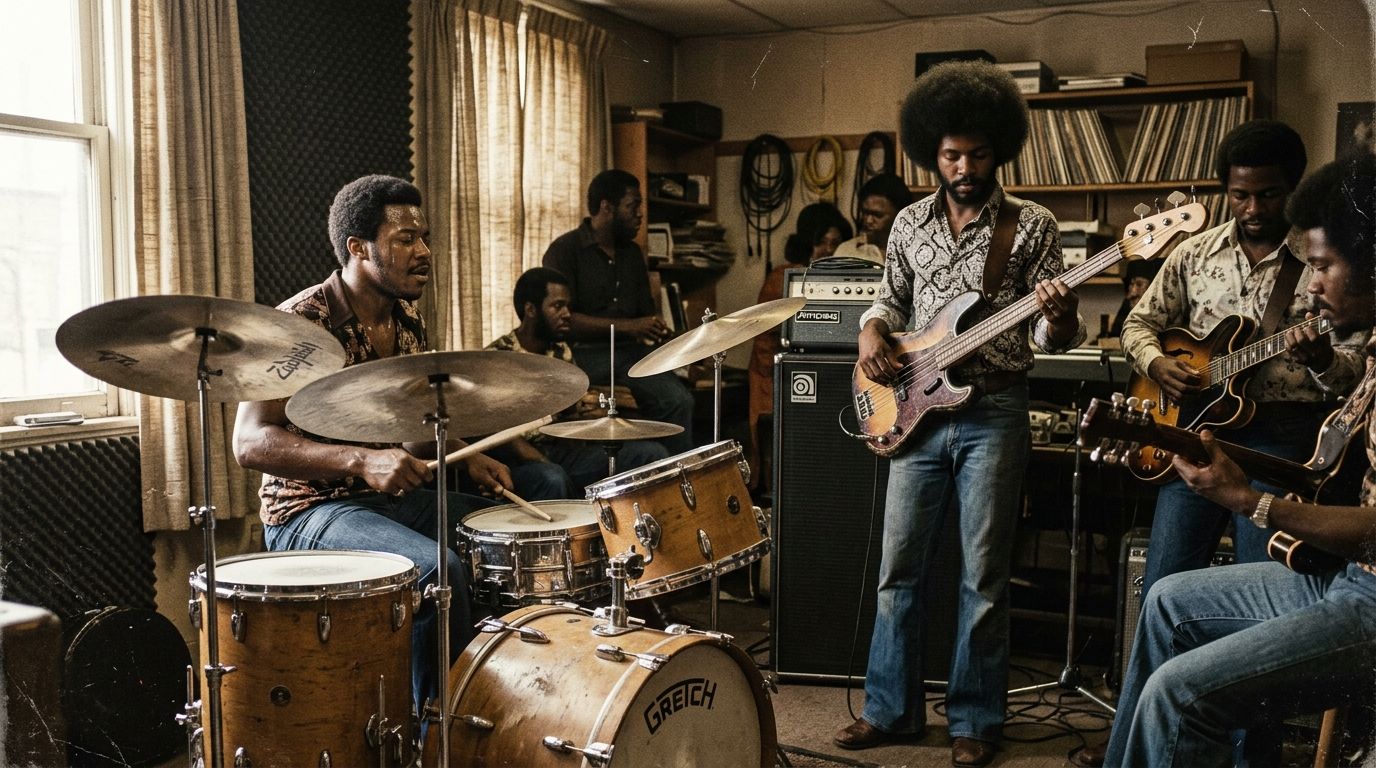
Labor journalism isn't new. It's one of the oldest forms of reporting in the country, and understanding that history helps explain why it matters now.
The labor press, which included newspapers, pamphlets, and other union-published materials, was a key tool in disseminating information and mobilizing workers during the industrial era. Unions like the Industrial Workers of the World published their own papers because mainstream outlets wouldn't cover their concerns fairly. In the Pacific Northwest, as documented by Cornell University's labor archives, union newspapers and radical periodicals played a critical role in building working-class solidarity across industries.
Some of the most important American journalism came from this tradition. Mary Heaton Vorse reported on labor movements throughout the early 20th century with a depth that mainstream reporters rarely matched. Upton Sinclair's investigation of meatpacking conditions in Chicago, later published as The Jungle, was labor journalism before anyone called it that. His reporting exposed dangers inside food processing plants that the industry had zero incentive to reveal on its own.
The NW Labor Press, based in Oregon, recently marked 125 years of continuous publication. In a 1962 report, its editor James Goodsell thanked the shareholding unions for their "truly remarkable degree of editorial freedom." That phrase sticks with me because it highlights something important: the best labor journalism maintains editorial independence even when funded by unions. Credibility depends on it. A union paper that only prints what leadership wants is propaganda. A union paper that reports honestly, even when the truth is complicated, is journalism.
Anyone interested in this tradition should check out essential reading on labor history to understand how the movement and its media evolved together.
Journalists Unionizing Changed the Coverage
Something interesting happened starting around 2015. Journalists started unionizing their own newsrooms, beginning with Gawker and spreading to dozens of digital and legacy outlets. More than 80 media organizations across the U.S., U.K., and Canada have unionized since then.
This had a direct effect on labor coverage. Kim Kelly, formerly a heavy metal journalist at Vice, became a full-time labor reporter after going through her own newsroom's union drive. She described the experience as the catalyst that made her realize she could use her platform differently. Hamilton Nolan, a labor writer involved in the Gawker unionization, observed that labor coverage moved from a niche topic to a mainstream focus, driven by younger reporters who covered the beat with genuine passion.
Matt Pearce, a journalist and president of the Los Angeles Times union, said that organizing his own newsroom made him "significantly more aware of potential labor angles to stories that I might have otherwise overlooked." That's not a small thing. When a reporter sees labor angles everywhere, the coverage changes. Stories about housing become stories about construction wages. Stories about healthcare become stories about nurse staffing ratios and the workers fighting for them. Stories about tech layoffs become stories about whether those workers had any collective power to begin with.
The Business Media Blind Spot

There's a particular problem with how business media treats labor. Most business journalism is aimed at investors, executives, and affluent readers. The coverage priorities reflect that audience. CEO compensation, which rose 940% from 1978 to 2018, gets detailed treatment. Typical worker wages, which grew only 11.9% over that same period, get a passing mention if they're mentioned at all.
Former business journalist Jeffrey Madrick put it bluntly: "If the press does not represent mid-level and low-level workers, who will?"
That imbalance distorts public understanding. When labor costs are discussed only as a line item eating into profits, rather than as the wages that allow people to feed their families, the entire framework tilts toward management. When a company announces layoffs, the stock price reaction gets top billing while the human consequences get a paragraph near the bottom. This framing isn't neutral. It tells the reader who matters.
What Good Labor Reporting Actually Looks Like
So what does the labor beat look like when it's done well? A few principles stand out.
Center worker voices. Interview the people doing the work, not just union leadership or corporate PR. The shop floor perspective is the story.
Explain the system. Don't just report that workers walked out. Explain the months of failed negotiations, the specific contract provisions at stake, the legal framework governing the dispute.
Follow the money. Wage theft costs American workers billions every year. Where enforcement data exists, use it. The Department of Labor has increased public access to this data, and it tells powerful stories.
Connect the dots. Labor issues don't exist in isolation. A story about workplace stress and its effects on families is also a story about healthcare, housing, and education. Good labor reporting makes those connections explicit.
Don't parachute in. The worst labor coverage happens when a reporter shows up at a strike, files 800 words, and moves on. The best coverage comes from reporters who know the industry, the workers, and the history.
Independent outlets have been modeling these practices for years, often on shoestring budgets. They've shown that labor journalism doesn't require massive resources. It requires attention, institutional knowledge, and editorial commitment.
What You Can Do
If you're a worker, know your rights. The NLRA protects your ability to talk to reporters about wages, safety, and working conditions. Your employer's social media policy doesn't override federal law.
If you're a union member or organizer, build relationships with local journalists. Don't just call them during a contract fight. Help them understand your industry year-round. The reporters who write the best strike coverage are the ones who already understood the workplace before the picket signs went up.
If you're a news consumer, pay for labor journalism. Subscribe to the independents. Share their work. The outlets doing this reporting survive on reader support, not advertising revenue from the companies they cover. And when you see a labor story that gets the facts wrong or ignores the workers entirely, say something. Reader feedback shapes editorial priorities more than most people realize.
Press freedom and labor reporting aren't abstract civic ideals. They're practical tools. A well-reported story about wage theft recovers money. An investigation into unsafe conditions saves lives. A profile of an organizing drive inspires workers in other shops to do the same. The beat matters because the work matters, and when the press goes silent on labor, workers pay the price.
The Union Edge Staff
Also in the paper