
How Unions Close the Wage Gap for Women and Workers of Color
The single most effective tool for closing pay gaps in America isn't a corporate diversity initiative. It isn't an unconscious bias training seminar. It isn't even a new law. It's a union contract.

How Unions Close the Wage Gap for Women and Workers of Color
The single most effective tool for closing pay gaps in America isn't a corporate diversity initiative. It isn't an unconscious bias training seminar. It isn't even a new law. It's a union contract. The data is overwhelming, consistent, and frankly hard to argue with: when workers bargain collectively, the pay disparities between men and women, and between white workers and workers of color, shrink dramatically. And yet this fact barely registers in mainstream conversations about pay equity, which tend to focus on individual negotiation tactics or vague calls for cultural change.
I've spent years writing about labor issues, and the connection between union representation and wage equality is one of the most well-documented and least discussed phenomena in American economics. So let's talk about what the numbers actually show, why collective bargaining works where other approaches fail, and what practical steps unions are taking right now to push the needle further.
The Numbers Don't Lie
Here's a stat that should stop you in your tracks: hourly wages for women represented by unions are 23 percent higher than for nonunionized women, according to the Economic Policy Institute. That's not a rounding error. That's a life-changing difference in take-home pay, retirement savings, and economic security.
The impact is even more pronounced for Black women. Research from AFSCME found that Black women in unions earn 24% more than their nonunion peers. Think about what that means in concrete terms. A Black woman earning $40,000 without a union could be earning nearly $50,000 with one. Over a 30-year career, that gap compounds into hundreds of thousands of dollars in lost income.
And it's not just about higher wages at the top. Unions compress the entire wage distribution, meaning they lift pay more at the bottom than at the top. Since women and workers of color are disproportionately concentrated in lower-wage positions, this compression effect narrows the overall unions wage gap from both directions.
Hispanic workers see a union wage premium of about 16.4 percent, and Black workers overall see roughly 12.6 percent. These premiums are consistently larger than what white male workers experience, which is exactly why unions function as an equalizer. When everyone gets a raise, but the people who were underpaid get a bigger raise, the gap closes. Simple math, powerful results.
Why Collective Bargaining Works Where Individual Negotiation Fails
There's a popular narrative in career advice circles that women just need to "negotiate harder." Ask for more. Lean in. Be assertive. The problem with this advice isn't that it's wrong on an individual level. It's that it ignores a mountain of research showing that women and people of color face real penalties for negotiating aggressively. They're perceived as pushy, difficult, or ungrateful in ways their white male colleagues are not.
Union contracts sidestep this problem entirely. When wages are determined by a collectively bargained pay scale, there's no room for a manager's unconscious bias to creep into compensation decisions. Your pay is based on your job classification, your experience, and your seniority. Not on how confidently you asked for a raise or whether your boss likes your personality.
The U.S. Department of the Treasury confirmed this dynamic in a report noting that collective bargaining has significantly reduced the wage gap between Black and white women, and has narrowed gender wage gaps among teachers specifically. That teacher example is worth dwelling on. Public school teachers represent probably the single largest group of unionized women in the country. Because their pay is determined by transparent salary schedules negotiated through their unions, the gender pay gap among teachers is dramatically smaller than in comparable professions without union representation.
Research by economists Biasi and Sarsons showed something remarkable: when teacher collective bargaining agreements expired and standardized pay schedules disappeared, the gender wage gap among educators actually increased. Remove the union structure, and bias floods back in. That's about as close to a controlled experiment as you'll find in labor economics.
Beyond Wages: Benefits, Wealth, and Long-Term Security
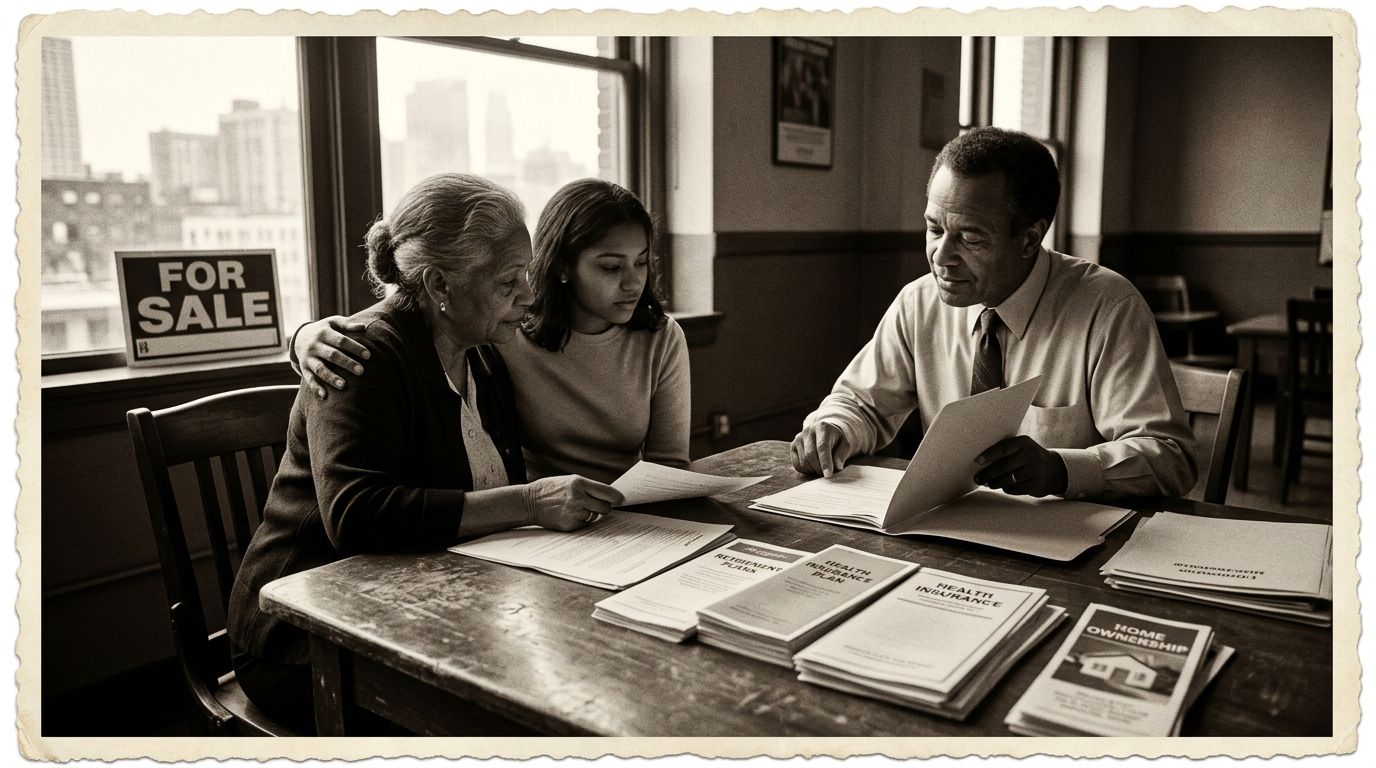
The union pay equity story doesn't end with hourly wages. Benefits matter enormously, and unions deliver there too.
Black union workers are 17.4 percentage points more likely to have employer-provided health insurance than nonunion Black workers. They're 18.3 percentage points more likely to have an employer-sponsored retirement plan. These aren't marginal differences. Access to health insurance and retirement savings are the building blocks of middle-class stability, and unions are providing them at dramatically higher rates to the workers who have historically been excluded.
The wealth gap numbers are even more striking. Between 2010 and 2016, the median wealth of nonwhite union members was nearly five times greater than that of nonunion nonwhite workers. For white workers, the union wealth advantage was about 39 percent. So union membership is associated with a wealth boost for everyone, but the boost for workers of color is massive.
This connects directly to broader economic issues that affect working families. As we've explored in discussions of how workplace stress ripples through families, financial insecurity is one of the biggest drivers of household tension and health problems. Higher wages and better benefits don't just show up on a pay stub. They change lives.
Similarly, the fight for fair pay in home care work illustrates how union organizing in female-dominated and minority-dominated sectors can reshape an entire industry's compensation standards. Home care workers, overwhelmingly women and disproportionately women of color, have seen some of the most dramatic wage improvements through union campaigns.
How Unions Are Actively Negotiating for Pay Equity
It's not enough to say "unions help." The question is how, and what specific bargaining strategies are making a difference.
One of the most powerful tools is the pay equity audit. According to the California Commission on the Status of Women and Girls, unions can negotiate for joint labor-management committees dedicated to identifying and correcting pay disparities. These committees either conduct audits themselves or hire outside experts to analyze compensation across job classifications, broken down by sex and race.
When audits reveal disparities, unions can then negotiate targeted wage adjustments for the affected classifications. This is fundamentally different from a corporate HR department running a pay equity analysis and deciding internally what to do about it. With a union at the table, workers have actual power to demand corrections.
Here's what that process typically looks like:
The union and employer agree to establish a Joint Labor Management Committee on Pay Equity
The committee defines the scope, agreeing on which job classifications, time periods, and demographic breakdowns to examine
An audit is conducted, either internally or by a hired consultant
Results are brought to the bargaining table
The union negotiates wage adjustments for underpaid classifications
Monitoring continues through subsequent contract cycles
The United Electrical Workers union (UE) has published practical guides for stewards tackling pay equity at the bargaining table. One instructive example from their materials involves a union steward named Lucy Parsons who, while preparing for negotiations, discovered that the lowest-paying job in the Department of Public Works paid more than the highest-paid job in the Library. Public Works was male-dominated. The Library was female-dominated. That's the kind of structural inequity that only becomes visible when someone with bargaining power actually looks at the numbers.
The Broader Economic Picture

When we talk about the racial wage gap unions can address, we're not just talking about individual workplaces. Strong unions set wage standards across entire industries and occupations. The Economic Policy Institute has documented that when unions are strong, they make wages more equal within occupations and narrow pay gaps between white workers and workers of color across the board.
This is why the decline of union density over the past four decades tracks so closely with rising income inequality. As fewer workers have been covered by collective bargaining agreements, the market has reverted to its default setting: paying people as little as it can get away with, with the lowest offers going to those with the least social and economic power.
States with strong public-sector unions adopt paid family leave policies more quickly, partly because women make up a large share of union membership and can influence policy priorities from within. Nearly 65 percent of workers covered by union contracts are women or minorities. That's not a niche constituency. That's the majority of the union movement.
This reality connects to a wider pattern we see in how immigrant workers are building organizing power and how the demographic makeup of unions has shifted dramatically over the past generation. The union movement today is more diverse than it has ever been, and that diversity is shaping bargaining priorities in ways that directly target the inequities built into American wage structures.
What Skeptics Get Wrong
Some critics argue that unions simply raise wages across the board and that the gap-closing effect is incidental. But this misreads the evidence. Union wage premiums are structurally larger for lower-paid workers, women, and workers of color. That pattern isn't accidental. It reflects both the compression effect of collective bargaining and the deliberate equity work that unions pursue at the table.
Others point to historical problems within unions themselves, including racial exclusion and segregation within trade unions through much of the 20th century. This history is real and ugly. But the modern labor movement looks nothing like its 1950s predecessor. Black men now have a higher union representation rate (13%) than the national average (10%). And as prevailing wage protections continue to be a focus of labor policy advocacy, the standards that unions negotiate increasingly reach beyond their own membership to raise floors for entire sectors.
The point isn't that unions are perfect. It's that they produce measurably better outcomes for the workers who are most consistently shortchanged by the status quo.
How to Turn This Evidence Into Action
If you care about pay equity, whether for yourself, your coworkers, or your community, here's what the evidence says you should actually do: support organizing efforts in female-dominated and minority-dominated industries, where union representation can make the biggest dent in wage gaps, push for pay transparency in your workplace through standardized and visible pay scales that reduce the role of bias in compensation, and if you're already in a union, advocate for pay equity audits and joint labor-management committees dedicated to analyzing and correcting disparities. Vote on labor policy with the same energy you'd bring to any other civil rights issue, because union density doesn't just affect union members—it sets wage standards for everyone in an industry.
The gender wage gap and the racial wage gap are not mysterious forces of nature. They're the predictable result of systems that allow bias, power imbalances, and information asymmetry to determine what people earn. Unions don't eliminate every form of discrimination. But they build structures where discrimination has far less room to operate, and they give workers the collective power to demand corrections when it does. That's not a theory. It's forty years of data.
The Union Edge Staff
Also in the paper