
WHO and OSHA Advance Healthcare Workplace Violence Protections as Federal Standard Stalls
The World Health Organization launched comprehensive framework guidelines to combat workplace violence in healthcare settings while the U.S. Occupational Safety and Health Administration continues enforcement actions despite pushing back federal rulemaking to an undetermined timeline, according to r

WHO and OSHA Advance Healthcare Workplace Violence Protections as Federal Standard Stalls
The World Health Organization launched comprehensive framework guidelines to combat workplace violence in healthcare settings while the U.S. Occupational Safety and Health Administration continues enforcement actions despite pushing back federal rulemaking to an undetermined timeline, according to regulatory analysis published today.
The dual developments signal intensified attention to a crisis affecting up to 38 percent of healthcare workers globally who experience physical violence during their careers. Nearly 20 percent of U.S. healthcare workers report workplace physical abuse, with far higher numbers exposed to verbal aggression and threats. The WHO estimates between 8 and 38 percent of healthcare workers worldwide face physical violence at some point in their employment.
The WHO, International Labour Organization, International Council of Nurses, and Public Services International jointly developed "Framework Guidelines for Addressing Workplace Violence in the Health Sector," establishing protocols for violence prevention policies in non-emergency settings and systematic data collection methods for attacks in emergency contexts.
Federal Standard Delayed Indefinitely
OSHA moved its proposed workplace violence prevention standard for healthcare and social assistance from a June 2025 target date to the long-term action category with timing now listed as "To Be Determined." The agency convened a Small Business Advocacy Review panel in March 2023 that heard from hospitals, residential behavioral health facilities, ambulatory treatment centers, home healthcare agencies, emergency medical services, and correctional health settings.
Despite the rulemaking delay, OSHA continues citing healthcare employers under the General Duty Clause of the Occupational Safety and Health Act, which requires workplaces free from recognized hazards likely to cause death or serious physical harm. Federal circuit courts have upheld General Duty Clause citations involving healthcare facilities and workplace violence, establishing that absence of a dedicated standard does not shield employers from enforcement.
The agency has designated workplace violence prevention in healthcare as both "serious" and "longstanding," maintaining active investigations and citations against employers that fail to protect healthcare workers from assault and threats.
State Legislation Fills Enforcement Gap
Multiple states enacted workplace violence prevention requirements for healthcare settings while federal rulemaking remained stalled. California, Kentucky, Utah, Virginia, and Washington passed legislation establishing specific protections and requirements for healthcare employers in recent years.
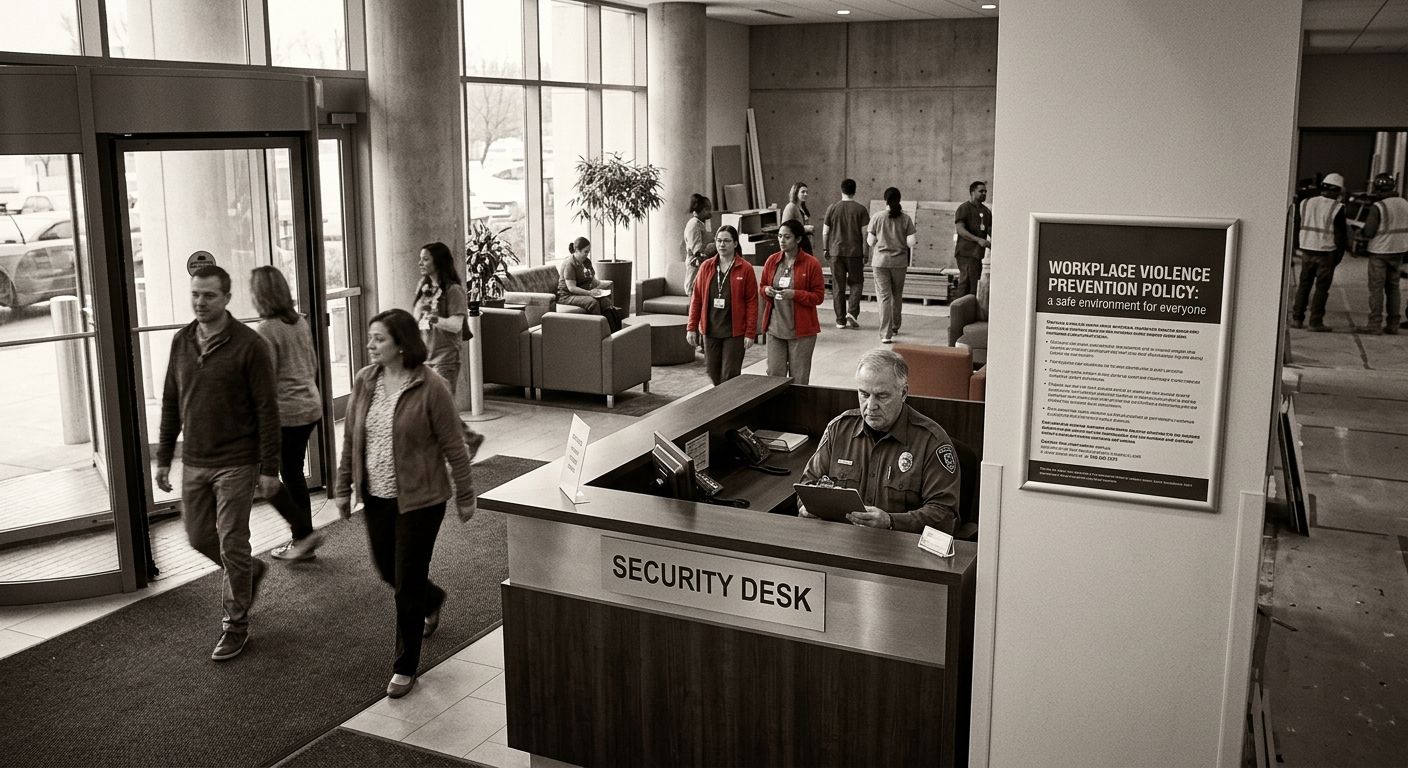
Kentucky's House Bill 176, passed in 2023, requires health facilities to develop workplace safety assessments and safety plans targeting violence risk against healthcare workers. The law mandates annual training, recordkeeping, and internal reporting systems with annual compliance audits. In February 2026, Kentucky legislators introduced strengthening amendments proposing prominent facility notices warning of consequences for threatening or aggressive behavior toward healthcare workers.
Washington amended RCW 49.19.020 to establish investigation requirements for workplace violence incidents in healthcare settings. The state-level requirements create enforceable standards in jurisdictions where federal OSHA authority extends only through the General Duty Clause.
Data Collection and Prevention Protocols
The WHO framework includes a standardized questionnaire and study protocol to measure violence magnitude and consequences in healthcare workplaces. The guidelines address systematic underreporting that obscures the true scale of workplace violence in medical settings. The emergency-setting protocols establish methods to track attacks against healthcare facilities, workers, and patients across incident types.
The framework supports policy development by providing evidence-based approaches for violence prevention rather than reactive responses to individual incidents. Healthcare employers implementing the WHO guidelines would conduct hazard assessments, establish reporting systems, and train staff on de-escalation and response procedures.
The consequences of workplace violence extend beyond immediate physical injuries to psychological trauma, compromised patient care quality, and healthcare system strain. Workers experiencing repeated verbal aggression or physical assault face burnout, reduced job satisfaction, and occupational exit at higher rates than workers in environments with robust violence prevention programs.
Policy Implications
Healthcare workers and labor organizers face a fractured enforcement landscape where protection levels depend on state jurisdiction rather than consistent federal standards. Unions representing healthcare workers can leverage state-level requirements and OSHA's General Duty Clause citations as organizing tools, documenting employer failures to implement violence prevention programs and demanding contract language that exceeds minimum legal requirements.
The WHO framework provides organizing leverage for healthcare unions negotiating safety committees, incident reporting systems, and staffing levels that reduce violence risk. Workers and organizers should document every physical assault, verbal threat, and near-miss incident to establish patterns demonstrating recognized hazards under the General Duty Clause. States without specific healthcare workplace violence legislation remain vulnerable to organizing campaigns demanding statutory protections comparable to Kentucky or Washington requirements.
The indefinite delay of federal OSHA rulemaking shifts enforcement focus to state legislatures and collective bargaining, creating opportunities for labor advocates to advance violence prevention standards through political organizing and contract campaigns rather than waiting for federal regulatory action.
The Union Edge Staff
Also in the paper