
Postal Banking: A Financial Lifeline for Working Americans
The United States Postal Service has 33,000 locations spread across the country. That's more than all the bank branches, McDonald's restaurants, and Starbucks stores combined. And 59% of those post offices sit in ZIP codes that have either no bank or only one.

Postal Banking: The Financial Lifeline 46 Million Working Americans Desperately Need
The United States Postal Service has 33,000 locations spread across the country. That's more than all the bank branches, McDonald's restaurants, and Starbucks stores combined. And 59% of those post offices sit in ZIP codes that have either no bank or only one. If you're trying to solve the problem of financial exclusion for working people, the infrastructure is literally already there. It's been there for over a century. We just stopped using it.
Here's what kills me: we already did this once. From 1911 to 1967, working Americans could open a savings account at their local post office, backed by the full faith and credit of the United States, earning 2% interest. At its peak in 1947, the Postal Savings System held $3.4 billion in assets — over $35 billion in today's dollars. It worked. Millions of people used it. Then the banking industry lobbied it out of existence.
Now 46 million Americans are either unbanked or underbanked, spending a collective $89 billion a year on predatory financial services. And that post office on the corner? It sells stamps.
The Problem Is Bigger Than You Think
When we talk about unbanked workers, it's easy to picture some edge case. It's not. Nearly one in five American households lacks full access to basic banking services. These are people who cash their paychecks at corner stores for a fee, pay their electric bill with money orders, and take out payday loans when their car breaks down because they have no other option.
The demographics are predictable and damning. Black and Hispanic households are five times more likely than white households to be unbanked, according to FDIC data. Rural communities have been gutted — over 6,000 bank branches closed between 2008 and 2016, disproportionately in low-income areas. If you live in a small town in Appalachia or on a reservation in South Dakota, your nearest bank might be 45 minutes away. Your post office is down the street.
This isn't just inconvenient. It's expensive. The average payday loan of $375 ends up costing $520 in interest and fees. A worker making $30,000 a year can easily spend $2,400 annually just on the basic financial transactions that someone with a Chase account does for free. That's a tax on being poor, and it's being collected by an industry that has every incentive to keep it going.
The connection to wages matters here. When you look at what the data actually shows about minimum wage workers, you see a population that can't absorb these kinds of fees. A $12 check-cashing fee on a $400 paycheck doesn't sound catastrophic until you realize it happens every two weeks, forever.
Post Office Banking Already Works — In 139 Other Countries
Americans have a peculiar habit of debating whether something is possible while the rest of the world is already doing it. Postal banking operates in 139 countries, serving 1.5 billion people globally. This isn't experimental. It's one of the most proven models in public finance.
Japan Post is the clearest example. Financial and insurance services account for 78% of Japan Post Group's total income. In France, La Poste derived 23.4% of its revenue from financial services in 2022. These aren't charity operations. They're self-sustaining public services that happen to also make money.
The model that works best internationally isn't trying to become a full commercial bank. It's focused: savings accounts, check cashing, money transfers, bill payments, and small-dollar loans. That's it. Nobody is proposing that your post office should start offering mortgage-backed securities. The goal is to provide the basic financial plumbing that every working person needs and that the private sector has decided isn't profitable enough to bother with.
What's Actually Been Proposed
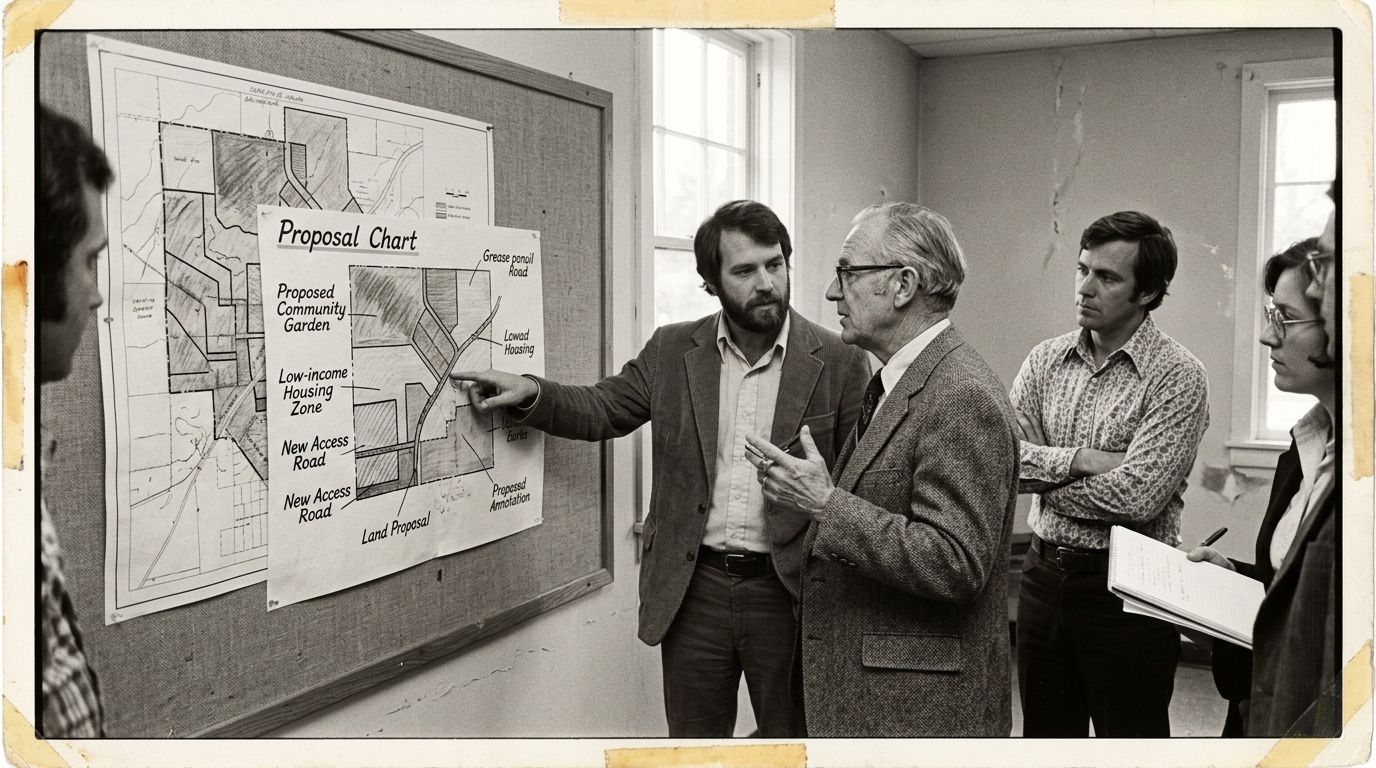
Two major pieces of legislation have tried to bring post office banking back to America.
The Postal Banking Act, introduced by Senators Kirsten Gillibrand and Bernie Sanders, would create a nonprofit postal bank offering low-cost checking and savings accounts, ATMs, mobile banking, and low-interest loans. According to the USPS Office of Inspector General, this could generate between $9 billion and $19 billion in annual revenue for the Postal Service. Read that number again. A service that helps working people could also stabilize the finances of a beloved public institution struggling with declining mail volumes.
Senator Sherrod Brown's Banking for All Act takes a different approach, proposing FedAccounts — no-fee, interest-bearing digital bank accounts offered through the Federal Reserve and accessible at post offices. These would include debit cards, mobile banking, and immediate payment clearing.
Both proposals share a core idea: use the existing USPS network to deliver affordable financial services where banks won't go.
There's already a pilot program in motion. Select post offices can cash payroll or business checks of up to $500 and load the money onto a gift card. It's modest, but it proves the concept works at an operational level. Postal clerks already process 378,000 money orders per day and receive extensive training, including annual Bank Secrecy Act certification. The workforce knows how to handle money.
Why This Also Matters for the USPS
The Postal Service is in financial trouble. Mail volumes keep dropping. Pension obligations keep growing. Congress keeps passing laws that make its budget situation worse. And every few years, someone floats the idea of privatizing it.
Postal banking gives the USPS a new revenue stream that actually aligns with its mission of universal service. You want to save the post office? Give it something useful to do. This is the same logic behind why workers in manufacturing communities push for new industries — when the old business model erodes, you need to find what's next, and sometimes the answer is something you used to do.
The Opposition and Why It's Mostly Wrong
Banking lobbyists have called postal banking "the worst idea since the Edsel." That's a fun line, but it falls apart under any scrutiny.
Their primary argument: the USPS isn't equipped to provide financial services. But it already does. Money orders, international wire transfers, the pilot check-cashing program. Postal workers are federal employees who take an oath of office and undergo financial compliance training. Are we really arguing that a USPS clerk can handle a $1,000 money order but not a savings account?
The second argument: it would unfairly compete with community banks. This is the one that sounds reasonable until you look at the map. The whole point is that these communities don't have banks. You can't unfairly compete with something that doesn't exist. A study from the University of Michigan's Poverty Solutions initiative found that in census tracts with a post office but no bank branch, the post office is the sole access point for financial services.
The third argument: government can't run a bank efficiently. Tell that to Japan, France, Brazil, India, and 135 other countries. Or tell that to the Postal Savings System that ran successfully in America for 56 years.
The real issue, as with many fights over public services, is that powerful industries make a lot of money from the status quo. The same dynamics play out when big money influences policy decisions across every sector affecting working people.
What Postal Banking Would Actually Look Like

Let's get concrete. Here's what a modern postal banking system could offer:
Basic savings accounts with no minimum balance and no monthly fees, earning modest interest
Check cashing for payroll and government checks at minimal cost (compare $1 to the $12 that check-cashing outlets charge)
Bill payment services so people don't have to buy money orders for every utility payment
Small-dollar loans at reasonable rates, with the USPS Inspector General estimating total costs of about $48 on a $375 loan versus $520 from a payday lender
Debit cards and mobile access because it's 2026 and nobody should have to operate on a cash-only basis
Fees for these services could be 90% lower than payday lender equivalents. That's not an aspiration — it's a function of the USPS already having the physical infrastructure, the workforce, and no obligation to generate shareholder profits.
And this isn't just about individuals. Small businesses in underserved areas need basic financial services too. When the nearest bank is an hour's drive, accepting payments, making deposits, and managing cash flow becomes a logistics problem that suppresses local economic activity.
Public Support Is Already There
Here's the part that should make politicians pay attention: a 2020 Data for Progress poll found 74% overall voter support for postal banking. That breaks down to 84% of Democrats, 68% of Independents, and 67% of Republicans.
The USPS itself is the most popular federal agency across party lines, according to Pew Research. People trust their mail carrier. They trust their post office. That trust is a foundation that no fintech startup and no payday lender can replicate.
This is a rare issue where working-class voters across the political spectrum agree. Rural conservatives who've lost their bank branch and urban progressives fighting predatory lending both benefit from the same solution. The demographic breakdown of who supports labor-friendly policies often reveals this kind of cross-partisan alignment when the policy directly addresses bread-and-butter economic needs.
What Needs to Happen Next
The legislative proposals exist. The public support exists. The international evidence exists. The infrastructure exists. What's missing is political will, and that only comes from pressure.
Here's what I think matters:
Pilot programs need to expand. The current check-cashing pilot is proof of concept, but it's too small to generate the data that convinces skeptics. Congress should fund a broader trial in 100 post offices across banking deserts — urban and rural — and measure the results over two years.
Postal worker unions need to be at the table. Any expansion of services affects workload, training requirements, and compensation. The American Postal Workers Union has been a vocal advocate for postal banking, and that advocacy should translate into a real role in designing how it works.
And the framing matters. This isn't about growing government for its own sake. It's about using a public institution that already exists to solve a problem that the private market has chosen not to solve — or worse, has chosen to exploit. When 46 million people are shut out of basic banking, and they're spending $89 billion a year for the privilege of being shut out, something is broken. The fix is sitting right there on Main Street, between the flag and the blue mailbox. We just have to walk in.
The Union Edge Staff
Also in the paper