
Union Nurses Stage Traffic Blockades in Eight Cities to Demand Hospitals Cut Ties With Palantir
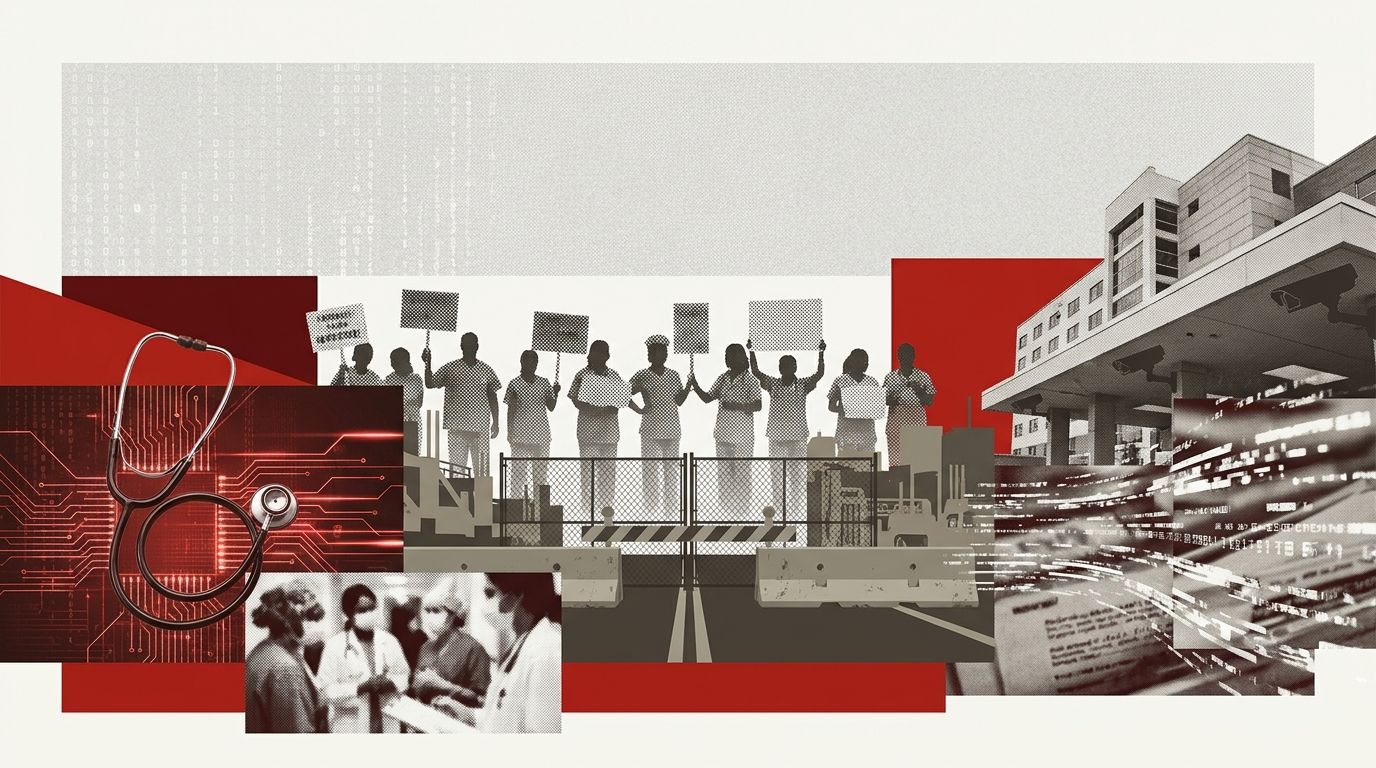
National Nurses United organized civil disobedience actions on August 27 in eight cities, with registered nurses blocking traffic to demand hospitals and elected officials cut ties with artificial intelligence giant Palantir Technologies, according to a report published by ScheerPost.
Union Nurses Stage Traffic Blockades in Eight Cities to Demand Hospitals Cut Ties With Palantir
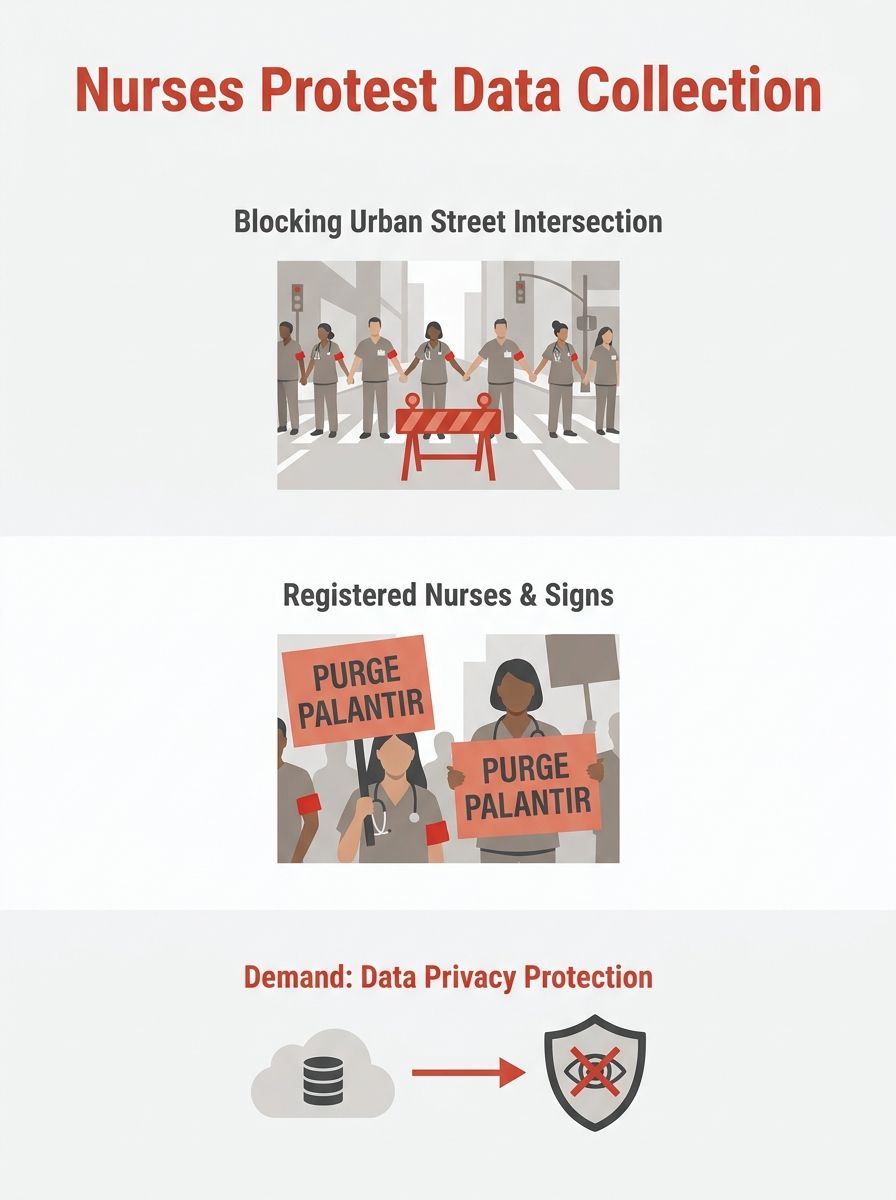
National Nurses United organized civil disobedience actions on August 27 in eight cities, with registered nurses blocking traffic to demand hospitals and elected officials cut ties with artificial intelligence giant Palantir Technologies, according to a report published by ScheerPost. The protests marked an escalation in the union's "Purge Palantir!" campaign against technology surveillance in healthcare settings.
The coordinated actions brought together hundreds of registered nurses, patients, and community allies in Palo Alto, Los Angeles, Chicago, Washington DC, Portland, Asheville, Austin, and New Orleans. National Nurses United represents the nation's largest union of registered nurses. Kelli Brennan, a registered nurse from Portland, Maine, Lee Barker from Kansas City, Missouri, and Kiera Arbour from Chicago participated in the campaign and spoke about the union's concerns in a September 17 podcast interview.
Federal Contracts Fuel Palantir's Healthcare Expansion
Palantir received $2.5 billion in federal government funding between 2009 and 2025, but that figure surged in the past year. The Department of Defense announced a $10 billion agreement with Palantir in July to use its technology for data sharing across federal agencies. The Department of Homeland Security awarded Palantir a $30 million contract to build an AI-powered system identifying immigrants for deportation, followed by a $1 billion contract signed in February 2026.
The company already manages more than one-fifth of U.S. hospital beds, marking what nurses describe as an unprecedented expansion of surveillance technology into patient care. "Union nurses cannot be silent when our most vulnerable people, babies and children are being detained by federal immigration agents," said Jamie Brown, NNU President, in the union's press statement. "While our patients and neighbors are living in fear of immigration raids enabled by Palantir, our hospitals are facing huge cuts and our patients are facing mounting healthcare costs."
The union's campaign arrives as tech workers themselves have gained momentum in union organizing efforts, with many expressing concerns about how their companies' technologies are deployed. The intersection of healthcare labor rights and technology surveillance represents a growing area of worker activism.
Nurses Cite Patient Privacy and Care Quality Concerns
Registered nurses participating in the campaign emphasized that the proliferation of untested technology in hospitals threatens both patient safety and nursing practice. The union characterizes Palantir's hospital management systems as part of a broader trend of unregulated artificial intelligence entering clinical settings without adequate oversight or testing for patient care impacts.
"Nurses aren't just saying no to Palantir, but we're calling for our public resources to go toward the benefit of working people, not billionaires and their corporations," Brown stated in the press release. The union connects Palantir's hospital presence to broader concerns about how federal resources are allocated, particularly in the context of healthcare funding cuts.
The New York Times reported earlier this year that the Trump administration has tapped Palantir to compile data on Americans, expanding the company's surveillance reach beyond immigration enforcement. The Guardian characterized a Palantir manifesto as the "ramblings of a supervillain" amid concerns about the company's contracts in the United Kingdom.
Eight-City Action Marks Nationwide Coordination
The August 27 civil disobedience represented coordinated action across geographic regions, with nurses stopping traffic in major metropolitan areas. The protests disrupted normal traffic flow as participants demanded institutional divestment from Palantir contracts. National Nurses United structured the day of action to generate simultaneous pressure on hospital administrators and elected officials in multiple states.
The union framed the campaign within its broader advocacy for patient care quality and nursing professional standards. Nurses argued that directing billions in public funds to technology companies diverts resources from direct patient care and healthcare worker staffing. The campaign connects technology surveillance concerns to traditional union priorities around workplace conditions and patient advocacy.
The coordinated nature of the protests demonstrated the union's capacity to mobilize members across state lines around a technology policy issue, expanding organized labor's focus beyond traditional wage and benefit negotiations. The campaign positions nurses as frontline witnesses to how surveillance technology affects vulnerable populations in healthcare settings.
What This Means for Union Members
The National Nurses United campaign against Palantir represents a significant expansion of union advocacy into technology policy and government contracting. For union members across industries, this action demonstrates how organized labor is confronting the integration of surveillance systems into workplaces and public services. The nurses' focus on both patient privacy and professional practice standards shows how technology adoption affects multiple stakeholders in healthcare settings.
Union members in other sectors may face similar questions as artificial intelligence and data management systems expand into their workplaces. The nurses' demand for transparency and public accountability in how government contracts are awarded offers a template for worker-led resistance to unregulated technology deployment. The $1 billion federal contract signed in February 2026 illustrates the scale of public resources flowing to private technology companies with minimal worker or patient input.
The campaign also highlights the intersection of workplace rights and civil rights, particularly regarding immigration enforcement. For union members whose work brings them into contact with vulnerable populations, the nurses' stance on refusing complicity with surveillance systems that enable deportations may inform similar debates about the ethical boundaries of their own labor.
The Union Edge Staff
Also in the paper