
Connecticut Senate Passes Comprehensive Labor Bill Addressing Wage Theft, Worker Assaults, and Pay Transparency
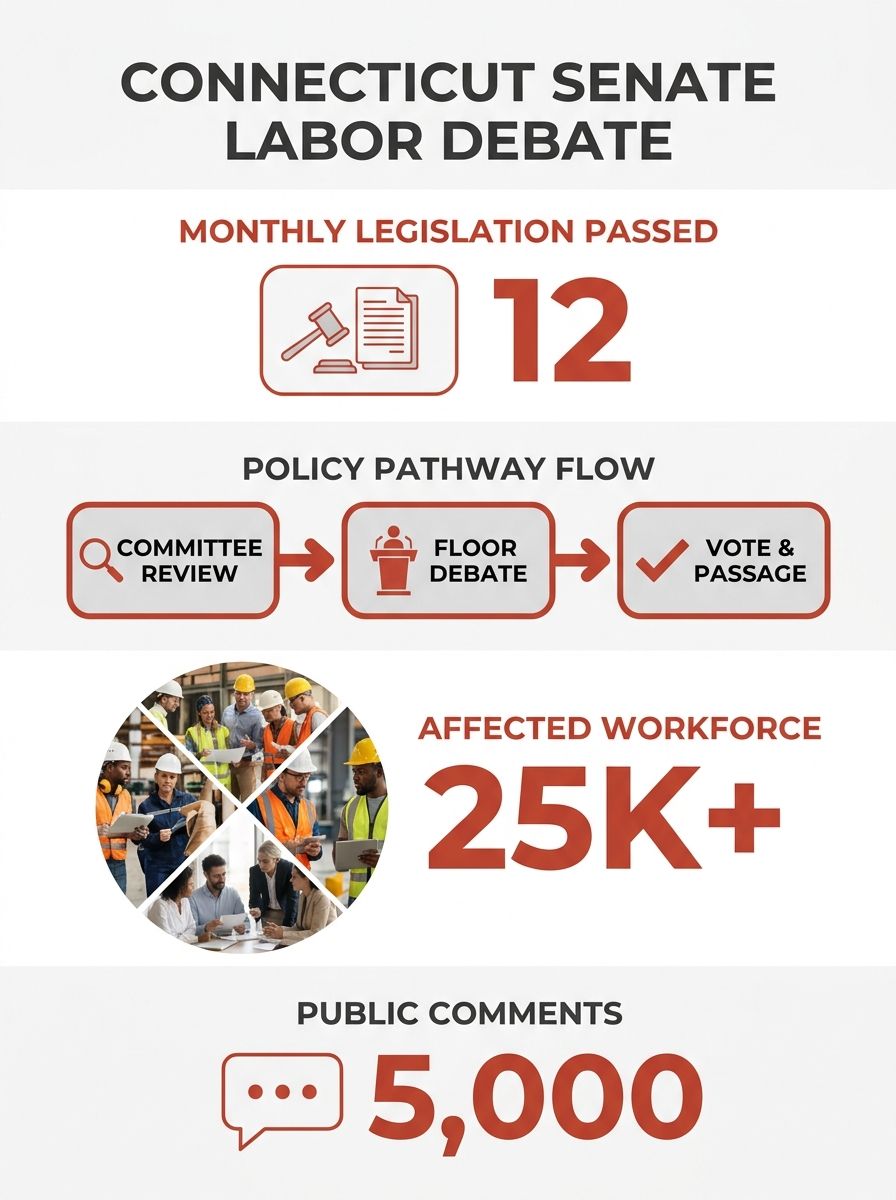
The Connecticut Senate passed H.B. 5003 by a 28-7 vote on May 3, sending a 200-page labor omnibus bill to the governor's desk that addresses wage theft in construction, mandates salary range disclosures on job postings, and expands compensation for workers assaulted on the job, according to Hartford

Connecticut Senate Passes Comprehensive Labor Bill Addressing Wage Theft, Worker Assaults, and Pay Transparency
The Connecticut Senate passed H.B. 5003 by a 28-7 vote on May 3, sending a 200-page labor omnibus bill to the governor's desk that addresses wage theft in construction, mandates salary range disclosures on job postings, and expands compensation for workers assaulted on the job, according to Hartford Business.
The legislation, which consolidates 75 sections drawn from individual bills previously heard in committee, creates new protections across multiple industries while targeting persistent enforcement gaps in workplace safety and fair pay. Sen. Julie Kushner, D-Danbury, told colleagues the measure "creates great law for working families in the state of Connecticut."
Key Provisions Span Multiple Sectors
The bill's wage theft provisions target the building trades, where misclassification and unpaid wages remain persistent organizing obstacles. Separate sections establish job protections for service workers and require employers to list position wage ranges on all job applications—a transparency measure labor advocates view as critical for addressing systemic pay disparities.
Healthcare workers gain new assault protections under the legislation. Hospitals and care facilities must implement notification systems alerting providers when patients have documented histories of workplace violence. Workers assaulted on the job would receive compensation covering up to 100 percent of their weekly earnings, expanded from current partial-wage replacement structures.
Firefighter and public safety recruitment provisions attempt to address staffing shortages through tuition waivers, expanded healthcare benefits, and new recruitment programs. The measures respond to declining application rates in departments across the state.
Republican Opposition Centers on Process
Senate Republicans filed more than a dozen amendments during Friday afternoon debate that stretched nearly five hours before the evening vote. Sen. Rob Sampson, R-Wolcott, criticized what he termed a "legislative buffet" approach, arguing that combining diverse workplace issues into a single omnibus bill prevented adequate scrutiny of individual sections.
Sampson told colleagues he had not received sufficient time to review every provision in the 200-page measure. Republicans raised detailed questions about implementation timelines, enforcement mechanisms, and employer compliance costs across multiple industries.
Kushner defended the omnibus structure, noting that "it's not uncommon in this chamber, in this legislature to have omnibus bills such as this." She said many sections reflected years of development through committee hearings and stakeholder input.
The bill's passage came two days after May 1, the international workers' celebration known as May Day. Kushner referenced the date in closing remarks, stating that working people in Connecticut "keep our state running, and it is our obligation, responsibility to make sure we have their backs."
Governor's Decision Next
Gov. Ned Lamont has not indicated whether he will sign the legislation. The bill's fate depends on his assessment of the economic impact provisions, particularly wage range disclosure requirements that affect all Connecticut employers. Business groups have raised concerns about competitive disadvantages from mandatory salary transparency, while labor organizations frame the measure as a basic fairness standard already adopted in multiple states.
The wage theft provisions mirror enforcement strategies detailed in pattern bargaining campaigns where unions extend contract standards across entire sectors. Construction trades unions have pushed similar legislative remedies in states where regulatory enforcement remains inconsistent.
Context and Outlook
Connecticut's labor legislation arrives as organizing advocates push state-level worker protections amid stalled federal reforms. The omnibus structure reflects a legislative strategy increasingly common in Democratic-controlled statehouses: bundling multiple worker protection measures to maximize passage efficiency while creating comprehensive enforcement frameworks.
The bill's pay transparency mandate positions Connecticut alongside Colorado, California, New York, and Washington in requiring upfront salary disclosure. Research from labor economists shows wage range posting reduces pay gaps by limiting employers' ability to lowball candidates lacking negotiating leverage—a dynamic particularly harmful to women and workers of color entering new positions.
If signed, the healthcare assault provisions could influence how hospitals and care facilities approach violence prevention. Current reporting systems often leave workers unaware of patient risk histories until after incidents occur. The notification requirement shifts institutional responsibility toward proactive disclosure, though implementation details remain subject to regulatory development. Worker advocates note that assault compensation increases, while important, do not address the root conditions—understaffing, inadequate security, insufficient de-escalation training—that make healthcare among the nation's most violent workplace sectors.
The Union Edge Staff
Also in the paper