
SoFi Stadium Hospitality Workers Conclude Strike Vote Days Before World Cup Opener
Contract negotiations at SoFi Stadium face a June 12 deadline as nearly 2,000 hospitality workers concluded strike authorization voting today, threatening to disrupt the FIFA World Cup opener over wages, job security, and Immigration and Customs Enforcement deployment concerns, according to Unite He

SoFi Stadium Hospitality Workers Conclude Strike Vote Days Before World Cup Opener
Contract negotiations at SoFi Stadium face a June 12 deadline as nearly 2,000 hospitality workers concluded strike authorization voting today, threatening to disrupt the FIFA World Cup opener over wages, job security, and Immigration and Customs Enforcement deployment concerns, according to Unite Here Local 11.
The union and SoFi Stadium management are scheduled to return to the bargaining table June 8, four days before the United States men's national team faces Paraguay in the tournament's opening match. The venue, which will operate under the name "Los Angeles Stadium" during the World Cup, is scheduled to host eight matches total, including three knockout-round games.
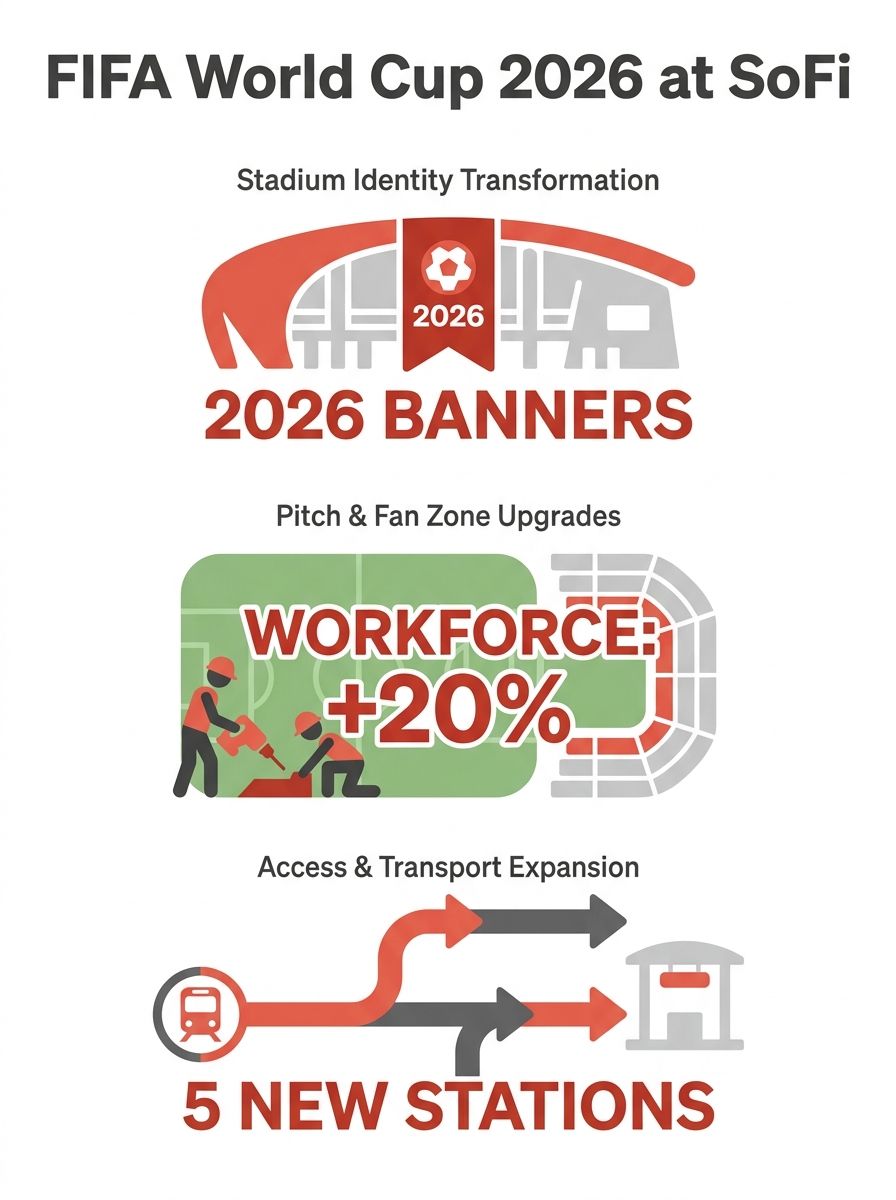
Similar strike threats emerged at Seattle hospitality venues ahead of World Cup matches, with Embassy Suites workers near Lumen Field authorizing a strike that could affect operations when the city expects 750,000 visitors.
Immigration Enforcement Emerges as Central Bargaining Issue
Workers cite uncertainty about ICE agent presence during matches as a primary factor in the strike authorization vote. The Department of Homeland Security announced in recent months that immigration enforcement agents will be deployed near the stadium to target counterfeiters and traffickers, but has not provided detailed operational parameters.
"The main concern, first of all, is the ICE issue being on the grounds," said Yolanda Fierro, a SoFi Stadium worker, in an interview with CBS News. "Myself and my co-workers are a little bit scared of coming to work, because I do have a lot of employees that are here on working visas from different countries."
DHS Secretary Markwayne Mullin stated in May that ICE agents would not conduct mass immigration arrests at matches, but left open the possibility of enforcement actions in host cities and around venues. "Well, ICE always does immigration enforcement. We're always going to do that," Mullin said. "But we're not there solely for that purpose. We're there to do our job."
Unite Here Local 11 is seeking written guarantees about the scope of immigration enforcement operations during World Cup events. Workers say the lack of clarity has created fear among staff members holding work visas from multiple countries.
"If I get snatched up by ICE, who's going to take care of my family?" Fierro said. "What's going to happen to my personal property, such as homes, vehicles, things like that?"
Wage and Job Security Demands Compound Pressure
Beyond immigration concerns, the nearly 2,000 workers are demanding wage increases and job security protections. The union has not publicly disclosed specific wage proposals, but workers say current compensation does not reflect the venue's high-profile status or Los Angeles' cost of living.
SoFi Stadium opened in 2020 as a $5 billion privately financed venue. The facility hosts the NFL's Los Angeles Rams and Chargers, along with major entertainment and sporting events. World Cup matches represent one of the highest-profile event series the stadium will host.
The union's bargaining position carries significant use given the timing: a work stoppage beginning June 12 would affect hospitality operations during a globally televised event expected to draw massive crowds. Los Angeles organizers selected SoFi Stadium partly to showcase the venue's design to an international television audience.
Workers say they are prepared to walk off the job if negotiations fail to produce an agreement by June 12. The strike authorization vote provides union leadership with a mandate to call a work stoppage, though the vote result has not been publicly released.
Negotiations resume June 8, leaving a four-day window to reach an agreement before the tournament opener. Unite Here Local 11 represents hospitality workers at the venue, covering roles in food service, concessions, and guest services.
Policy Implications
The SoFi Stadium labor dispute illustrates how immigration enforcement policy creates secondary pressure points in workplace bargaining, particularly when federal agencies provide ambiguous operational guidance. Workers holding legal work visas report fear of enforcement actions despite DHS statements that mass arrests are not planned, a communication gap that unions are now incorporating into contract demands.
The case also demonstrates union use at high-visibility venues during major events. Strike threats immediately before internationally broadcast competitions create time pressure that can shift bargaining dynamics, a tactical approach that hospitality unions have deployed at other World Cup host venues. Whether this use translates into concrete wage and job security gains depends on the June 8-12 negotiation window.
Federal policy around immigration enforcement at large public events remains unresolved. The DHS position that "ICE always does immigration enforcement" while simultaneously stating agents are "not there solely for that purpose" leaves venue workers and employers without clear operational parameters, a regulatory ambiguity that is now shaping labor negotiations at one of the country's most prominent stadiums.
The Union Edge Staff
Related Articles

SoFi Stadium Workers Authorize Strike Over Pay and ICE Protections Days Before World Cup Opener
Food and beverage workers at SoFi Stadium in Los Angeles authorized a strike by a 96 percent margin on June 6, threatening to walk off the job during the FIFA World Cup over wages and workplace protections against federal immigration enforcement, according to RNZ News. The vote by nearly 2,000 Unite

SoFi Stadium Strike Vote Clears Path for World Cup Opener Disruption
A strike authorization vote at SoFi Stadium positions workers to walk off the job during Friday's World Cup opener in Los Angeles, creating the potential for labor disruption at one of the tournament's highest-profile venues. The vote, reported by LAist on June 8, clears the legal path for a work st

Seattle Hotel Workers Near Lumen Field to Vote on World Cup Strike Authorization
More than 100 Embassy Suites hotel workers near Seattle's Lumen Field will vote Friday, June 5, on authorizing a strike that could disrupt hospitality operations during the FIFA World Cup, when the city expects 750,000 visitors, according to KING 5. The 113 workers, represented by Unite Here Local 8
Also in the paper