
SoFi Stadium Workers Authorize Strike Over Pay and ICE Protections Days Before World Cup Opener
Food and beverage workers at SoFi Stadium in Los Angeles authorized a strike by a 96 percent margin on June 6, threatening to walk off the job during the FIFA World Cup over wages and workplace protections against federal immigration enforcement, according to RNZ News. The vote by nearly 2,000 Unite

SoFi Stadium Workers Authorize Strike Over Pay and ICE Protections Days Before World Cup Opener
Food and beverage workers at SoFi Stadium in Los Angeles authorized a strike by a 96 percent margin on June 6, threatening to walk off the job during the FIFA World Cup over wages and workplace protections against federal immigration enforcement, according to RNZ News. The vote by nearly 2,000 Unite Here Local 11 members came six days before the tournament's June 12 opener at the $5 billion venue, which will host eight World Cup matches.
Unite Here Local 11, representing cooks, dishwashers, bartenders, and suites runners employed by food service operator Legends Global, stated that contract negotiations "have not had significant progress on key economic and workplace safety issues." The union scheduled additional talks for June 9, three days before the first World Cup match on U.S. soil.
Immigration Enforcement Becomes Central Bargaining Demand
The strike authorization centers on an uncommon contract provision: workers demanded the right to immediately walk out if Immigration and Customs Enforcement personnel enter SoFi Stadium during World Cup events and create "a reasonable fear for their safety," according to the union's statement. ICE has conducted workplace raids across Los Angeles and other major cities in recent months, drawing criticism from human rights organizations for enforcement tactics that workers describe as intimidating.
Stadium employees also raised concerns about FIFA's accreditation process, which requires workers to submit personal information to football's governing body. Workers fear that data could be shared with ICE, potentially exposing undocumented employees or those with mixed-status families to detention or deportation. Human rights groups issued a travel advisory in April 2026 warning World Cup visitors of arbitrary detention risks, a backdrop that has heightened worker anxiety about enforcement sweeps at the tournament.
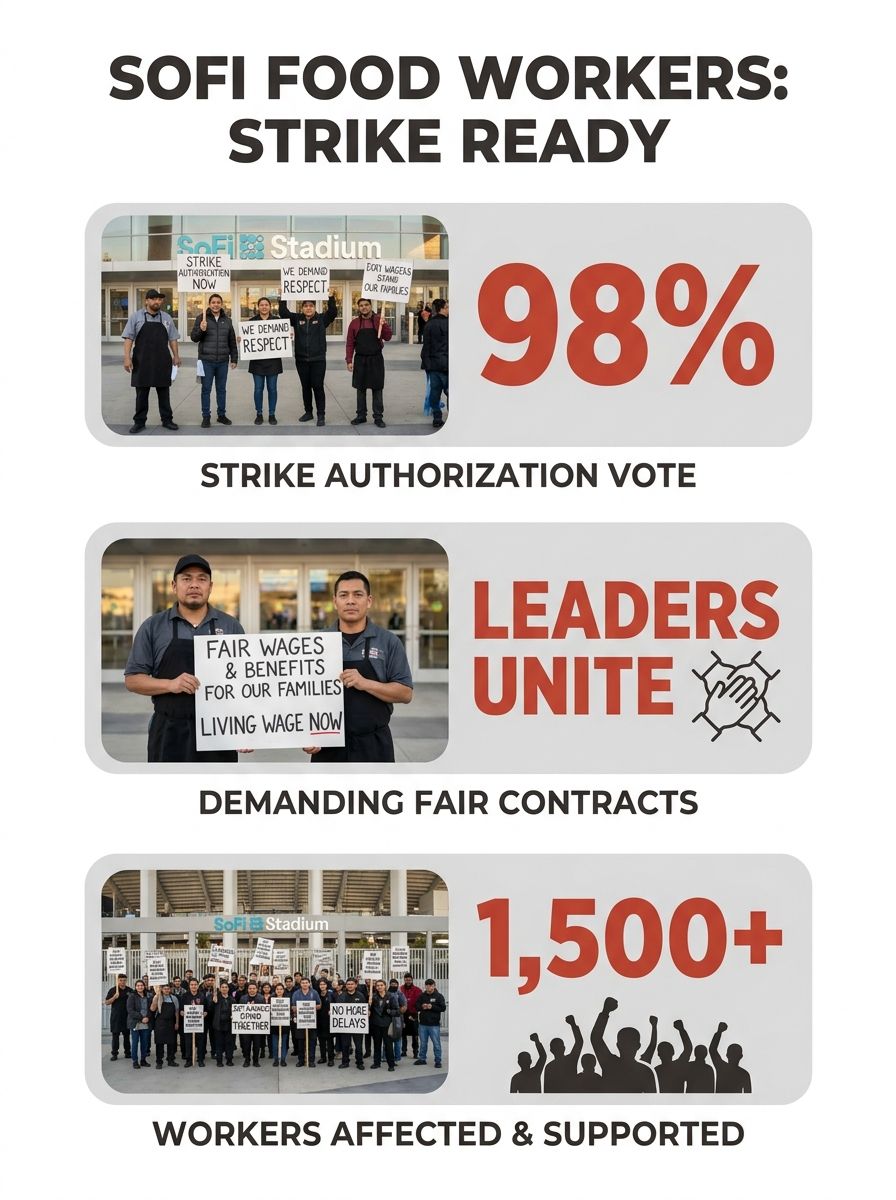
"The FIFA World Cup will generate enormous profits but we are still fighting for basic respect and security," Cesar Zamora, a stadium bartender, said in the union's statement. "We deserve better, and if that means going on strike, I'm ready."
Economic Demands and Strike Use
Unite Here co-president Kurt Petersen framed the strike threat in terms that emphasized workers' use over the tournament's high-end hospitality operation. "If we're forced to strike, those $100,000 FIFA suites will have nothing but bottled water and Doritos," Petersen said, referencing the premium seating packages sold to corporate clients and wealthy fans.
SoFi Stadium, which opened in 2020 at a construction cost exceeding $5 billion, ranks as the world's most expensive sports venue. The facility serves as home to two NFL teams and was designed to host major international events. The World Cup represents the stadium's first global tournament, with eight matches scheduled including high-profile games expected to draw sold-out crowds exceeding 70,000 spectators.
Workers secured strike authorization less than a week before the tournament begins, a timeline that maximizes pressure on Legends Global and FIFA to settle the contract. Similar strike authorizations by Seattle hotel workers near Lumen Field have used World Cup timing to push for improved wages and working conditions at tournament venues across North America.
The union has not publicly disclosed specific wage demands, though Unite Here Local 11 has historically sought prevailing wage standards that match union contracts at comparable Los Angeles venues. Food service workers at SoFi typically earn between $18 and $22 per hour, below the rates at unionized convention centers and sports facilities in the region.
Negotiations Under Tournament Deadline
Legends Global, a hospitality and merchandise company owned by the Dallas Cowboys and New York Yankees ownership groups, operates food and beverage services at SoFi under a contract with the stadium's owners. The company has not publicly commented on the strike authorization or the union's immigration-related demands.
FIFA similarly has not addressed workers' concerns about data sharing or ICE access to tournament venues. The organization pledged in 2025 that the World Cup would be "safe, free and inclusive," but Amnesty International warned in April that the tournament carries "huge human rights risks" given current U.S. immigration enforcement policies.
The June 9 negotiation session will occur three days before kickoff, leaving minimal time for both parties to reach an agreement before the first match. Workers retain the right to strike at any point following the authorization vote, meaning a walkout could occur during the tournament itself if negotiations fail to produce a contract.
Unite Here Local 11 has organized similar strike threats at hotels, airports, and entertainment venues across Southern California, frequently timing authorization votes to coincide with high-profile events that give workers maximum bargaining use. The union's multilingual organizing strategies have proven effective at SoFi and other Los Angeles workplaces where large shares of employees are Spanish-speaking immigrants.
What This Means for Union Members
The SoFi authorization vote demonstrates how unions can integrate civil rights protections into traditional economic bargaining, particularly in workplaces with significant immigrant membership. Demanding contractual limits on ICE access transforms workplace safety from a regulatory question into a collectively bargained right—a strategy that could be replicated at airports, convention centers, and other public venues where workers face immigration enforcement risks.
The 96 percent margin also illustrates the organizing power of linking immediate economic demands (wages, benefits) with broader safety concerns that affect workers' families and communities. For locals organizing in mixed-status workplaces, SoFi's approach offers a template for building majority support around immigration issues that might otherwise divide membership or prove difficult to discuss openly during campaigns.
Tournament timing gives workers unusual use, but it also compresses the bargaining window and raises the stakes of a potential strike. Union members watching this negotiation should note both the strategic advantages of deadline-driven actions and the risks: management may calculate that workers won't actually walk out during a global event, or that replacement workers can staff essential positions if a strike occurs. The June 9 session will test whether the authorization vote alone creates enough pressure to move Legends Global, or whether workers will need to follow through on the strike threat to win their demands.
The Union Edge Staff
Related Articles

SoFi Stadium Hospitality Workers Conclude Strike Vote Days Before World Cup Opener
Contract negotiations at SoFi Stadium face a June 12 deadline as nearly 2,000 hospitality workers concluded strike authorization voting today, threatening to disrupt the FIFA World Cup opener over wages, job security, and Immigration and Customs Enforcement deployment concerns, according to Unite He

SoFi Stadium Strike Vote Clears Path for World Cup Opener Disruption
A strike authorization vote at SoFi Stadium positions workers to walk off the job during Friday's World Cup opener in Los Angeles, creating the potential for labor disruption at one of the tournament's highest-profile venues. The vote, reported by LAist on June 8, clears the legal path for a work st

Seattle Hotel Workers Near Lumen Field to Vote on World Cup Strike Authorization
More than 100 Embassy Suites hotel workers near Seattle's Lumen Field will vote Friday, June 5, on authorizing a strike that could disrupt hospitality operations during the FIFA World Cup, when the city expects 750,000 visitors, according to KING 5. The 113 workers, represented by Unite Here Local 8
Also in the paper