
Brigham and Women's Hospital Refuses Returning Strikers Until Monday, Extending Work Stoppage to Five Days
Brigham and Women's Hospital told approximately 4,000 striking nurses they cannot return to work until Monday morning, extending what was planned as a one-day strike to a five-day lockout, according to NBC Boston. The nurses walked off the job Tuesday and planned to end their strike at 6:59 a.m.

Brigham and Women's Hospital Refuses Returning Strikers Until Monday, Extending Work Stoppage to Five Days
Brigham and Women's Hospital told approximately 4,000 striking nurses they cannot return to work until Monday morning, extending what was planned as a one-day strike to a five-day lockout, according to NBC Boston. The nurses walked off the job Tuesday and planned to end their strike at 6:59 a.m. Thursday, but the hospital hired temporary replacement workers on five-day contracts, preventing the permanent staff from resuming their duties until July 14.
Hospital Cites Temporary Worker Contracts as Reason for Extended Lockout
The Massachusetts Nurses Association had notified Brigham and Women's that its members would end their strike Thursday at 6:59 a.m. and return to work at 7 a.m., but the hospital informed them they would be locked out for four additional days. The hospital hired temporary healthcare workers under contracts requiring a minimum five-day commitment, according to statements from nurses at the picket line Thursday morning.
Kelly Morgan, a nurse with more than 25 years at Brigham and Women's, told NBC Boston the union members would attempt to return to work Thursday but were told the hospital would not allow them back. "I am going to attempt to go back to work, and I know all the nurses that are behind me are going to attempt to come back to work, and we're told the hospital won't let us," Morgan said.
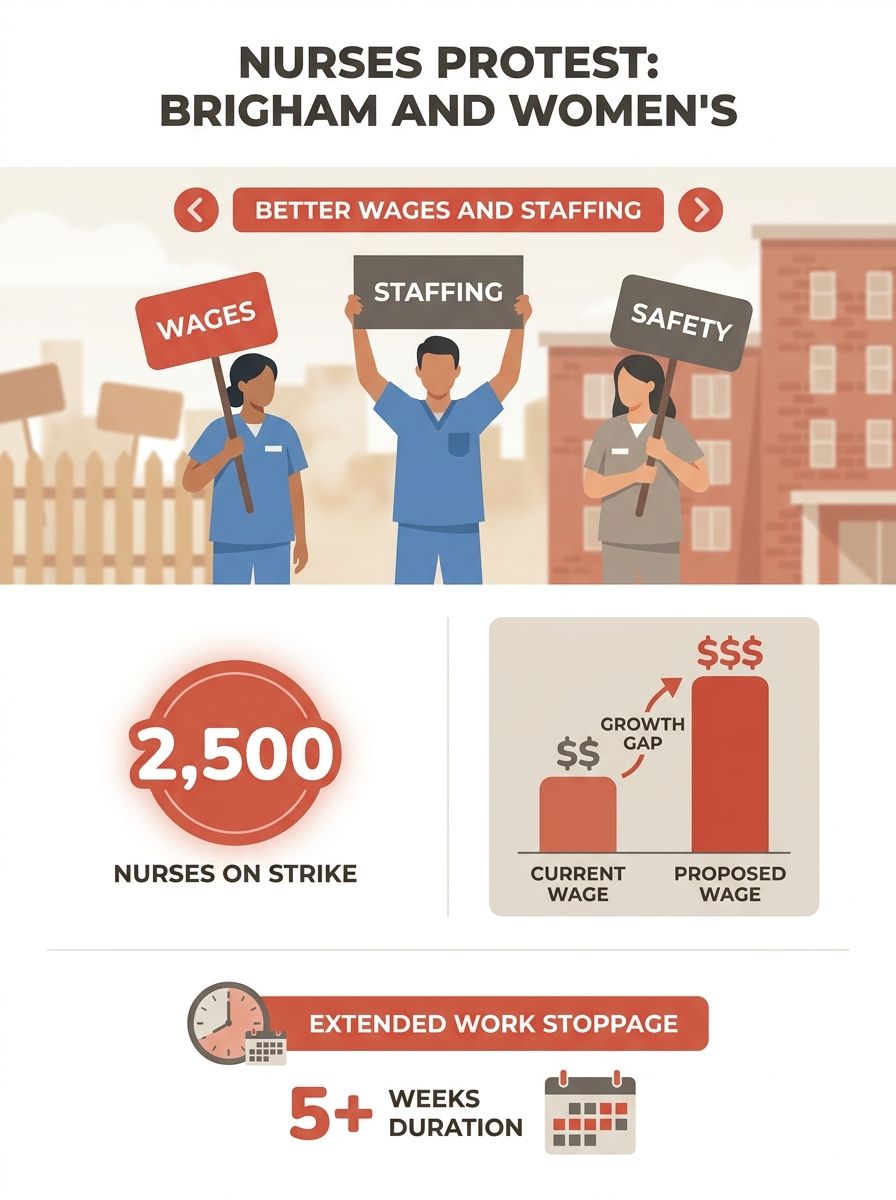
The Massachusetts nurses launched what they called the largest health care strike in state history over stalled contract negotiations focused on wage increases, improved benefits, and staffing ratios. Morgan said the union has not had "meaningful, productive and good faith bargaining with the hospital for many sessions."
Patients Report Care Disruptions with Temporary Staff
Family members of patients currently hospitalized at Brigham and Women's reported challenges with the temporary nursing staff Thursday. One man whose father is in the Intensive Care Unit following a double lung transplant told NBC Boston that temporary nurses were unfamiliar with basic hospital procedures. "I asked to page the transplant attending and they aren't familiar with how to do that. It's their first day there, which is understandable," the family member said.
The hospital posted a notice on its website acknowledging the strike but stating it would "continue to ensure high-quality, safe patient care for the five-day work stoppage." The notice warned of heavier traffic near the main Brigham campus due to picketing activity.
Morgan framed the lockout as a financial decision that compromises patient care. "You have hundreds of thousands if not millions of years of experience out here walking the street and you're willing to risk that for profits over patients," she said Thursday morning.
Governor Intervenes as Lockout Extends Strike Duration
Massachusetts Governor Maura Healey met with negotiators from Mass General Brigham and the Massachusetts Nurses Association on Wednesday, one day before the planned end of the strike. The timing of the meeting suggests state officials recognized the potential for the dispute to extend beyond the nurses' intended one-day action.
The nurses' demands center on three main issues: across-the-board pay increases sufficient to afford living in the Boston area, improved staffing ratios, and better working conditions. "We want to be safe in our own working environment. We want better staffing ratios. We want to not have to do more with less," Morgan told NBC Boston. "We want to be able to afford to live in the city that we provide care to and we can't do that right now."
Morgan emphasized that none of the approximately 4,000 healthcare workers wanted to strike but felt they had no alternative given the lack of progress in contract negotiations. The extended lockout means nurses will be walking picket lines 24 hours a day through Monday morning rather than returning to patient care Thursday as planned.
Mass General Brigham, the hospital's parent organization, has not publicly commented on why it chose to sign five-day contracts with temporary workers rather than shorter-term arrangements that would have allowed permanent staff to return after the planned one-day strike.
The Takeaway
The Brigham and Women's lockout raises questions about hospital management strategies during labor disputes. By signing five-day contracts with temporary workers for what nurses intended as a one-day strike, the hospital effectively transformed a 24-hour work stoppage into a 120-hour lockout. This tactic, preventing workers from returning when they're ready, can be interpreted as retaliation or as a practical necessity depending on the constraints temporary staffing agencies impose.
For workers in healthcare and other essential industries, the case illustrates how replacement worker contracts can extend labor disputes beyond what unions plan. When employers hire temporary staff, the terms of those contracts can dictate when permanent employees are allowed back, regardless of when the union wants to end a strike.
The immediate impact falls on patients and families navigating critical care situations with unfamiliar temporary staff, while nurses with decades of institutional knowledge stand outside unable to provide the care they say motivated the strike in the first place. Whether the lockout strengthens the hospital's bargaining position or galvanizes public support for the nurses' demands will likely depend on how patient care holds up through Monday morning.
The Union Edge Staff
Related Articles

Massachusetts Nurses Launch Largest Health Care Strike in State History Over Stalled Wage Talks
More than 4,000 nurses at Brigham and Women's Hospital will walk off the job on July 8 in what the Massachusetts Nurses Association calls the largest health care worker strike in state history, according to NBC Boston. The strike follows months of stalled contract negotiations over cost-of-living in

UMass University Campus Nurses Vote 99 Percent to Authorize 14-Day Strike Over Staffing and Safety Concerns
Registered nurses at UMass Memorial Medical Center's University Campus voted 99 percent in favor of authorizing a 14-day strike on July 1, escalating a contract dispute over staffing ratios, workplace safety, and retention issues at Massachusetts' only academic Level 1 Trauma Center, according to th

Hospital Workers Strike Over Workplace Violence as Injury Rates Hit Seven Times National Average
Hundreds of hospital workers at Henry Ford Genesys Hospital in Michigan have been on strike since September 1, 2025, with workplace violence and chronic understaffing at the center of their demands, according to NPR.
Also in the paper