
UMass University Campus Nurses Vote 99 Percent to Authorize 14-Day Strike Over Staffing and Safety Concerns
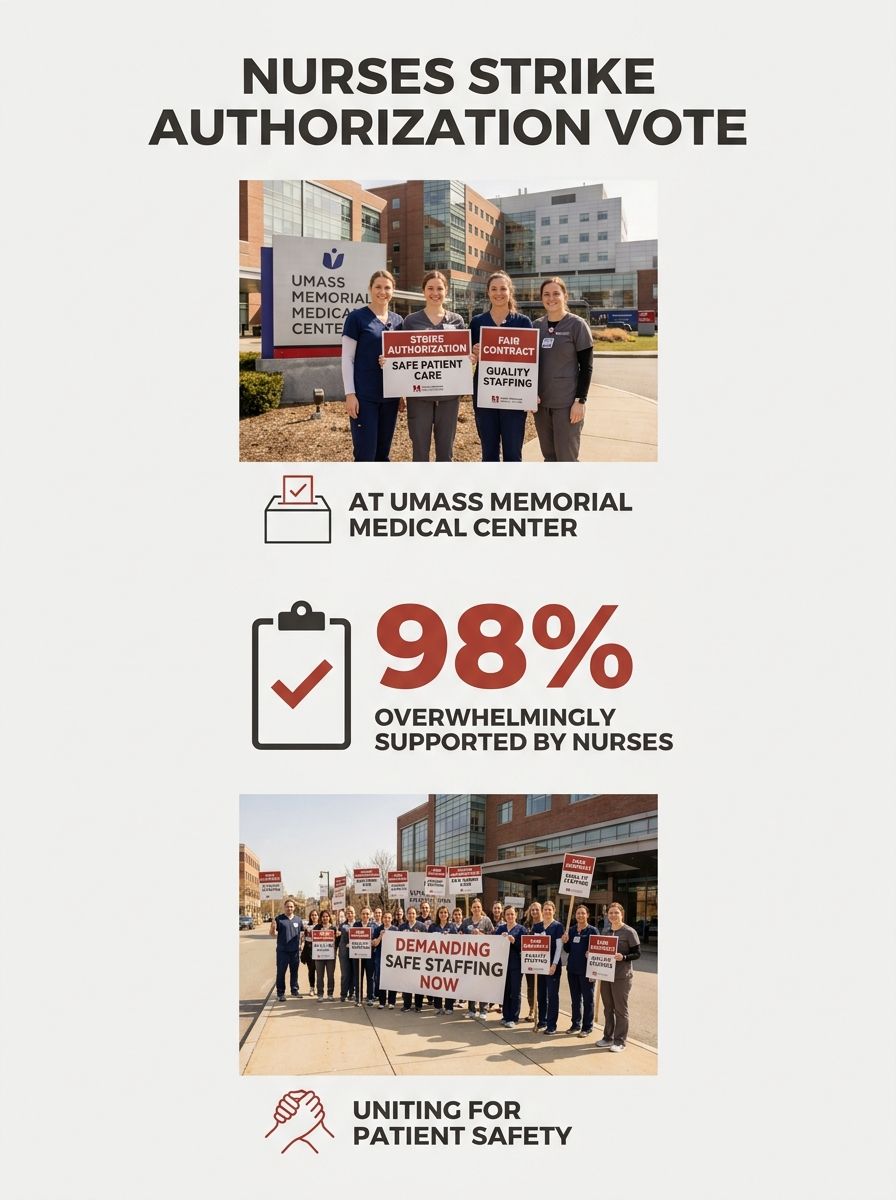
Registered nurses at UMass Memorial Medical Center's University Campus voted 99 percent in favor of authorizing a 14-day strike on July 1, escalating a contract dispute over staffing ratios, workplace safety, and retention issues at Massachusetts' only academic Level 1 Trauma Center, according to th

UMass University Campus Nurses Vote 99 Percent to Authorize 14-Day Strike Over Staffing and Safety Concerns
Registered nurses at UMass Memorial Medical Center's University Campus voted 99 percent in favor of authorizing a 14-day strike on July 1, escalating a contract dispute over staffing ratios, workplace safety, and retention issues at Massachusetts' only academic Level 1 Trauma Center, according to the Massachusetts Nurses Association. The vote took place at the MNA's Region 2 office in Worcester following months of stalled negotiations with hospital management.
Strike Authorization Follows Months of Failed Negotiations
The authorization does not trigger an immediate walkout. The vote grants the nurses' bargaining committee authority to call a 14-day strike if negotiations fail to produce an agreement addressing chronic understaffing and safety concerns. Margaret McLoughlin, RN and co-chair of the MNA bargaining unit at the University Campus, said in the union's statement that nurses are prepared to take action despite reluctance to strike. Nurses cited mounting pressure from persistent staffing shortages and difficulty retaining experienced caregivers at the facility, which serves some of the sickiest patients in Central Massachusetts.
Hospital management has rejected multiple proposals from nurses, including limits on the number of patients assigned to each nurse and contract language ensuring charge nurses remain available to assist floor staff rather than carrying their own patient assignments. Most MNA-represented hospitals include such charge-nurse protections in their contracts, according to the union's statement.
Post-Pandemic Acuity Increase Strains Existing Staff
Massachusetts Department of Public Health data shows 22.4 percent of emergency room patients statewide required hospitalization post-pandemic, compared to 19.6 percent before COVID-19. The shift means a larger proportion of patients entering emergency departments are severely ill and require more intensive nursing care. Hospital length-of-stay data also shows patients are remaining hospitalized longer, compounding staffing demands.
Ellen Smith, RN and co-chair of the bargaining unit, said in the statement that the emergency department "now feels like a MASH unit nearly every day" as nurses cope with increased patient acuity without corresponding staffing increases. Hospital management has not provided resources to account for the documented acuity changes, the union stated.
Key Contract Demands Remain Unresolved
Nurses are seeking competitive wage increases to recruit and retain staff, patient assignment limits to prevent unsafe nurse-to-patient ratios, and guaranteed charge nurse availability on each unit. Charge nurses function as coordinators who direct patient flow, assign nurses to patients based on acuity, and provide backup assistance during patient crises. The hospital's refusal to guarantee charge nurses start shifts without their own patient assignments will force nurses to accept unsafe assignments, according to the union's analysis.
The University Campus operates as the region's only academic medical center and Level 1 Trauma Center. The facility's role serving medically complex and critically ill patients makes adequate staffing particularly urgent, nurses stated in their messaging. Inadequate conditions have driven experienced nurses to leave, creating a cycle of turnover that further strains remaining staff.
Timeline of Escalating Labor Action
The July 1 authorization vote followed escalating pressure tactics by nurses throughout 2026. On March 26, University Campus nurses joined colleagues from other UMass Memorial facilities in informational pickets highlighting staffing and safety concerns. More than 80 percent of the bargaining unit signed a petition delivered to UMass Memorial Health President and CEO Eric Dickson pledging to "do whatever it takes to win a fair contract that improves workplace safety, protects patients, and recruits and retains experienced staff."
The strike authorization represents the most aggressive step nurses have taken in the dispute. If negotiations continue to stall, the bargaining committee can call a 14-day strike with advance notice to the hospital. Massachusetts law requires healthcare workers to provide notice before striking to allow facilities to arrange patient care coverage.
Workplace safety concerns have intensified across healthcare facilities post-pandemic, with nurses nationwide reporting increased patient violence, inadequate staffing protections, and moral injury from being unable to provide adequate care due to resource constraints.
What This Means for Union Members
The near-unanimous strike authorization at a major academic medical center demonstrates healthcare workers' willingness to use economic use when employers refuse to address documented safety concerns. The 99 percent vote total reflects broad unity within the bargaining unit and strengthens the nurses' negotiating position heading into future sessions with management.
Healthcare strikes have historically achieved significant contract improvements when supported by overwhelming membership votes and clear messaging linking demands to patient safety rather than solely compensation. The UMass nurses' emphasis on staffing ratios, charge nurse availability, and data documenting increased patient acuity provides concrete justification for their demands that resonates with public support.
Union members in other industries can study how the UMass nurses built toward strike authorization through escalating tactics—starting with informational pickets in March, then a supermajority petition delivery to executive leadership, culminating in the authorization vote. This graduated approach demonstrates commitment while giving management multiple opportunities to settle before a strike becomes necessary. The focus on quantifiable safety metrics (the 22.4 percent hospitalization rate versus 19.6 percent pre-pandemic) provides objective evidence supporting nurses' claims that working conditions have materially deteriorated beyond pre-pandemic norms.
The Union Edge Staff
Related Articles

Massachusetts Nurses Launch Largest Health Care Strike in State History Over Stalled Wage Talks
More than 4,000 nurses at Brigham and Women's Hospital will walk off the job on July 8 in what the Massachusetts Nurses Association calls the largest health care worker strike in state history, according to NBC Boston. The strike follows months of stalled contract negotiations over cost-of-living in

Brigham and Women's Hospital Refuses Returning Strikers Until Monday, Extending Work Stoppage to Five Days
Brigham and Women's Hospital told approximately 4,000 striking nurses they cannot return to work until Monday morning, extending what was planned as a one-day strike to a five-day lockout, according to NBC Boston. The nurses walked off the job Tuesday and planned to end their strike at 6:59 a.m.

Hospital Workers Strike Over Workplace Violence as Injury Rates Hit Seven Times National Average
Hundreds of hospital workers at Henry Ford Genesys Hospital in Michigan have been on strike since September 1, 2025, with workplace violence and chronic understaffing at the center of their demands, according to NPR.
Also in the paper