
CEOs at Low-Wage Corporations Earned 614 Times Median Worker Pay in 2025, Analysis Finds
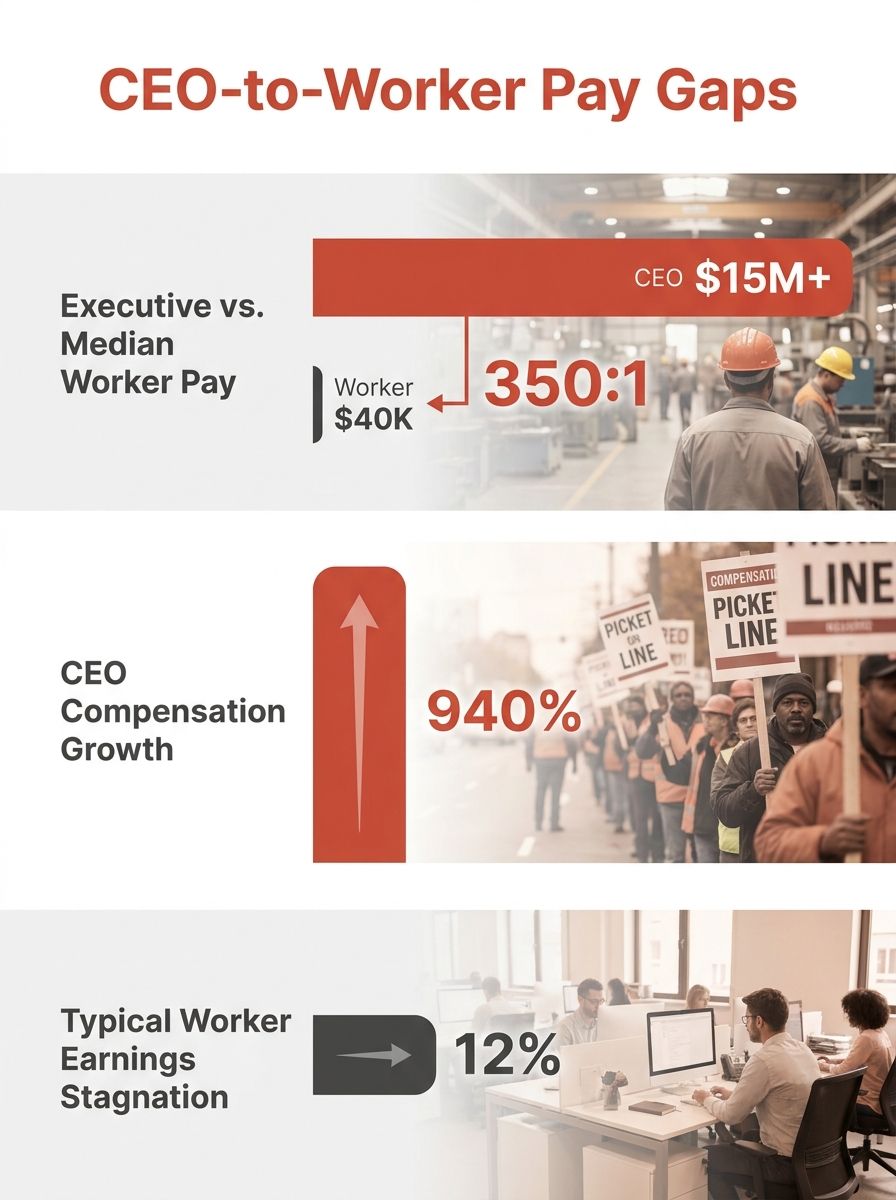
Chief executives at the 100 S&P 500 corporations with the lowest median worker pay earned 614 times more than their typical employee in 2025, according to an analysis published August 27 by the Institute for Policy Studies. The average CEO compensation among these firms reached $17.

CEOs at Low-Wage Corporations Earned 614 Times Median Worker Pay in 2025, Analysis Finds
Chief executives at the 100 S&P 500 corporations with the lowest median worker pay earned 614 times more than their typical employee in 2025, according to an analysis published August 27 by the Institute for Policy Studies. The average CEO compensation among these firms reached $17.5 million, while median worker pay stood at $36,571.
The report analyzed compensation data from corporations that combine large scale with low wages, revealing that executive pay growth significantly outpaced both worker earnings and inflation over a six-year period.
Pay Gap Widened Despite Worker Raises
CEO compensation at the low-wage 100 firms increased 41.4% from 2019 to 2025 without adjustment for inflation, according to the Institute for Policy Studies' executive excess report. Median worker pay at the same companies rose 20.7% during the identical period, while inflation climbed 25.9%, meaning workers lost purchasing power even as their nominal wages increased.
The CEO-to-worker pay ratio at these firms grew 8.4% between 2019 and 2025. The wealth of at least 36 billionaires is connected to the 100 corporations analyzed, including Walmart's eight Walton family members, Amazon's Jeff Bezos and MacKenzie Scott, and Carvana co-founders Ernie Garcia II and Ernie Garcia III.
"This is really a big problem for society, that we have such extremes," said Sarah Anderson, lead author of the report and director of the Global Economy Project at the Institute for Policy Studies. "To me, it seems like these CEOs are just living on a remote economic planet from the one that their employees are living on."
Stock Buybacks Surged as Worker Pay Stagnated
The low-wage 100 corporations spent $108.6 billion on stock buybacks in 2025, up from $105 billion in 2024, according to the report. Across the 2019-2025 period, these firms directed $718 billion toward share repurchases, which primarily benefit executives and shareholders.
Walmart led all firms in buyback spending at $8.1 billion in 2025, an amount equivalent to a $3,851 bonus for each of the company's 2.1 million workers. Doug McMillon, who stepped down as Walmart's CEO in January 2026, received $29.2 million in compensation in 2025, representing a 958-to-1 ratio compared to the median Walmart worker pay of $30,520.
The 100 corporations analyzed employ a combined force of 1,282 registered federal lobbyists, the report noted. Many of these companies declined to denounce aggressive immigration enforcement actions directed at their workforce or conducted on their property.
Workers Face Benefit Cuts Amid Executive Windfalls
Low-wage workers at these corporations face simultaneous pressures from stagnant purchasing power and reductions to public assistance programs. "Low-wage workers are now facing the biggest cuts to Medicaid and SNAP in history," Anderson said. "Many of the employees at these companies have to rely on those programs, and then so many of them have also been terrorized and detained by ICE agents."
The report recommends several policy interventions to address executive pay excess, including a tax increase on corporations that pay CEOs more than 50 times their median employee wage, higher taxes on stock buybacks, and contract restrictions that would bar federal contractors from engaging in share repurchases.
The Institute for Policy Studies analysis examined S&P 500 companies' mandatory pay-ratio disclosures, which federal securities law has required since 2018. Walmart did not respond to requests for comment on the findings.
Reading Between the Lines
The 614-to-1 pay ratio documented at low-wage corporations provides quantified evidence for labor organizers challenging corporate claims of resource constraints during contract negotiations. When employers cite budget limits to resist wage demands, union teams can reference public SEC filings showing the same corporations directing billions toward stock buybacks and executive compensation packages that dwarf entire worker payrolls.
The report's policy recommendations—particularly the graduated corporate tax tied to pay ratios—represent actionable legislative targets for worker advocacy coalitions. States including California and Illinois already levy surcharges on corporations with extreme CEO-to-worker ratios; the IPS framework extends that model to federal tax policy and government contracting standards.
The timing of the analysis, released amid simultaneous cuts to Medicaid and SNAP programs that low-wage workers disproportionately access, sharpens the contrast between corporate cash allocation priorities and worker economic security. Organizations representing service and retail employees can deploy these figures to counter employer narratives about competitive pressures, pointing instead to discretionary spending choices that favor shareholders over the workforce.
The Union Edge Staff
Related Articles

U.S. Employers Spent $1.7 Billion Fighting Unions in 2025 as Membership Hits 16-Year High
U.S. employers spent an estimated $1.7 billion in 2025 hiring consultants and attorneys to oppose union organizing efforts, according to a study released Tuesday by union-busting watchdog LaborLab and the Economic Policy Institute, even as union membership climbed to 16.5 million workers—the highest

Wage Benchmarking as an Organizing Tool: How to Document Pay Inequality Before Filing for Union Recognition
The Bureau of Labor Statistics publishes wage data broken down by occupation, metropolitan area, and industry across roughly 800 occupational profiles updated annually, all free to download.

US Union Membership Rose by 411,000 Workers in 2025, With Most Gains in States Protecting Collective Bargaining
Union membership in the United States increased by 411,000 workers in 2025, the largest single-year gain since 2008, with nearly three-quarters of new members concentrated in states that legally protect collective bargaining rights, according to a report released September 7, 2026, by the Illinois E
Also in the paper