
When Corporate Safety Policies Fail Workers: The Gap Between What Companies Promise and What They Deliver
"They had us watch a two-hour safety video on our first day. Real professional, real polished. Then they put us on the floor with machines that had no guards, no lockout procedures, and a supervisor who told us to 'just be careful.

When Corporate Safety Policies Fail Workers: The Gap Between What Companies Promise and What They Deliver
"They had us watch a two-hour safety video on our first day. Real professional, real polished. Then they put us on the floor with machines that had no guards, no lockout procedures, and a supervisor who told us to 'just be careful.'" That's Maria, a former packaging plant worker in Ohio, describing the exact moment she realized her employer's safety program existed on paper and nowhere else. She broke two fingers eight weeks into the job.
Maria's story isn't unusual. It's the norm. And the distance between the glossy safety manuals companies produce and the conditions workers actually face on the shop floor, on the job site, and in the warehouse represents one of the most dangerous lies in American labor.
The Numbers Behind the Broken Promises
In 2022, 5,486 workers were killed on the job in the United States. That's roughly one death every 96 minutes. The job fatality rate climbed to 3.7 per 100,000 workers, and an estimated 120,000 additional deaths were caused by occupational diseases that go largely untracked because the country still lacks a national occupational disease surveillance system.
But here's the number that should make you angry: while employers reported nearly 3.5 million workplace injuries and illnesses, the actual figure may be between 5.6 million and 8.4 million annually in private industry alone. The underreporting is staggering, and it's not accidental. Companies have every financial incentive to suppress injury numbers, and workers have every reason to fear retaliation if they report.
Experts warn that a growing gap between perception and real protection is one of the most concerning trends in occupational health. Workers may feel safe. They may trust the policies on the wall. But many can't identify the safety systems supposedly protecting them, and they don't know how to report hazards when they see them.
Where Corporate Safety Policies Break Down
Every major employer has a safety policy. Most have thick binders full of them. The question isn't whether the policy exists. The question is whether anyone enforces it.
The PPE Problem
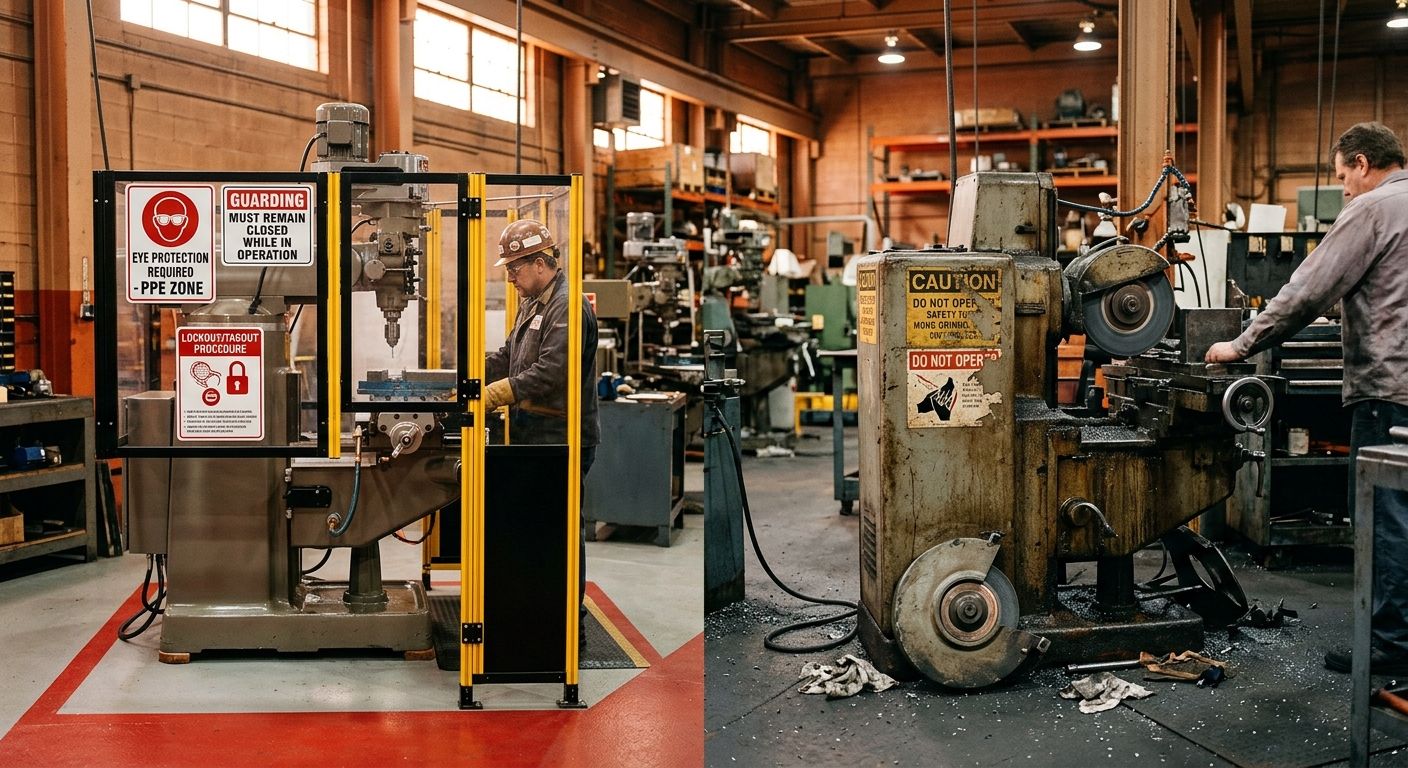
One of OSHA's most frequently cited violations involves personal protective equipment. Companies issue hard hats, safety glasses, and gloves during orientation, then never check whether workers actually have access to properly fitting, well-maintained equipment on a daily basis. According to analysis from the Industrial Safety & Hygiene News, violations often stem from missing or improper PPE and inconsistent policy enforcement. PPE is supposed to be part of a hazard control strategy. Instead, it's treated as a box to check during onboarding and forget about afterward.
Machine Guarding Failures
The lack of physical guards on machinery, failure to maintain or replace worn guarding equipment, and outdated machine safety protocols represent some of the most common OSHA violations employers face. These aren't obscure technical failures. A missing machine guard is visible. A broken safety latch is obvious. When a company's written policy requires machine guarding but the production floor tells a different story, that's not an oversight. That's a choice.
We've covered the specific dangers workers face around heavy equipment and why OSHA's updated machinery standards matter for your safety. The pattern is consistent: companies write strong policies, then budget for production speed instead of safety compliance.
Lockout/Tagout Neglect
LOTO procedures exist to make sure machines are properly shut down before maintenance work begins. When workers fail to follow LOTO protocols, they risk electrocution, amputation, and death. But here's what corporate safety audits rarely acknowledge: workers skip LOTO because they've been pressured to work faster, because training was inadequate, or because the equipment itself wasn't designed for easy lockout. The safety compliance failures almost always trace back to management decisions, not worker negligence.
Why Enforcement Is a Joke
Federal law gives every worker the right to a safe workplace. OSHA's own website states plainly: your employer must keep the workplace free from known safety and health hazards. You can speak up or report safety concerns without fear of retaliation.
That's the law. Here's the reality.
OSHA has roughly 1,850 inspectors responsible for approximately 8 million worksites across the country. Do the math. At current staffing and funding levels, it would take OSHA decades to inspect every workplace in America even once. The agency has been flat-funded for years, failing to keep pace with inflation, workforce growth, or emerging hazards. The promise of the OSH Act, as researchers at the National Institutes of Health have documented, was largely unfulfilled because of budget restrictions, judicial rulings, executive orders, and strong opposition from the business community.
And the penalties? Even when OSHA catches a violation, the consequences are underwhelming. Serious violations carry a maximum penalty, but OSHA frequently reduces fines by up to 70% based on the employer's "good faith" efforts, business size, and history. A company can kill a worker through negligent safety practices and face a fine smaller than what it spent on its last corporate retreat.
Repeat violations within five years can reach up to $165,514. That sounds steep until you realize that OSHA cited three construction companies and 14 subcontractors for 371 safety violations in a single enforcement action, with the largest penalty being $8.3 million to O&G Industries. That kind of enforcement exists, but it's the exception. Most employers will never see an inspector, let alone face meaningful accountability for workplace safety accountability failures.
The Racial Dimension of Worker Protection Gaps
These worker protection gaps don't affect everyone equally, and pretending otherwise is dishonest.
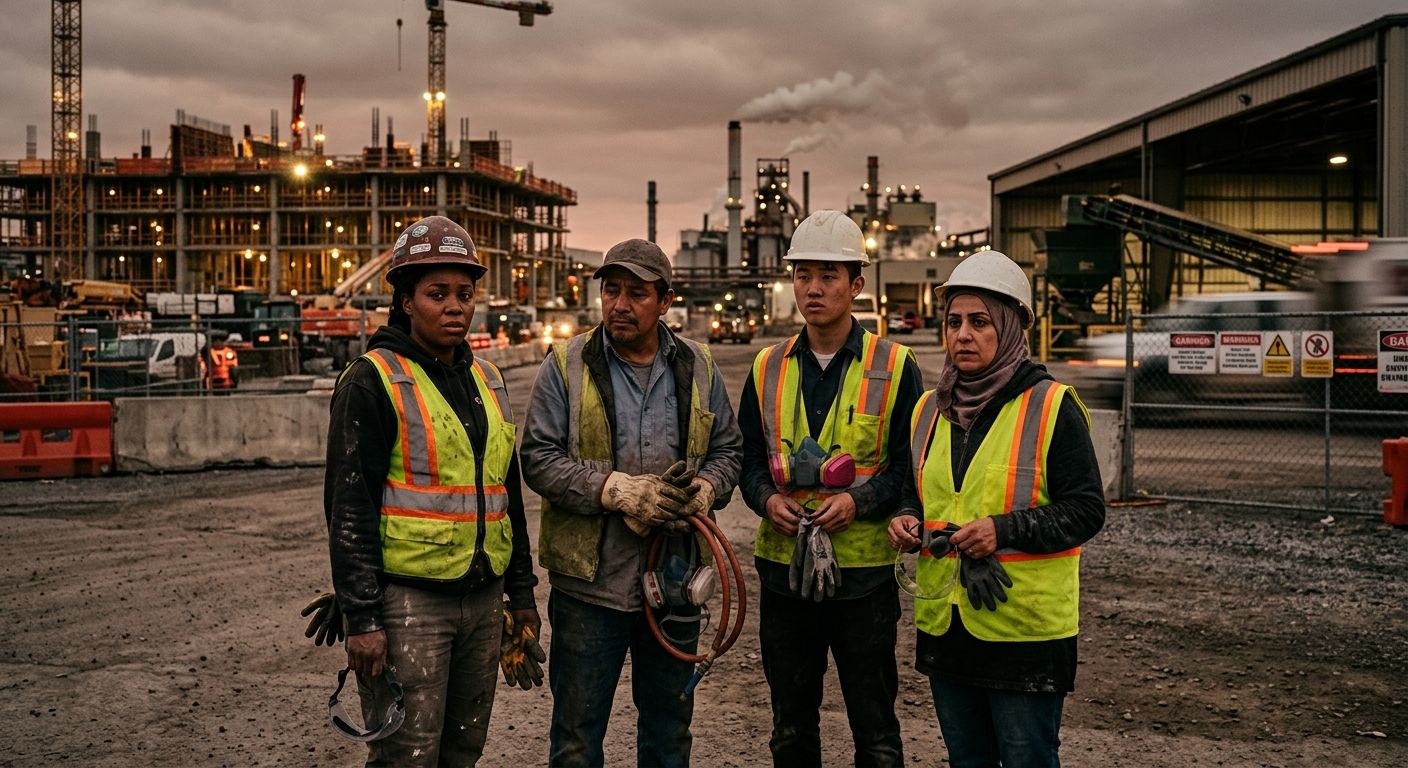
In 2022, Black workers experienced a fatality rate of 4.2 per 100,000, the highest level in nearly 15 years, with 734 deaths. Latino workers faced an even higher rate of 4.6 per 100,000, a number that has been climbing steadily. Industries with the highest fatality rates include agriculture, forestry, and fishing at 18.6 per 100,000, mining at 16.6, and transportation at 14.1.
These are industries where immigrant workers, workers of color, and workers with limited English proficiency are disproportionately represented. When corporate safety training is only available in English, when reporting systems require navigating bureaucratic processes that assume cultural familiarity with American workplace norms, when undocumented workers fear that filing a complaint means deportation, the safety policy becomes meaningless. Understanding how to adapt organizing approaches to reach these workers, as we've explored in our coverage of why standard union tactics fail without cultural and legal adaptation, is critical to closing these gaps.
The corporate safety policies enforcement problem isn't just about weak regulations. It's about who gets protected and who gets sacrificed.
What Companies Do Instead of Keeping You Safe
Let's talk about the corporate playbook when things go wrong, because it's remarkably consistent across industries.
Blame the Worker
The first move is always individual accountability. The worker wasn't wearing their PPE. The worker didn't follow procedure. The worker made a mistake. Root cause analysis, when done honestly, almost always reveals systemic problems: equipment failures, insufficient training, production pressure, or policy gaps. But honest root cause analysis threatens management, so companies default to blaming the person at the bottom of the hierarchy.
Paper Over the Problem
After an incident, companies update their written policies. They add another page to the manual. They require workers to sign an acknowledgment form confirming they've read the new procedure. None of this changes conditions on the floor. It simply creates a paper trail the company can point to in court.
Suppress Reporting
Some companies create cultures where reporting injuries is socially punished. "Safety bonuses" that reward teams for going injury-free sound positive, but they incentivize workers to hide injuries rather than report them. When your whole crew loses a bonus because you filed a report about your back injury, you learn quickly to keep quiet.
What Actually Works: The Union Difference
Here's what corporate safety consultants don't want to admit: union workplaces are safer. Period.
Unionized workers have contractual rights to refuse unsafe work. They have shop stewards who can escalate safety concerns without fear of individual retaliation. They have negotiated grievance procedures that force management to respond to hazards in writing, on a timeline, with consequences for inaction. Research linking OSHA injury data with establishment-specific information has shown that union status is a significant factor in safety outcomes, alongside management structure, overtime levels, and corporate financial health.
The collective voice matters. A single worker telling a supervisor about a broken guard rail gets ignored. Fifty workers filing a group safety grievance through their union gets action.
This is why the organizing work matters so much. Whether you're building power through placing informed workers inside non-union shops or running a full organizing campaign, safety is one of the most effective issues for building solidarity. Everyone wants to go home in one piece.
Five Things You Can Do Right Now
If you're reading this and recognizing your own workplace, here's what we recommend:
Document everything. Every hazard you see, every broken guard, every missing piece of PPE, every time a supervisor tells you to skip a safety step. Dates, times, names, photos if you can get them safely. This documentation becomes critical if you file an OSHA complaint or pursue a grievance.
Know your rights under the OSH Act. You have the legal right to request an OSHA inspection. You have the right to refuse work that presents an imminent danger of death or serious physical harm. You have the right to see your employer's injury and illness records. These aren't suggestions. They're law.
File OSHA complaints strategically. You can file complaints online, by phone, or by mail. Complaints from current employees, especially written and signed complaints, are more likely to trigger an inspection. You can also file anonymously, though signed complaints carry more weight with investigators.
Talk to your coworkers. If you're seeing safety problems, your coworkers are too. Start conversations. Build a list of shared concerns. Safety issues affect everyone, and collective action gets results that individual complaints can't. If you're starting from scratch, our field guide to union organizing campaigns walks through how to turn workplace frustration into organized power.
Contact your union or a local organizing body. If you're already in a union, use your safety committee and grievance process. Push your steward. Demand inspections. If you're not in a union, reach out to your local AFL-CIO council, a worker center, or a national union in your industry. They can provide guidance, legal support, and the collective muscle that individual workers lack.
The Policy Won't Save You. Organization Will.
Corporate safety policies exist primarily to protect companies from liability. They're written by lawyers, reviewed by risk managers, and designed to shift responsibility onto workers. When a company can point to its 200-page safety manual and say "we told them the rules," the policy has served its real purpose.
Real protection comes from power. The power to shut down a line when it's dangerous. The power to demand an inspection and get one. The power to negotiate enforceable safety language into a contract. The power to make workplace safety accountability more than a slogan on a poster in the break room.
Maria, the packaging worker from Ohio, eventually got her fingers treated, lost three weeks of wages, and was quietly pushed out of her job six months later. She now volunteers with a worker center helping other injured workers navigate their rights. She's part of a growing movement of people who learned the hard way that safety policies without enforcement, without worker power, and without real consequences for employers are worth less than the paper they're printed on.
If your workplace has a safety policy that looks good on paper but feels dangerous in practice, you're not imagining things. Trust what you see. Talk to the people next to you. And start building the power to make the policy real.
That's not optional. It's survival.
The Union Edge Staff
Also in the paper