
Qantas Ground Workers to Strike Over Pay and Safety as Airline Faces Labor Crisis
Approximately 600 Qantas ground workers will strike for 24 hours beginning September 23 across multiple Australian cities, demanding improved pay, job security, and safety standards following the airline's 2020 illegal termination of 1,800 workers, according to Travel Radar.
Qantas Ground Workers to Strike Over Pay and Safety as Airline Faces Labor Crisis
Approximately 600 Qantas ground workers will strike for 24 hours beginning September 23 across multiple Australian cities, demanding improved pay, job security, and safety standards following the airline's 2020 illegal termination of 1,800 workers, according to Travel Radar.
The Transport Workers' Union, which represents the striking employees at Qantas Ground Services and Australian Air Express, announced the industrial action will begin Wednesday, September 23 in Victoria and continue Thursday, September 24 in the rest of Australia. The workers primarily handle Qantas Freight and QantasLink services at Sydney Airport and other locations.
Strike Rooted in Multiple Enterprise Agreements
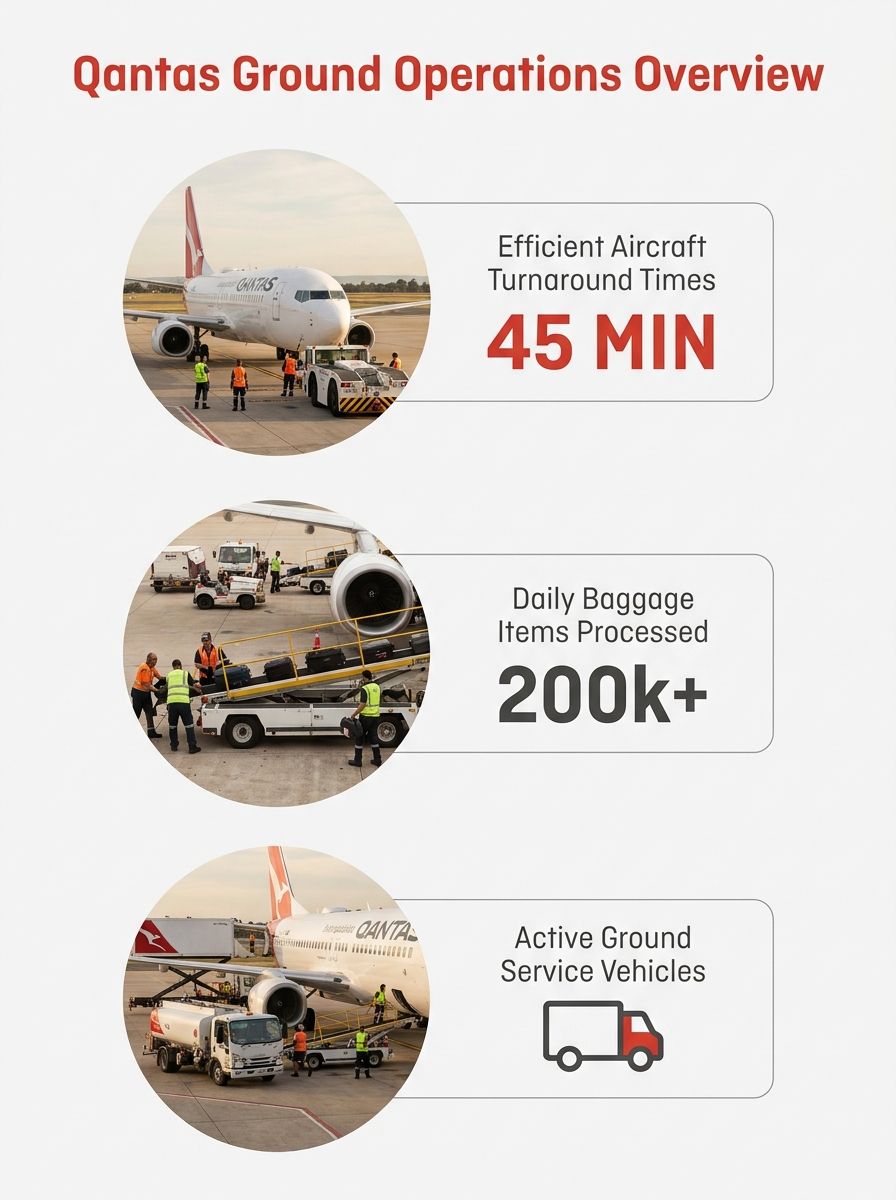
The Transport Workers' Union identified Qantas' use of subsidiary companies and fragmented enterprise agreements as the core issue preventing ground workers from achieving industry-standard pay and job security. The airline currently operates under multiple enterprise agreements for approximately 700 ground staff and freight handlers, a structure the union argues should be replaced with a single unified agreement.
"Qantas will tell you that it has changed, but workers and passengers know better: this is an industry in crisis," said Michael Kaine, the Transport Workers' Union National Secretary. He cited near-collisions in Sydney, chronic understaffing, and workplace fatalities as evidence of systemic problems, adding that the action follows "just over a year after a Qantas Freight worker was tragically killed on Father's Day."
Kaine described the situation as "corporate greed on steroids," pointing to what the union characterizes as a revolving door of casual, insecure work that has led to safety failures.
Airline History of Labor Violations
The strike occurs against a backdrop of significant legal and safety controversies for the Australian carrier. In 2020, Qantas illegally terminated more than 1,800 ground workers during the COVID-19 pandemic and replaced them with outsourced staff, claiming financial necessity. The Transport Workers' Union successfully challenged the terminations, and in 2025 an Australian federal judge imposed a AU$90 million fine on Qantas—the largest penalty ever issued to an Australian company under the Fair Work Act.
A ground worker's death at Sydney Airport in September 2025 further intensified the union's concerns. The Transport Workers' Union alleged that Qantas had received multiple complaints about inadequate safety measures before the fatal incident and accused the airline of outsourcing workers who lacked proper training and safety briefings.
Qantas responded to the strike announcement by confirming it has contingency plans to minimize passenger disruption and stating that negotiations with the Transport Workers' Union remain ongoing through the Fair Work Commission. "Our focus is on an agreement that addresses what employees have told us matters most, including pay and more full-time opportunities," a Qantas spokesperson told Australian Aviation. The airline committed to "annual pay rises for our people" in any final agreement.
Policy Implications
The Qantas strike exemplifies how airline outsourcing models continue to fragment labor protections and safety standards across the aviation industry. When employers split workers across multiple subsidiary agreements, union negotiators face compounding barriers: each enterprise agreement must be bargained separately, wages and conditions diverge across worker classifications performing identical functions, and systemic safety concerns become harder to address through collective action.
The AU$90 million penalty handed down in 2025 established Australian precedent for punishing illegal mass terminations, yet ground workers still face casualized employment conditions and what the union describes as preventable safety failures. The gap between legal accountability and actual workplace change suggests enforcement mechanisms alone cannot rebuild job security when employers retain structural discretion to outsource and fragment their workforce. Unified enterprise agreements—the core demand of this strike—would close that gap by binding all ground staff to a single negotiated standard.
The Union Edge Staff
Related Articles
Virgin Australia Cancels 30 Flights as Cabin Crew Call in Sick During Contract Talks
Virgin Australia cancelled up to 30 flights over the weekend of September 21-22 after cabin crew called in sick amid ongoing contract negotiations, according to a report from Paddle Your Own Kanoo.

WestJet Flight Attendants End Strike After Reaching Tentative Labor Agreement
WestJet and the Canadian Union of Public Employees local 8125 reached a tentative labor agreement at 4:15 a.m. Mountain time Monday, ending a strike by the airline's flight attendants that had suspended WestJet's 737 and 787 operations since just after midnight Sunday, according to Global News.

BHP Port Hedland Workers Stage First Strike in 26 Years Over Contract Negotiations
Workers at BHP's Port Hedland operations in Western Australia halted ship-loading operations for 24 hours on August 8 and August 9, marking the first major industrial action at the world's largest iron ore export hub since 2000, according to the Combined BHP Ports Unions.
Also in the paper