
BHP Port Hedland Workers Stage First Strike in 26 Years Over Contract Negotiations
Workers at BHP's Port Hedland operations in Western Australia halted ship-loading operations for 24 hours on August 8 and August 9, marking the first major industrial action at the world's largest iron ore export hub since 2000, according to the Combined BHP Ports Unions.

BHP Port Hedland Workers Stage First Strike in 26 Years Over Contract Negotiations
Workers at BHP's Port Hedland operations in Western Australia halted ship-loading operations for 24 hours on August 8 and August 9, marking the first major industrial action at the world's largest iron ore export hub since 2000, according to the Combined BHP Ports Unions.
The stoppage involved approximately 150 workers from BHP's Port Hedland workforce of more than 800 employees. The Combined BHP Ports Unions represents three separate unions coordinating the action. On August 9, an additional 100 workers joined the strike at 5:30 a.m. Singapore time, expanding participation from the initial 100 workers who walked out on August 8.
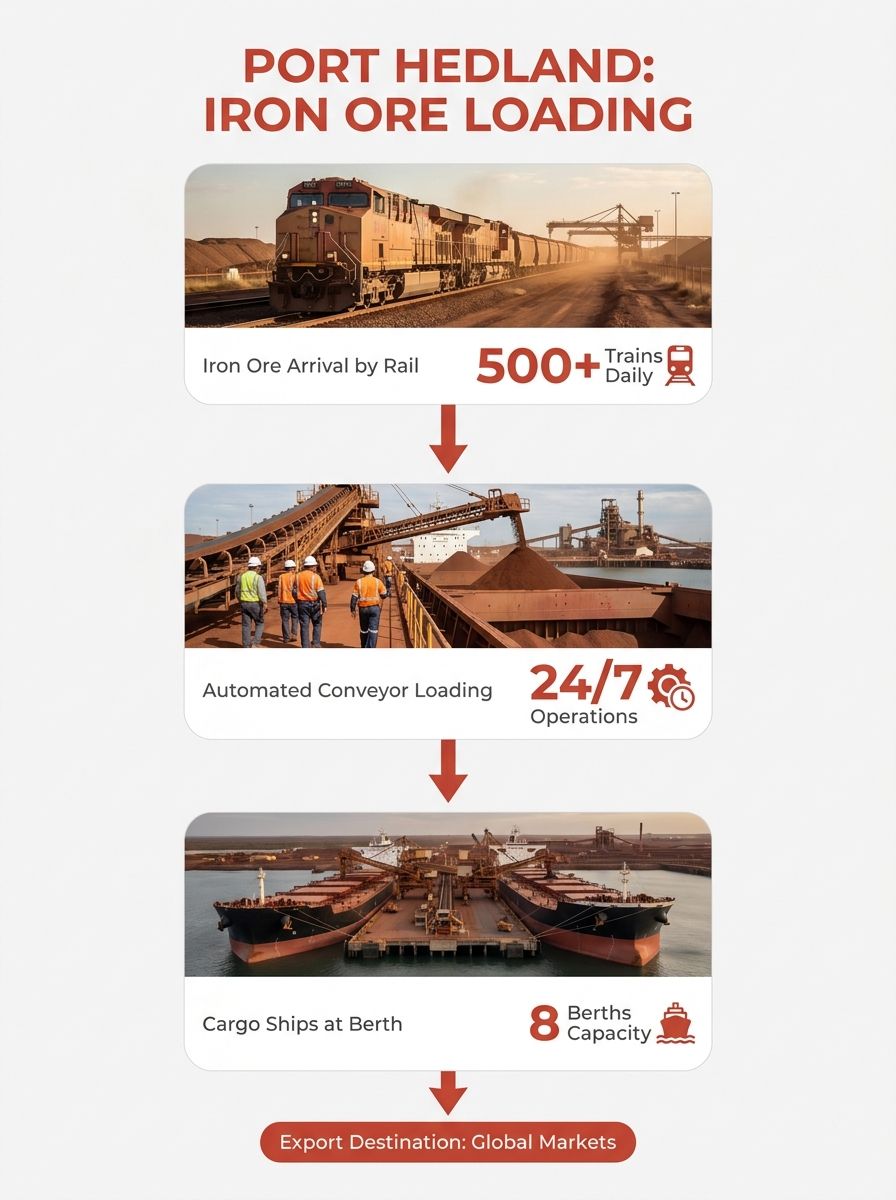
Strike Impact on Iron Ore Operations
Melbourne-based BHP ships approximately $80 million worth of iron ore daily through Port Hedland. The company stated on August 8 that vessels continued to be loaded, "with scheduled departures subject to usual port planning and tides," but did not respond to requests for comment on August 9 regarding the strike's operational impact.
Port Hedland accounted for 75 percent of iron ore exports from Western Australia's Pilbara region in the year ending June 2026. The strike action targeted only BHP operations and was not expected to affect rival miners Fortescue and Hancock Prospecting, which also use the port facility.
Bargaining Timeline and Union Demands
Workers are scheduled to return to their positions at 3:30 a.m. Singapore time on August 10. Negotiations between the Combined BHP Ports Unions and BHP will resume on August 18, a union spokesperson confirmed. The unions are seeking a four-year bargaining agreement with BHP, the world's third-largest iron ore miner.
The strike proceeded despite what sources described as progress in talks between the parties on August 4. The union spokesperson did not detail specific wage or benefit demands that remain unresolved. Similar labor actions at major resource operations have centered on wage increases and job security provisions, as seen in recent contract negotiations at other industrial facilities.
Historical Context and Industry Precedent
The August 8-9 work stoppage represents the first significant industrial action at Port Hedland since 2000, marking a 26-year gap in major strike activity at the critical export hub. The longevity of that labor peace contrasts with increasing union activity across multiple industries in 2026, including organizing efforts in the technology sector and strikes in aviation and manufacturing.
Port Hedland's role as the world's largest iron ore export facility boosts the strategic use available to the Combined BHP Ports Unions. Any extended disruption to ship-loading operations would affect global iron ore supply chains, though the two-day duration of this initial action limited broader market impact.
BHP operates multiple iron ore mining sites in the Pilbara region, relying on Port Hedland as its primary export gateway. The company's broader workforce in Western Australia numbers in the thousands across mining and port operations.
Policy Implications
This strike demonstrates organized labor's renewed willingness to deploy work stoppages as a negotiating tool at critical infrastructure chokepoints, even in industries where strikes have been historically rare. The 26-year gap since Port Hedland's last major industrial action suggests that traditional bargaining channels may be failing to meet worker expectations in Australia's resource sector, despite the industry's substantial profitability.
The timing of resumed negotiations on August 18 will test whether a brief work stoppage can shift bargaining dynamics where earlier talks on August 4 reportedly showed progress but failed to close a final agreement. The four-year contract timeline sought by unions creates significant stakes for both wage patterns and operational flexibility in Western Australia's iron ore sector.
Port Hedland's concentration of iron ore exports—handling three-quarters of Pilbara output—creates systemic vulnerability to coordinated labor action, a reality that extends beyond BHP to competitors using the same port infrastructure. This dynamic may incentivize employers to settle disputes quickly, while simultaneously raising questions about whether essential infrastructure operations should face different regulatory frameworks for labor disputes than other industries.
The Union Edge Staff
Related Articles

BHP Files Federal Court Case to Suppress Journalism on Coal Miner's Wage Theft Claim
BHP Group Limited filed a Federal Court application on May 6, 2026, seeking to force Australian newsroom Michael West Media to remove published content, surrender source materials, and cease reporting on a former coal worker's wage theft case, according to court documents published by the outlet. Th

Qantas Ground Workers to Strike Over Pay and Safety as Airline Faces Labor Crisis
Approximately 600 Qantas ground workers will strike for 24 hours beginning September 23 across multiple Australian cities, demanding improved pay, job security, and safety standards following the airline's 2020 illegal termination of 1,800 workers, according to Travel Radar.

Bank Workers Launch Three-Day Strike Across India Over Five-Day Work Week Demand
Bank workers represented by the United Forum of Bank Unions launched a three-day nationwide strike on September 28, 2026, demanding that all Saturdays be declared holidays as part of a five-day banking schedule, according to The Economic Times.
Also in the paper