
Truck Drivers Rally Against Federal Wage-Theft Enforcement That Targets Workers Instead of Employers
Truck drivers rallied outside the Etobicoke office of Secretary of State for Labour John Zerucelli on September 12, demanding the federal government redirect enforcement of wage-theft laws away from workers and toward the employers violating Canada Labour Code protections, according to Justice for T

Truck Drivers Rally Against Federal Wage-Theft Enforcement That Targets Workers Instead of Employers
Truck drivers rallied outside the Etobicoke office of Secretary of State for Labour John Zerucelli on September 12, demanding the federal government redirect enforcement of wage-theft laws away from workers and toward the employers violating Canada Labour Code protections, according to Justice for Truck Drivers.
The protest coincided with National Trucking Week, a federally recognized observance meant to celebrate the workers who transport 90% of Canada's consumer goods. Drivers from Justice for Truck Drivers and the West Coast Trucking Association instead used the week to spotlight systemic failures in the Carney government's response to labour-law violations that have disproportionately affected the sector.
Violations Concentrated in Single Industry
Truck drivers represent 17% of Canada's federally regulated workforce but account for 85% of all confirmed Canada Labour Code violations, the organizations reported. The concentration reflects what drivers describe as widespread wage theft, forced misclassification of employees as independent contractors, and employer practices that place regulatory risk on workers rather than companies.
"We're here to say the best way to appreciate truck drivers is to stop wage theft, end misclassification, and hold employers accountable," said Karanveer Singh, a driver with Justice for Truck Drivers who spoke at the September 12 news conference held at 1111 Albion Road.
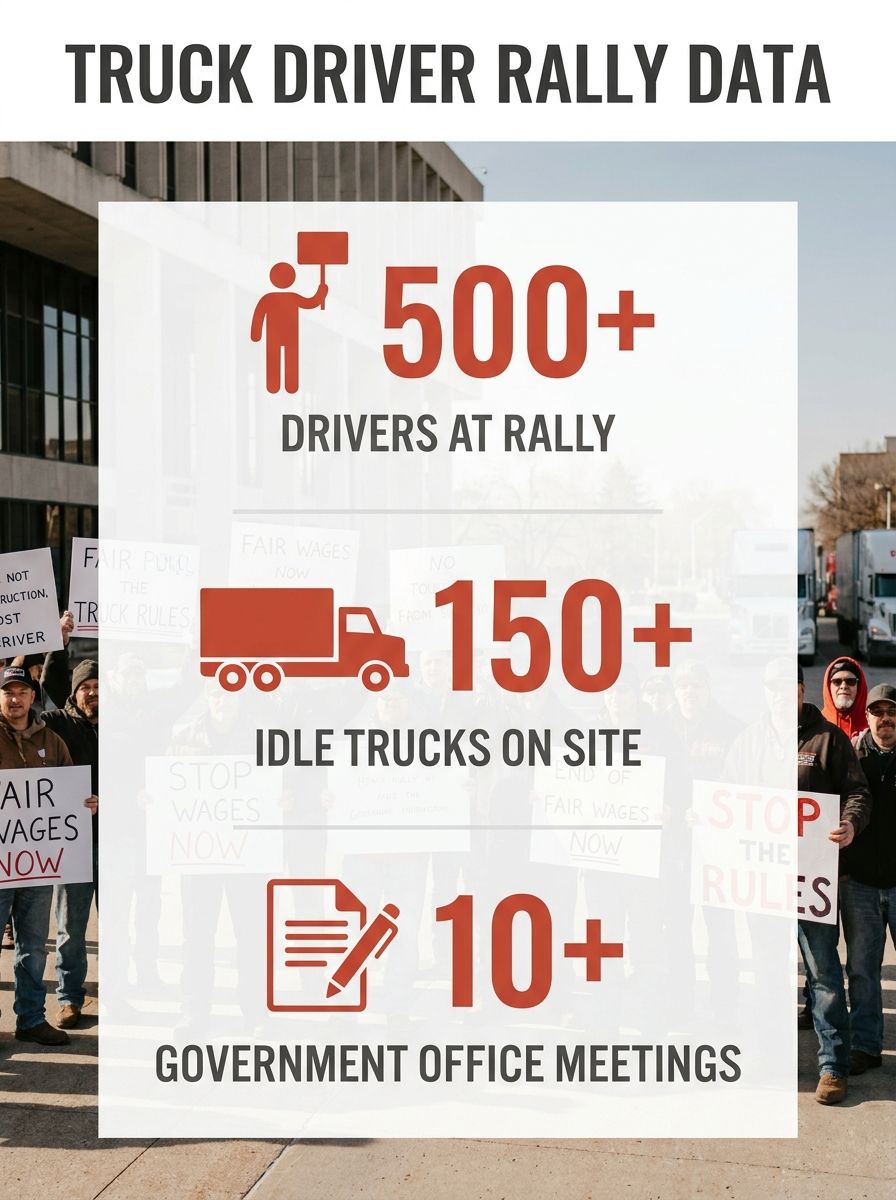
The rally in Etobicoke drew drivers who shared accounts of ineffective federal enforcement. A parallel action took place in Vancouver the same day, coordinated by the West Coast Trucking Association. Organizers said drivers across Canada were contacting local Members of Parliament to demand policy changes.
New Enforcement Measures Miss Target
Drivers argue that recent federal measures intended to curb illegal employer conduct have instead shifted penalties and compliance burdens onto workers. The enforcement approach, they contend, fails to sanction trucking companies that systematically violate labour standards while exposing individual drivers to fines, loss of credentials, and barriers to filing complaints.
Navi Aujla, Service Director for Labour Community Services of Peel and a member of Justice for Truck Drivers, coordinated outreach for the Brampton-area action. Manoj Sharma, General Secretary of the West Coast Trucking Association, organized the Vancouver component. Both groups provided drivers for on-site interviews during the rallies.
The trucking sector has emerged as a flashpoint in broader debates over labour enforcement in federally regulated industries. Drivers contend that weak penalties for employers—combined with a complaint-driven system that requires workers to risk retaliation—have allowed wage theft and misclassification to persist at scale despite years of advocacy.
Economic Role Contrasts With Regulatory Treatment
Trucking industry employment supports logistics networks that move the vast majority of physical goods within Canada. The federal government has described truck drivers as essential to economic infrastructure, a designation that carried weight during pandemic supply-chain disruptions when drivers maintained operations under hazardous conditions.
That official recognition has not translated into enforcement structures that protect drivers from employer violations, according to the groups behind the September 12 actions. The organizations pointed to a mismatch between the sector's economic importance—regularly cited in National Trucking Week messaging—and the government's reluctance to audit or penalize companies that exploit workers.
The concentration of Labour Code violations in a single sector, drivers argue, demonstrates that systemic employer practices rather than individual worker conduct drive the pattern. Yet enforcement mechanisms continue to place investigative and legal burdens on workers who file complaints, often while still employed by the companies they accuse.
What This Means for Union Members
The trucking sector's enforcement crisis illustrates how complaint-driven labour systems fail workers in industries where employer retaliation is common and violations are widespread. Truck drivers' organizing around wage theft and misclassification parallels struggles in other precarious sectors, including gig work and contract-based employment, where workers lack collective bargaining structures that could force systemic accountability.
The coordinated September 12 actions reflect growing cross-regional coordination among trucking workers who operate in a federally regulated industry but face localized enforcement gaps. Union members in other sectors can expect similar organizing models—anchored in worker-led advocacy groups rather than traditional union structures—to expand in industries where misclassification and wage theft are prevalent.
The concentration of Labour Code violations in trucking also signals a potential inflection point for federal labour enforcement. If 85% of violations stem from 17% of the workforce, the government faces pressure to shift from reactive complaint investigations toward proactive audits and employer sanctions in high-violation sectors. Whether the Carney administration responds by restructuring enforcement or by further tightening worker-focused compliance measures will shape labour conditions across federally regulated industries.
The Union Edge Staff
Related Articles

Teamsters Sue California DMV Over Autonomous Truck Regulations, Claiming State Skipped Economic Impact Review
Teamsters California filed a lawsuit against the California Department of Motor Vehicles in August 2026, challenging the agency's decision to lift restrictions on heavy autonomous trucks and alleging regulators bypassed required economic impact analysis before approving rules that could affect more
Steelworkers Oppose Federal Labour Code Changes That Would Grant Minister Power to End Strikes
The United Steelworkers union declared the right to strike "a red line" on September 22, opposing proposed Canada Labour Code amendments that would grant the federal labour minister discretionary power to end legal strikes without Parliamentary approval, according to a statement from USW National Di

Gig Worker Firsts: What the Victoria Uber Drivers' Historic Contract Reveals About Future Organizing Battles
On April 28, 2026, over 1,000 Uber drivers in Greater Victoria, British Columbia, voted 99% in favor of the first collective bargaining agreement ever ratified by app-based rideshare workers anywhere in the world.
Also in the paper