
Gig Worker Firsts: What the Victoria Uber Drivers' Historic Contract Reveals About Future Organizing Battles
On April 28, 2026, over 1,000 Uber drivers in Greater Victoria, British Columbia, voted 99% in favor of the first collective bargaining agreement ever ratified by app-based rideshare workers anywhere in the world.

Gig Worker Firsts: What the Victoria Uber Drivers' Historic Contract Reveals About Future Organizing Battles
On April 28, 2026, over 1,000 Uber drivers in Greater Victoria, British Columbia, voted 99% in favor of the first collective bargaining agreement ever ratified by app-based rideshare workers anywhere in the world. The contract, negotiated by UFCW Local 1518, was formally certified this week, and it includes signing bonuses, a wellness fund, a dispute resolution process with mandated response timelines, and annual fee increases. Three different countries are now running three fundamentally different experiments in gig economy organizing, and the Victoria contract forces a comparison that workers everywhere need to understand before choosing their own path.
British Columbia built a legislative framework that lets drivers certify a union and bargain a binding contract. California passed laws enabling sectoral bargaining across an entire rideshare industry. Australia created an "employee-like" worker category that empowers a government commission to set minimum standards without requiring a union election at all. Each approach reflects different assumptions about what ride-share worker rights look like in practice, and each creates different openings and risks for the people behind the wheel.
What Victoria's Contract Actually Contains
The details of the UFCW Local 1518 agreement matter because they show exactly what a traditional union certification model can deliver for platform workers when the law cooperates.
Eligible drivers receive a $250 signing bonus. Quarterly bonuses tied to completed trips and cancellation rates can total up to $2,544 annually for top performers. Wait time fees, cancellation fees, and out-of-region fees will increase 5% each year. A wellness fund, financed by Uber contributing 10 cents per ride, provides up to $500 per year for sick leave or health expenses.
But the contract's most consequential provisions aren't financial. Drivers now have a formalized dispute resolution process that covers pay disputes, deactivation, suspensions, ratings challenges, and safety concerns, with mandated response timelines from Uber. Regular meetings between the company and the union on health and safety issues are built into the agreement. Patrick Johnson, UFCW Local 1518's president, said the contract gives drivers "a collective voice in their working conditions, something hard to find in the gig economy."
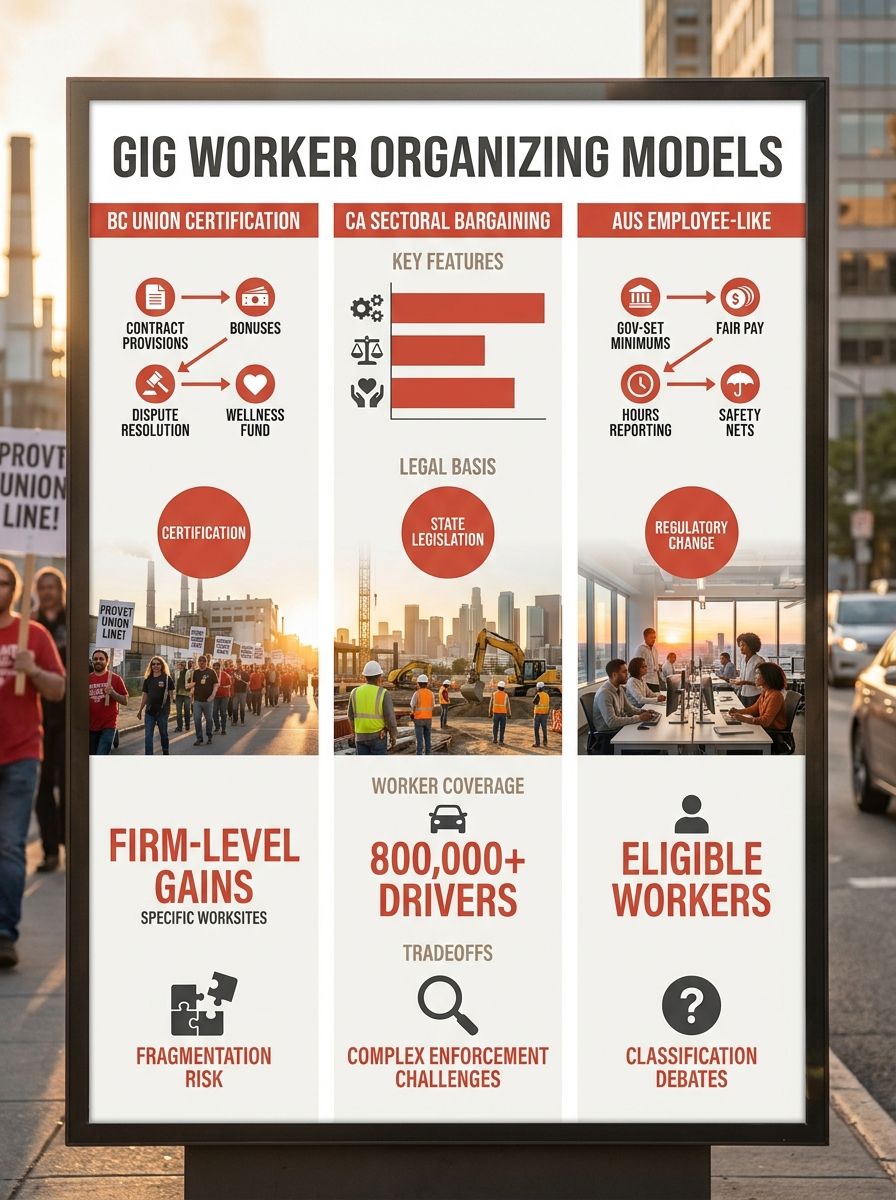
The enabling mechanism here is British Columbia's labor law reform, which created an "online platform worker" category and allows automatic union certification when more than 55% of workers sign cards. That threshold eliminates the employer-dominated election campaigns that kill so many organizing drives under the U.S. National Labor Relations Act. The near-unanimous ratification tells its own story about how engaged drivers were once the legal path was clear.
The tradeoffs are real, though. This contract covers roughly 1,000 drivers in one metro area. It required a provincial government willing to rewrite labor law for platform workers specifically. And the bargaining unit is tied to a single company in a single geography. If you're an organizer trying to build power across an industry, the Victoria model gives you a proof of concept, but it also gives you a long slog: city by city, company by company, contract by contract. Anyone who has studied how pattern bargaining reshapes industries knows that one local agreement can create momentum, but the chain between a first contract and industry transformation has many weak links.
Uber's own response is telling. Laura Miller, Uber Canada's head of public policy, confirmed the agreement was reached through "constructive, good-faith discussions" and said it would not alter driver flexibility or app functionality. She acknowledged a "modest" fare adjustment would follow, though the company hasn't disclosed specifics. That framing is classic corporate positioning: accept the deal locally, emphasize flexibility, signal that costs get passed to riders. It's the kind of response that makes you wonder whether the company views Victoria as a containable experiment or a precedent it'll fight harder against in larger markets.
California Goes Industry-Wide
California's approach to platform labor collective bargaining operates on a completely different scale. The state's framework allows rideshare workers to bargain across an entire industry rather than company by company or city by city. This is sectoral bargaining, and its logic is straightforward: when all drivers in the industry are covered by one contract, no company can undercut standards by driving down wages.
The numbers alone separate this model from Victoria's. Over 800,000 gig rideshare drivers in California won the right to form a union and negotiate an industry-wide contract. The Center for American Progress has argued that sectoral bargaining is "particularly well suited to rideshare" because it covers all drivers, from full-time to casual, regardless of how few hours someone works or which platform they drive for.
The appeal is obvious. Sectoral bargaining doesn't require every group of drivers to wage its own certification fight. It prevents the race-to-the-bottom dynamic where Uber offers slightly better terms than Lyft or vice versa to poach workers while keeping overall standards low. And it addresses the fundamental structural problem that the Center for American Progress identifies: "Workers need an easier path to form unions and bargain collectively because the NLRA gives corporations too many ways to avoid negotiating and to bust unions."
The tradeoffs cut differently than Victoria's. California's model solves the scale problem but introduces political vulnerability. This is a state whose gig economy history includes Proposition 22, the 2020 ballot measure where Uber, Lyft, DoorDash, and Instacart spent over $200 million to exempt themselves from a law that would have classified their workers as employees. The legal and political ground shifts constantly. A framework that depends on state legislation can be rolled back, defunded, or litigated into irrelevance the moment political winds change.
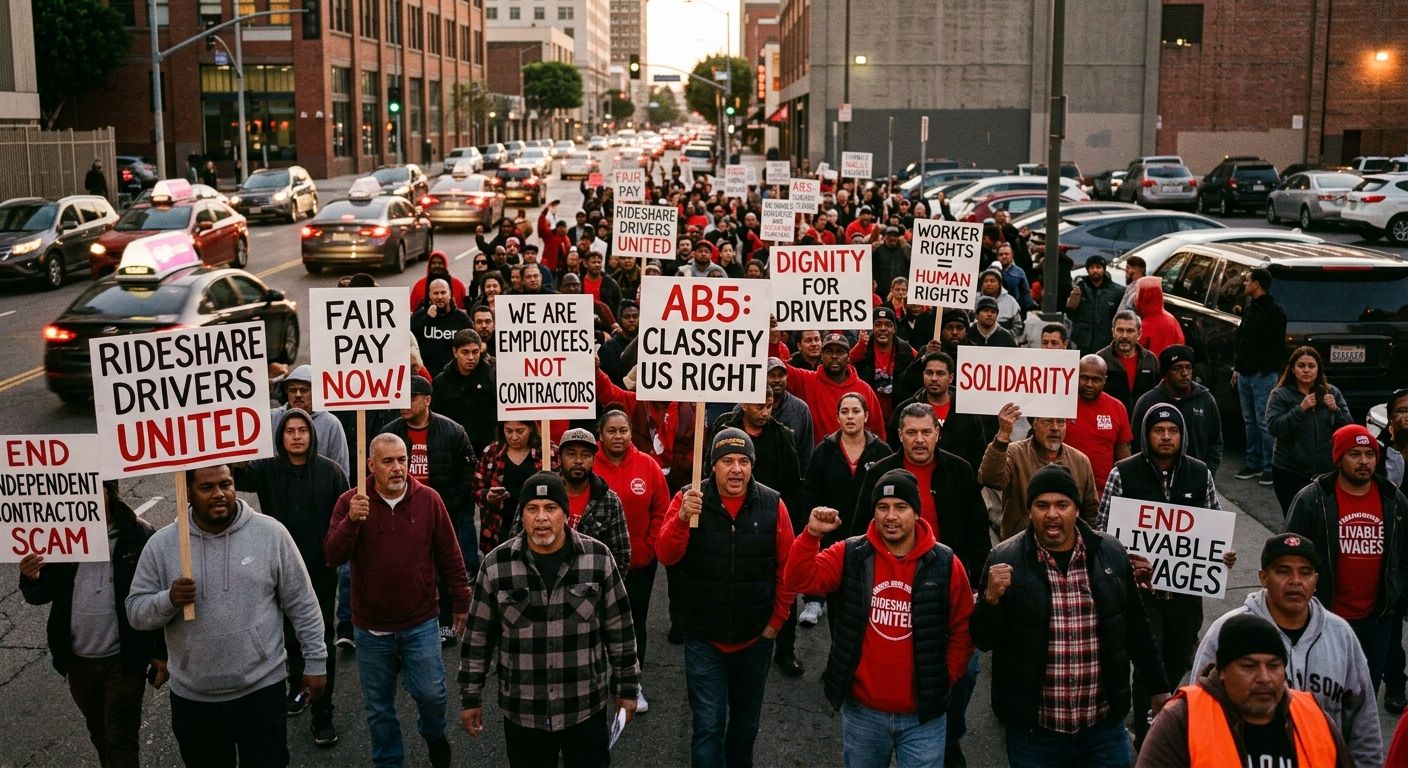
There's also a practical tension between breadth and depth. An industry-wide contract covering 800,000 drivers will necessarily produce more general terms than a contract covering 1,000 drivers in one city. Victoria's agreement specifies quarterly bonuses tied to cancellation rates and trip counts, a per-ride wellness fund contribution, and mandated response timelines for disputes. Can a sectoral agreement for an entire state replicate that level of specificity? The track record from other countries with sectoral bargaining suggests it can set wage floors and basic protections effectively, but granular working conditions often still need to be negotiated at the firm level.
For organizers weighing this approach, the lesson from California is that the legislative fight and the bargaining fight are two separate campaigns that require different strategies. Winning the law is step one. Converting workplace complaints into sustained campaigns at the scale of hundreds of thousands of workers is a challenge that existing union infrastructure hasn't fully solved yet.
Australia Writes New Rules Without a Union Contract
Australia's model departs from both Victoria and California by removing collective bargaining from the equation entirely. Under reforms to the Fair Work Act, the Australian Fair Work Commission can set binding minimum standards for "employee-like workers" on digital labor platforms through Minimum Standards Orders. These orders cover pay, conditions, and dispute resolution, and they apply whether or not workers have organized a union.
The Fair Work Ombudsman's framework defines platform operators as "regulated businesses" and gives the Commission authority to issue orders that function like industry-wide minimum conditions. The emerging worker classification at the heart of this approach avoids the binary employee-or-contractor question that has tied up courts and legislatures in the U.S., Canada, and Europe for years.
The appeal for workers is speed and coverage. You don't need to organize a majority of your coworkers, file for certification, survive an anti-union campaign, and negotiate a first contract. The government sets the floor. Academic analysis of platform worker classification in the Australian context has noted that the core problem for platform workers excluded from employee status is that they lose access to unfair dismissal protections, national employment standards, and basic workplace rights. Australia's response is to create a regulatory path that restores some of those protections without requiring full reclassification.
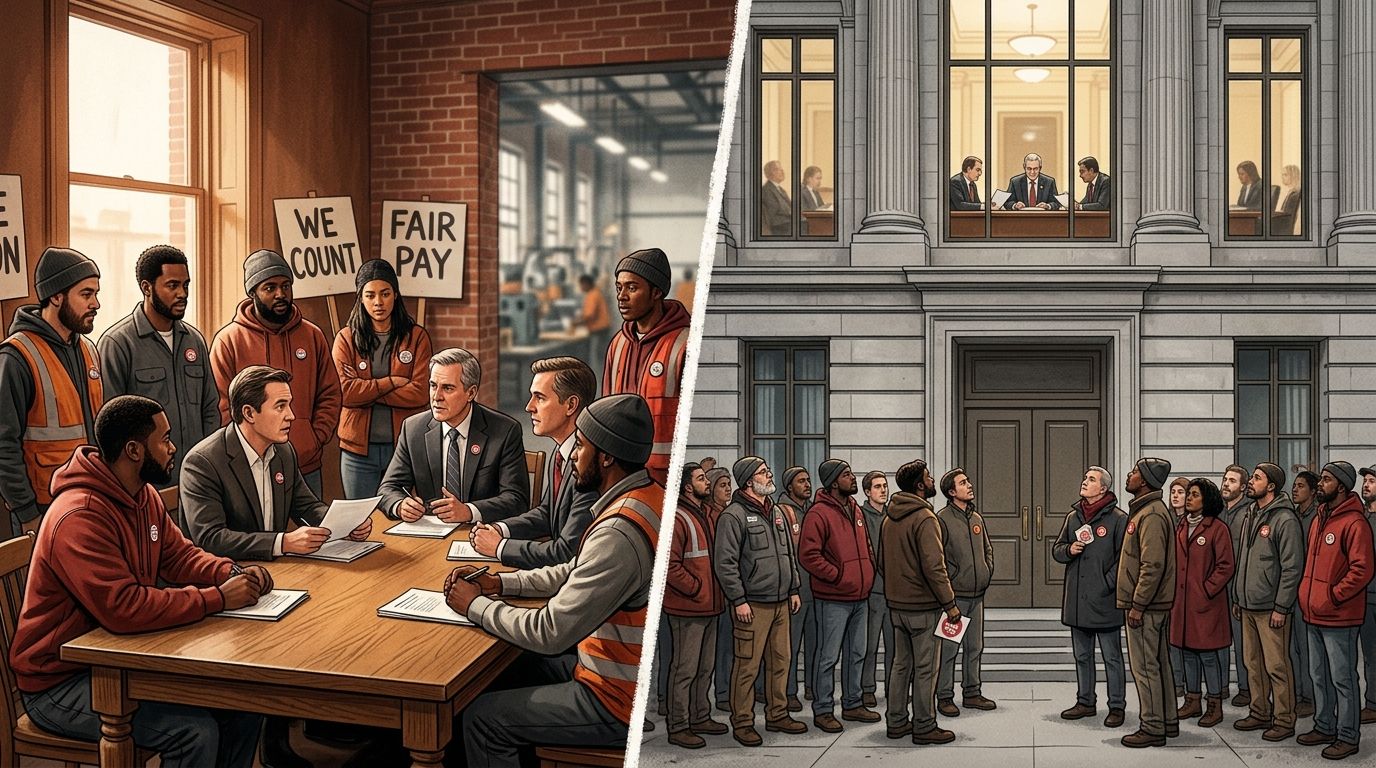
But this approach has a fundamental weakness that organizers should be honest about: it writes workers out of their own story. When a government commission sets your pay floor, you don't build the collective power that comes from organizing, bargaining, and holding a company accountable through a union structure. You get protections, but you don't get a seat at the table. And protections set by a commission can be revised, weakened, or left to stagnate without workers having institutional power to push back.
There's also an enforcement question. Australia's Tax Office has published a risk classification system for worker misclassification with four zones from very low to high risk. But as the Baker McKenzie risk analysis notes, the obligations and consequences of classification vary enormously across tax, superannuation, and labor law contexts. A Minimum Standards Order that looks strong on paper can be undermined if platforms restructure their relationships with workers to fall outside the "employee-like" definition. We've seen this playbook before in other countries. The Yale Law Journal's analysis of gig-economy myths documents how platform companies have spent decades convincing policymakers that employment is inherently inflexible while independent contracting is inherently flexible, creating political cover for "third-category" laws that often deliver less than they promise.
The wave of tech worker unionization across other industries shows that workers themselves increasingly want bargaining power, not just baseline regulatory protections. Australia's model may function as an important safety net, but it shouldn't be confused with the kind of organized, worker-led power that the Victoria drivers built.
Which Model Will Spread
The honest verdict is that all three approaches solve different problems, and no single model addresses every dimension of gig economy organizing.
If you're a worker in a jurisdiction where labor law already permits platform worker certification, the Victoria model is the gold standard. Binding contracts with enforceable provisions, a direct relationship between the union and the employer, and the kind of specificity that actually changes daily working conditions. The $500 wellness fund, the 5% annual fee increases, the dispute resolution timelines with mandated responses from Uber: these are the details that matter when you're trying to make rent, and they came directly from workers at the bargaining table. The path to negotiating workplace-specific contracts that hold up is well-documented, and Victoria's drivers just proved it works for gig workers.
If you're in a large market where hundreds of thousands of drivers work across multiple platforms, sectoral bargaining makes strategic sense. The Victoria contract covers one city and one company. California's framework covers an entire state and an entire industry. For organizers thinking about long-term power, the question isn't which contract is better; it's which structure prevents companies from pitting workers against each other.
If you're in a country where labor law reform is politically unlikely and workers lack the infrastructure to organize at scale, the Australian regulatory model provides a floor. It's not the ceiling anyone should aim for, but it addresses the immediate harm of workers having zero protections while longer-term organizing strategies develop. The critical gap, as any experienced organizer will tell you, is that weak worker education about their rights under any framework erodes the impact of even the best legal protections.
The Victoria contract will be remembered as the moment platform labor collective bargaining went from theoretical to real. Gilberto Talero Almanza and Amninder Singh, drivers on the bargaining committee, fought for specific gains in fairness and dignity that will show up in their paychecks and their ability to challenge unfair deactivations. Their contract is small in scope and enormous in precedent. What happens next depends on whether organizers in other cities and countries can adapt these three models to their own legal and political conditions, and whether workers recognize that the right to organize is a civil right that platform companies have systematically denied them since the gig economy began.
The Union Edge Staff
Related Articles

AFL-CIO Endorses Sectoral Bargaining for First Time as States Lead New Wave of Worker Organizing
The AFL-CIO passed a resolution at its July 2026 conference endorsing sectoral bargaining for the first time in the federation's history, according to a Time article published Wednesday.

California Rideshare Drivers' Union Cleared for Certification Within 30 Days
California's Public Employment Relations Board confirmed last week that the California Gig Workers Union secured support from 30% of the state's active rideshare drivers, clearing the organization for certification after a 30-day waiting period, according to the Los Angeles Times.

SEIU-Backed California Gig Workers Union Hits Organizing Milestone Amid Rival Union Competition
The California Gig Workers Union, backed by the Service Employees International Union, has reached a significant organizing milestone in its campaign to unionize Uber and Lyft drivers across the state, though the effort may face competition from a rival union seeking to represent the same workforce,
Also in the paper