
Workplace Safety Failures Kill 30 Workers Across Three Countries in Four-Day Span
At least 30 workers died in workplace accidents across Greece, China, and the United States between July 9 and July 12, 2026, prompting regulators to impose safety penalties exceeding half a million dollars and order operational shutdowns at facilities in three countries, according to enforcement fi

Workplace Safety Failures Kill 30 Workers Across Three Countries in Four-Day Span
At least 30 workers died in workplace accidents across Greece, China, and the United States between July 9 and July 12, 2026, prompting regulators to impose safety penalties exceeding half a million dollars and order operational shutdowns at facilities in three countries, according to enforcement filings and government reports compiled by ad-hoc-news.de.
The incidents—spanning manufacturing, construction, and waste management—exposed recurring patterns of preventable hazards. Investigators found blocked emergency exits, non-functioning safety systems, and workers operating without required protective equipment. The deadliest single incident killed 28 people at a shoe factory that had received an inspection warning just two days before the fire.
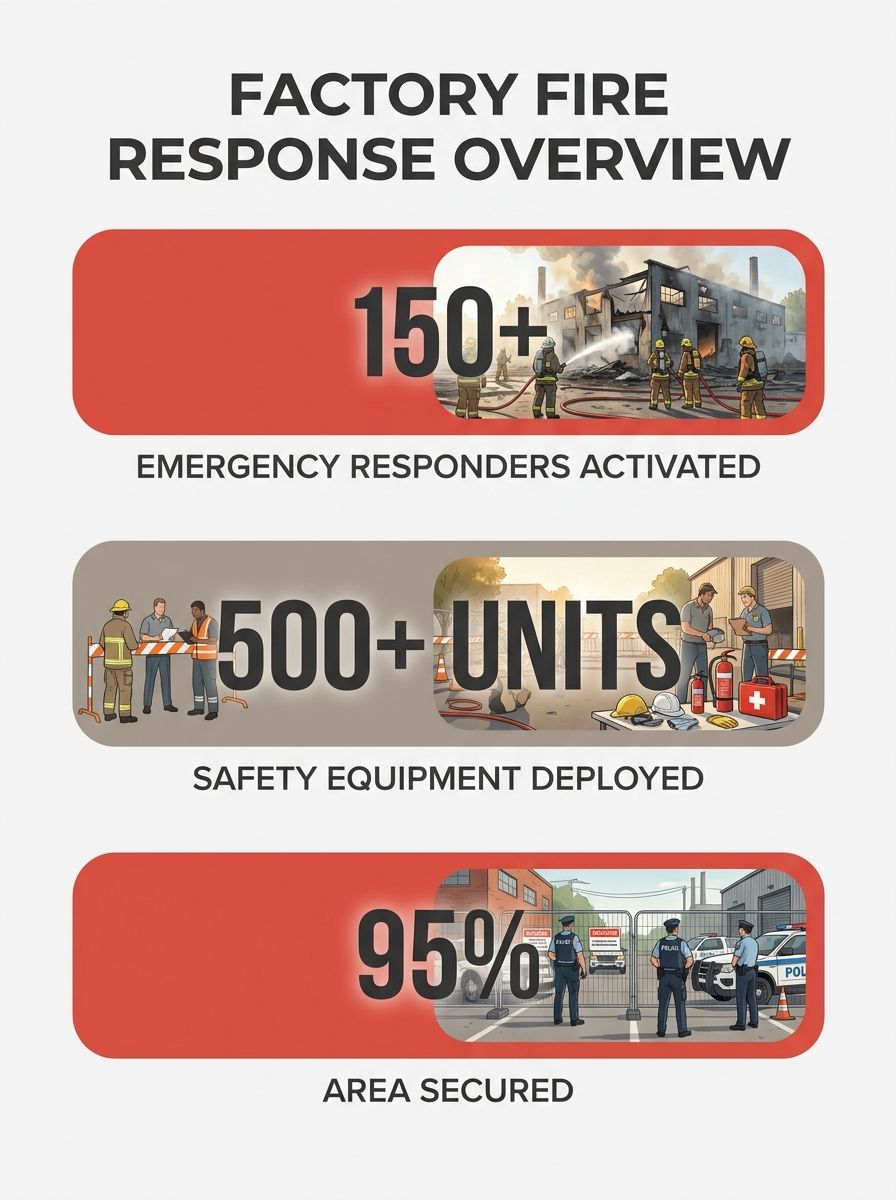
China Shoe Factory Fire Kills 28 as Inspection Warnings Go Unheeded
A shoe factory fire in Jinjiang, Fujian province, killed 28 workers on July 9, 2026, when flames swept through a facility packed with combustible materials while 239 people were inside. Investigators determined the factory had no functioning sprinkler system and metal grilles blocked emergency exits, preventing escape.
An inspection conducted on July 7—two days before the fire—had ordered the factory to correct safety violations by July 13. Police placed seven individuals under custody, including the factory head, as the investigation continues.
The Jinjiang fire represents one of China's deadliest industrial accidents in recent years, exposing gaps between regulatory inspections and enforcement timelines. The facility's combination of combustible inventory, disabled fire suppression, and physical barriers to egress created what investigators described as a catastrophic safety failure.
Fatal Incidents in Greece and United States Involve Equipment and Chemical Hazards
In Greece, a worker died at KAT Hospital on July 12 after suffering severe burns in a factory fire in Aspropyrgos, west of Athens. Two others sustained serious injuries in the blaze at the manufacturing facility in the industrial area.
The same day in Coventry, Vermont, Thomas Feerick, 58, was killed when an aerial lift tipped over at a Casella Waste Systems landfill. Feerick, a subcontractor, was not wearing a use at the time of the incident, which authorities ruled accidental. The lack of fall protection equipment violated basic workplace safety protocols that would have prevented the fatality.
"Workers operating aerial lifts face significant fall hazards that proper restraint systems are designed to prevent," one safety expert noted in response to similar incidents. The Vermont case underscores enforcement gaps around subcontractor oversight and equipment safety that advocates have highlighted in the waste management sector.
Regulators Impose Major Penalties for Confined Space and Chemical Safety Violations
The Occupational Safety and Health Administration fined Construction Labor Services Inc. $257,707 following a fatal toxic gas exposure incident in August 2025 that killed two workers at a sewer line project in Mobile, Alabama. OSHA cited 16 serious violations, including failure to maintain emergency plans, non-compliance with confined space entry protocols, and inadequate worker training.
Flowchem UK Ltd received a £50,000 fine and a £2,000 victim surcharge after agency worker Marzanna Sokolowska sustained chemical burns to her face, eyes, neck, and arm in November 2023. Sokolowska opened the wrong valve on a corrosive sink unblocker at the company's Sandiacre, Derbyshire site. The company admitted safety breaches during proceedings at Nottingham Magistrates' Court.
In Canada, Marigold Infrastructure Partners Inc. was fined $120,000 for a June 2023 incident in which a worker was struck by a tensioning bar and jack when concrete crumbled during post-tensioning operations on Edmonton's Valley Line West LRT project. The company pleaded guilty to failing to safely restrain the equipment involved.
The penalties reflect a growing regulatory focus on essential workplace safety topics that enforcement agencies have identified as linked to preventable fatalities, particularly in confined spaces and chemical handling.
Philippines Orders Telecoms Shutdown Over Missing Safety Officers
The Department of Labor and Employment in Central Visayas ordered three telecommunications and internet companies to halt field operations this weekend following reports of severe safety violations. Investigators found the firms lacked designated safety officers, had not conducted required hazard assessments, and failed to comply with national occupational safety and health standards.
The stoppage order requires the companies to continue paying employees during the mandatory shutdown. The enforcement action represents one of the Philippines' most aggressive uses of operational suspension authority to compel immediate safety compliance, particularly in sectors where field work exposes employees to electrical, fall, and vehicle hazards.
Similar patterns of inadequate safety officer staffing have emerged in other countries' workplace enforcement actions, where regulators have linked the absence of designated safety personnel to higher injury rates and slower emergency response.
Additional Enforcement Actions Target Environmental and Consumer Safety Gaps
Northumbrian Water agreed to pay £550,000 in enforcement undertakings following unauthorized sewage discharges in 2020 and 2021. The payments include £350,000 to the Wear Rivers Trust and £200,000 to the Durham Wildlife Trust for environmental restoration projects.
The UK Health Security Agency advised against using four non-sterile alcohol-free wipe products—ValueAid, Microsafe, Steroplast, and Reliwipe—following a fatal outbreak of Burkholderia stabilis bacteria. The outbreak, spanning from early 2018 to early 2026, involved 59 cases. The affected products were removed from the market in July 2026.
Reading Between the Lines
The concentration of fatal incidents within a four-day window—across unrelated industries and multiple continents—exposes a fundamental gap between existing safety regulations and actual workplace conditions. The China shoe factory received an inspection order on July 7 and burned on July 9, demonstrating that detection of hazards means little without immediate enforcement power to halt operations until corrections are verified.
Union safety representatives have long argued that voluntary compliance timelines allow employers to continue operating with known, documented hazards—a pattern these incidents confirm. The Vermont aerial lift death involved a missing use, one of the most basic and widely understood fall protection requirements. The UK chemical burn case involved an agency worker opening the wrong valve, pointing to inadequate training and supervision of temporary staff who face higher injury rates than permanent employees.
The regulatory response—fines, operational shutdowns, criminal investigations—comes after workers have already died. Advocates pushing for stronger enforcement authority, including immediate shutdown power for inspectors who identify life-threatening hazards, point to this July cluster as evidence that the current inspect-warn-fine cycle cannot prevent the next preventable death.
The Union Edge Staff
Related Articles

Essential Workplace Safety: 10 Topics Every Business Needs
Fall protection has topped OSHA's most-cited violations list for over a decade, and the same ten health and safety topics in the workplace appear in the agency's enforcement data year after year, accounting for the bulk of preventable worker injuries and deaths across American industries.

Six OSHA Inspectors Oversee 60,000 West Virginia Workplaces After Fatal Chemical Plant Incident
Federal workplace safety enforcement in West Virginia relies on six inspectors to oversee 60,000 workplaces, according to the WV Gazette-Mail, a staffing shortage that came into focus after two workers died in April 2026 at a chemical facility that had not been inspected in eight years despite prior

Taylor Farms Failed to Submit Injury Reports for Facilities Where Workers Died, Reuters Finds
Taylor Farms, North America's largest salad producer, failed to submit federally required workplace injury reports for at least four facilities where workers suffered fatal or serious injuries in recent years, according to a Reuters analysis of federal records published August 26.
Also in the paper