
AutoZone Workers in White Plains Push for First Union as Company Spends $200,000 Fighting Campaign
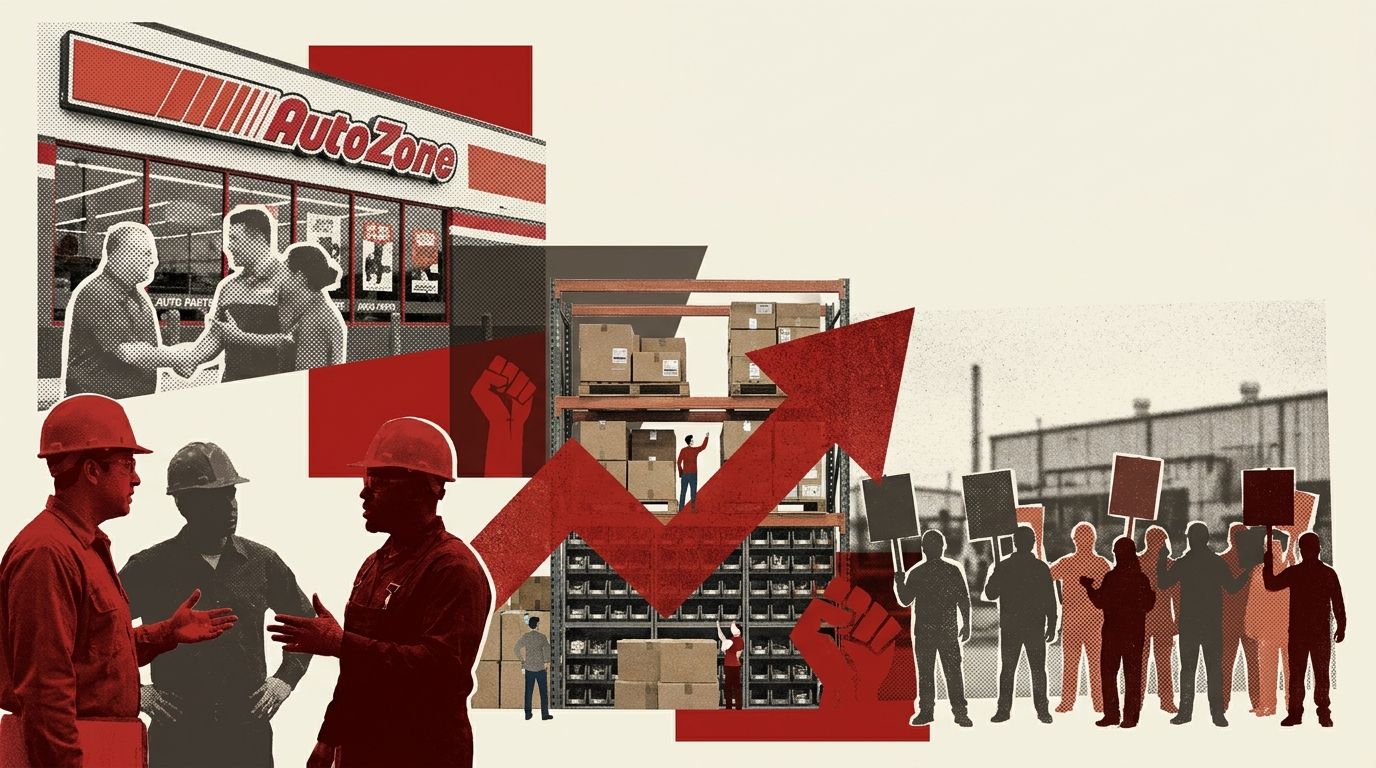
Eleven workers at an AutoZone store in White Plains, New York, will vote beginning September 25 on whether to join United Auto Workers Local 259 and form the first union at the nation's largest auto parts retailer, according to reporting in The Guardian.
AutoZone Workers in White Plains Push for First Union as Company Spends $200,000 Fighting Campaign
Eleven workers at an AutoZone store in White Plains, New York, will vote beginning September 25 on whether to join United Auto Workers Local 259 and form the first union at the nation's largest auto parts retailer, according to reporting in The Guardian. LaborLab, a nonprofit workers' rights watchdog, estimates AutoZone has spent approximately $200,000 to oppose the organizing effort through external attorney costs and internal executive time based on worker reports from the store.
AutoZone operates more than 6,800 retail stores in the United States and reported net income of $2.5 billion in fiscal year 2025. The company did not respond to multiple requests for comment from The Guardian.
Workers Cite Low Pay and Missing Holiday Benefits
Nathan DuCongé, a worker at the White Plains location for approximately two years, started as a sales associate earning minimum wage. The position required service sales and upselling products despite the base-level compensation, according to his account in The Guardian.
David Valencia joined the White Plains store in May 2026 and said his interest in unionizing crystallized after working the Fourth of July holiday without receiving holiday pay or bonuses. According to Indeed, AutoZone provides paid holidays only for eligible full-time employees, not part-time workers.
"There is no bargaining when you're alone," Valencia told The Guardian. "They're only going to bargain when you're together."
The organizing drive gained momentum after DuCongé attended an Emergency Workplace Organizing Committee training session and connected with a UAW organizer. Workers collected enough union authorization cards to file for an election with the National Labor Relations Board.
Company Deploys Regional Managers and Executives to White Plains Store
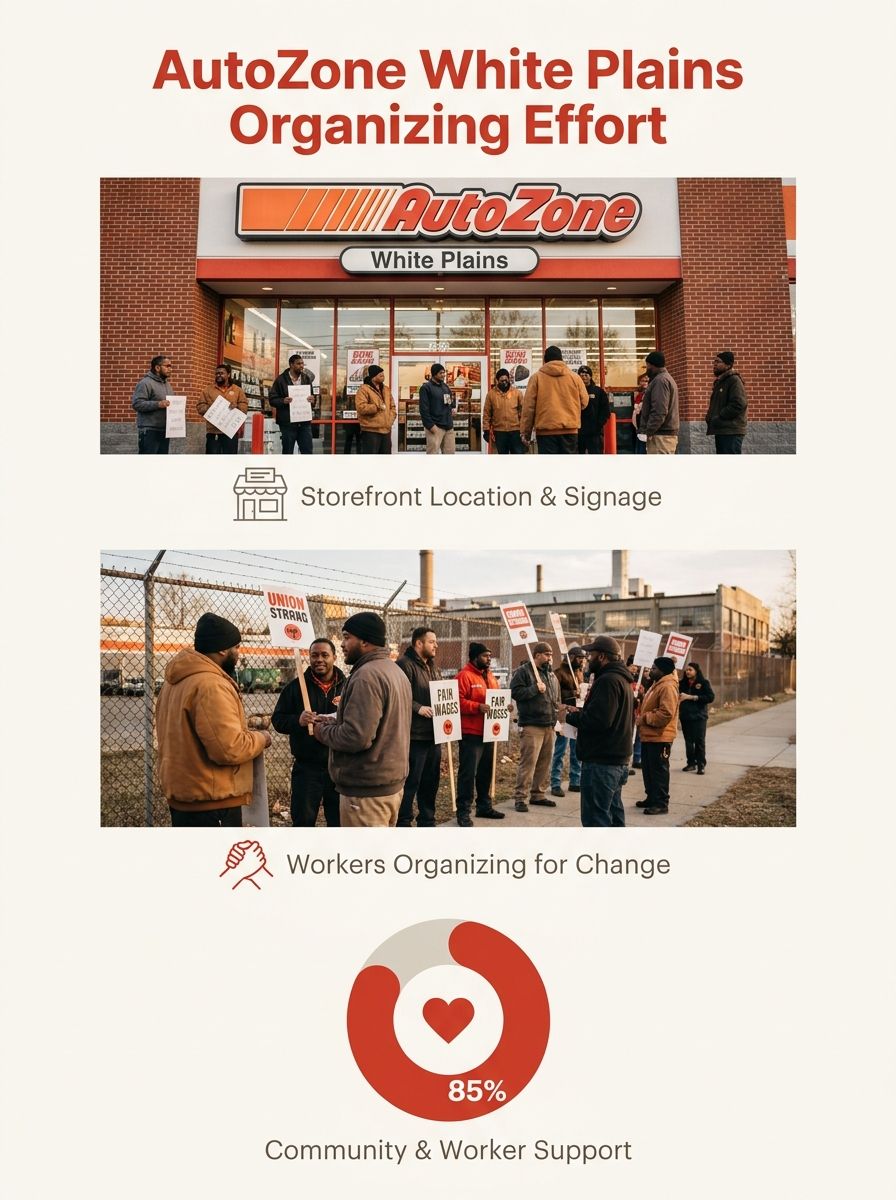
The day after AutoZone management learned workers had collected sufficient authorization cards, the White Plains store filled with regional and corporate managers along with human resources executives, according to accounts from DuCongé and Valencia. LaborLab identified at least 11 corporate executives who appeared at the location, along with several regional and district managers.
"They had sent in a whole fleet of managers, they were flying in people from around the country," DuCongé said in The Guardian report. Customers noticed the unusual concentration of management personnel in the store.
Management initially asked how they could help but shifted to deterring unionization after workers issued a formal letter announcing their intent to organize. Managers conducted individual meetings in back rooms where they read prepared statements opposing the union, according to worker accounts.
AutoZone threatened to delay the union election by challenging DuCongé's eligibility to participate. The issue forced organizers to withdraw the initial union election petition filed in late July, then refile in August. DuCongé provided recordings in which a manager allegedly told him "we will accept your invitation to fire you," though DuCongé said he had never suggested termination. Managers also informed him his social media posts were being monitored.
DuCongé shared a screenshot showing AutoZone CEO Phil Daniele's Facebook account appearing as a viewer of one of his social media stories about the union campaign.
Management Letters Warn of 'Tradeoffs' Without Citing Examples
Several letters from AutoZone management to workers urged them to vote against the union, citing union dues and claiming workers "could actually end up with less" because "nobody knows what tradeoffs will be made in bargaining." The letters stated "your wages could go up or down."
The correspondence did not cite any proposed union contract where workers would receive reduced pay, nor explained why AutoZone or the union would propose regressive compensation in negotiations.
"I believe local 259 will destroy the mutual respect, teamwork and culture you and I have built at store 2976," one management letter stated.
The intensive opposition campaign mirrors patterns documented across retail and service sectors where employers deploy substantial resources to fight organizing drives. LaborLab's $200,000 estimate for AutoZone's White Plains campaign tracks with industry spending on union avoidance consultants and management time.
The Teamsters previously attempted to organize an AutoZone distribution center in the early 1990s. Workers lost that election, though the National Labor Relations Board subsequently ordered a rerun election due to AutoZone's conduct during the campaign, which included prohibiting union discussions at work and threatening workers with job loss, according to NLRB records.
Reading Between the Lines
The White Plains campaign illustrates how organizing in retail auto parts follows tactical patterns emerging across non-traditional union sectors. Valencia's decision to organize after losing Fourth of July pay demonstrates how routine scheduling decisions can catalyze collective action when workers connect individual grievances to structural use.
AutoZone's willingness to spend an estimated $200,000 to oppose 11 workers at a single location signals corporate assessment that a successful vote could spark organizing at other stores among the retailer's 6,800 U.S. locations. The ratio of corporate response to bargaining unit size—nearly $18,000 per eligible voter—reflects standard union-avoidance calculus where preventing a first contract outweighs the direct costs of opposing a small unit.
The September 25 election offers a test case for whether UAW's cross-sector organizing strategy, which has gained momentum in recent years across manufacturing and service work, can secure footholds in automotive retail despite employer campaigns that federal labor law permits short of explicit threats or surveillance. DuCongé's forced withdrawal from voter eligibility to advance the election demonstrates the tactical trade-offs organizers navigate under current NLRB procedures when employers challenge unit definitions.
The Union Edge Staff
Related Articles
Florida Union-Busting Consultants Earned Up to $3,900 Per Day in September Campaign Filings
Federal labor filings submitted in late September 2026 show Florida-based union avoidance consultants charged employers between $2,200 and $3,900 per day to persuade workers against organizing, according to reports filed with the U.S. Office of Labor-Management Standards.

The Organizing Committee Trap: Why Worker Committees Fail and How to Build Leadership Density That Actually Wins
Organizing committees at VW Chattanooga failed twice before the plant's 2024 election finally succeeded. The difference was structural: the winning campaign built trained leadership at a ratio of one worker-leader for every twenty-five employees, covering 90 percent of the plant by election day.

Leadership Density Over Card Counts: Why Union Authorization Metrics Fail and What Actually Predicts Organizing Success
Authorization cards measure interest, not resilience.
Also in the paper