
Dutch Prosecutors Seize €3.3 Million from Meat-Sector Agency Owner in Wage Theft Case
Dutch prosecutors seized €3.3 million in assets from the shareholder of a meat-industry temp agency suspected of embezzling foreign workers' wages, according to DutchNews.nl. The Dutch labour inspectorate's criminal investigation service, acting under the public prosecution department, froze bank ac

Dutch Prosecutors Seize €3.3 Million from Meat-Sector Agency Owner in Wage Theft Case
Dutch prosecutors seized €3.3 million in assets from the shareholder of a meat-industry temp agency suspected of embezzling foreign workers' wages, according to DutchNews.nl. The Dutch labour inspectorate's criminal investigation service, acting under the public prosecution department, froze bank accounts, land, and property in the Netherlands, along with 20 properties in Germany worth approximately €2.4 million. The seizure came as part of an ongoing criminal investigation into wage theft totaling more than €2.1 million.
The agency and its shareholder, who has not been publicly named, face charges of embezzling more than €2.1 million from foreign workers employed through the temp agency. Investigators estimate the suspect gained an additional €2.4 million from similar offenses, bringing total alleged unlawful profit to approximately €4.5 million, the inspectorate said. The shareholder was arrested earlier in the investigation, which remains open.
The enforcement action represents one of the largest wage theft prosecutions in the Dutch meat sector and arrives as the government weighs whether to ban agency labor in slaughterhouses entirely.
How the Wage Theft Scheme Operated
Foreign workers hired through the agency never received wages in their own bank accounts, investigators said. The agency altered account numbers in its payroll records, redirecting wages to accounts believed to be controlled by agency staff. Those staff members then withdrew the diverted wages in cash, according to the labour inspectorate's findings.
The scheme targeted workers least able to challenge the theft—foreign laborers often unfamiliar with Dutch banking systems and employment protections. The cash-withdrawal method left minimal digital trail and allowed the operation to continue for an extended period before detection.
Prosecutors chose not to seize assets from the agency itself, the inspectorate said, to avoid disrupting operations and the wages of workers currently employed there. A court hearing is scheduled for August to address the seized assets.
Scale of the Alleged Fraud
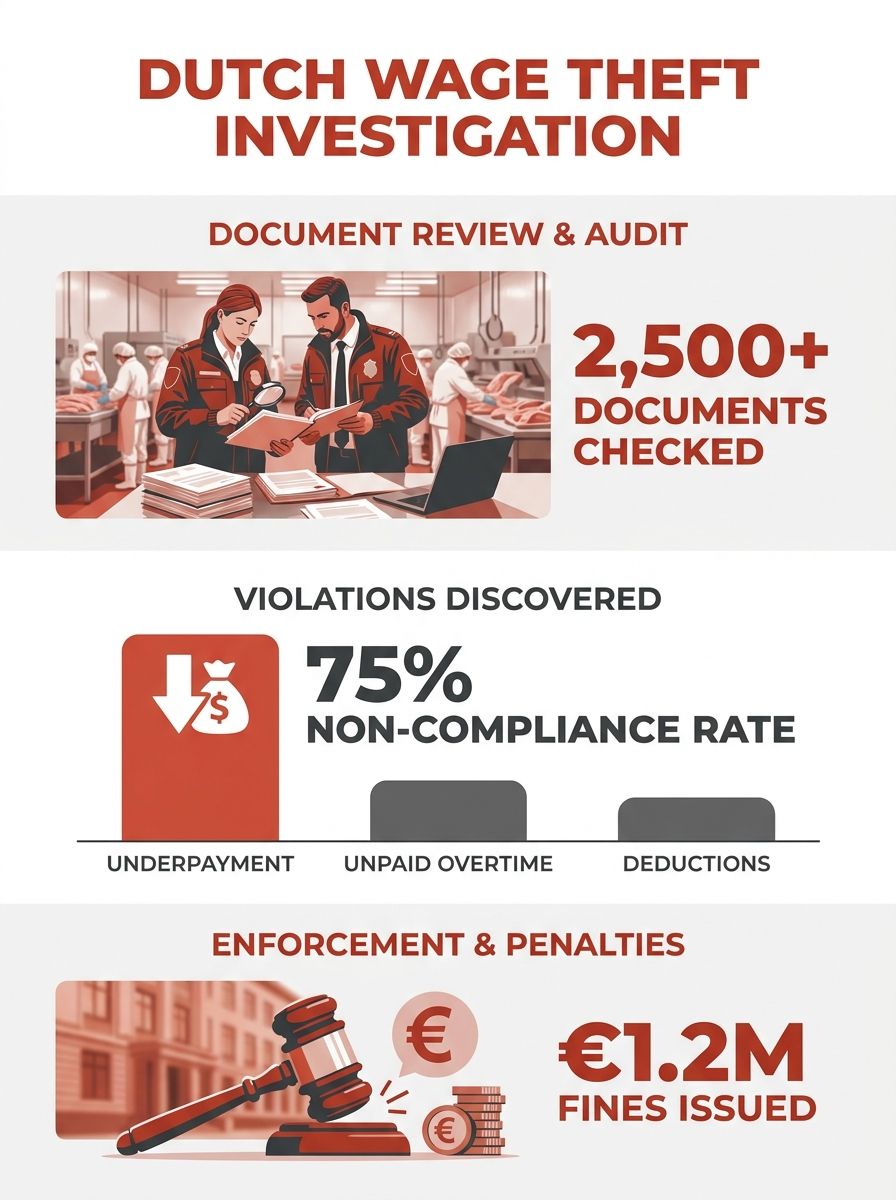
The €3.3 million asset seizure includes multiple property holdings across two countries. In Germany, prosecutors froze 20 properties valued at roughly €2.4 million. In the Netherlands, authorities seized bank accounts, a plot of land, and additional property holdings, the labour inspectorate confirmed.
The €2.1 million in directly embezzled wages represents money that should have reached workers' accounts but was instead diverted. The additional €2.4 million in estimated unlawful profit reflects gains from related offenses that investigators traced to the same shareholder, bringing the total alleged fraud to €4.5 million.
The seizure amount exceeds the documented embezzlement figure because prosecutors target all assets believed to derive from the criminal activity, not solely the stolen wages. Under Dutch law, authorities can freeze assets proportional to the total unlawful gain when prosecuting financial crimes.
Ongoing Investigation and Industry Context
The criminal investigation continues, with prosecutors gathering evidence for trial. The August hearing will determine whether the seized assets remain frozen pending prosecution or are released back to the shareholder.
The case emerges against a backdrop of sustained pressure on the Dutch meat-processing sector over labor practices. Social Affairs Minister Hans Vijlbrief is weighing whether to ban temp-agency labor in slaughterhouses entirely, following years of documented abuses involving migrant workers. The labour inspectorate said it will publish a report on its oversight of Dutch meat companies before summer.
Similar enforcement patterns have surfaced in other sectors where temporary agencies serve as intermediaries for migrant labor. The wage-theft method used in this case—altering payroll records to reroute payments—has appeared in construction and logistics prosecutions, though rarely at this scale.
The decision to preserve the agency's operations during prosecution reflects a practical enforcement trade-off: shutting down the business would harm current workers while enriching the accused shareholder, who could liquidate the company and keep diverted funds. Freezing personal assets while allowing payroll to continue targets the individual without punishing workers twice.
Context and Outlook
The €3.3 million seizure demonstrates that labor-law enforcement in the Netherlands can reach beyond fines and administrative penalties into criminal asset forfeiture. For workers and organizers in sectors with high concentrations of agency labor, the case shows that systemic wage theft can trigger prosecution and asset freezes—not just back-pay orders.
The timing matters. Minister Vijlbrief's consideration of an outright ban on temp agencies in meat processing suggests the government views the sector's labor practices as beyond reform through inspection alone. The inspectorate's forthcoming report will clarify whether this case represents an outlier or a pattern requiring structural intervention. Similar enforcement mechanisms exist in prevailing-wage law, where systematic underpayment triggers both restitution and debarment.
For temp agencies in other industries, the case sets a precedent: diverting wages into controlled accounts and withdrawing cash crosses from civil violation into criminal fraud, with prosecutors prepared to freeze assets across borders. The August hearing will determine whether the seized properties fund restitution to affected workers or remain frozen pending trial.
The Union Edge Staff
Related Articles

Dutch Employers Push to Shift 2027 Bargaining Focus From Wages to Training; Union Demands 5.5% Hike
Dutch employers' associations announced Friday they will push to redirect 2027 collective bargaining negotiations away from wage increases toward investments in training and artificial intelligence, arguing that productivity gains must precede higher pay.

Truck Drivers Rally Against Federal Wage-Theft Enforcement That Targets Workers Instead of Employers
Truck drivers rallied outside the Etobicoke office of Secretary of State for Labour John Zerucelli on September 12, demanding the federal government redirect enforcement of wage-theft laws away from workers and toward the employers violating Canada Labour Code protections, according to Justice for T

Supreme Court Rules Home Office Must Specify Grounds for Right-to-Work Penalties
The UK Supreme Court ruled on Monday that the Home Office must explicitly state which legal provision an employer violated when issuing civil penalties for right-to-work breaches, overturning a £15,000 fine against Akbar's Restaurants after justices found the penalty notice invalid.
Also in the paper