
Organizing Migrant Workers Without Erasing Their Identity: A Union Strategy Beyond the Standard Playbook
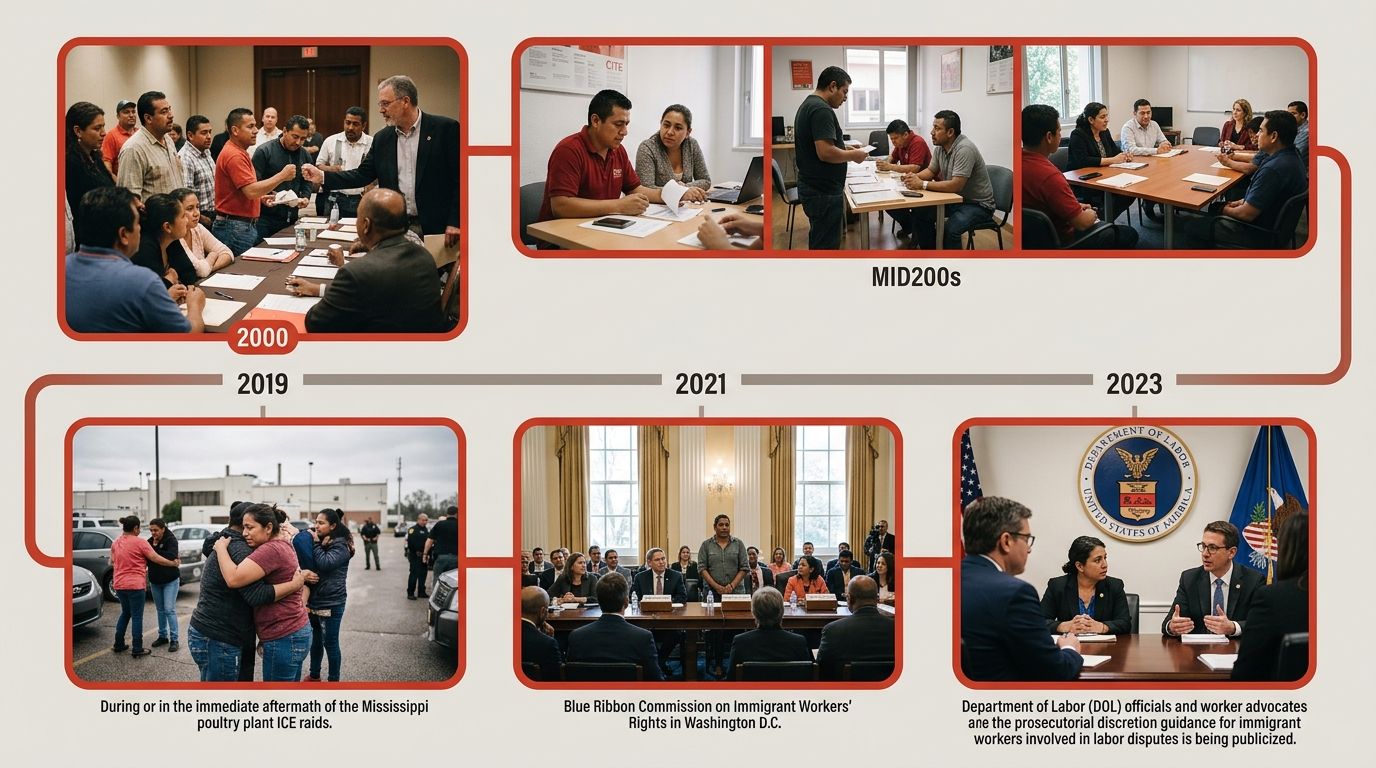
The AFL-CIO's executive council voted unanimously in February 2000 to abandon a position the federation had defended for over a century. For the first time, the largest labor body in the United States would publicly support amnesty for undocumented workers and oppose employer sanctions.

Organizing Migrant Workers Without Erasing Their Identity: A Union Strategy Beyond the Standard Playbook
The AFL-CIO's executive council voted unanimously in February 2000 to abandon a position the federation had defended for over a century. For the first time, the largest labor body in the United States would publicly support amnesty for undocumented workers and oppose employer sanctions. Federation officials described the move as "championing immigrant rights as a strategic move to make immigrants more enthusiastic about joining unions." The language was revealing. Even in the act of opening the door, the institution framed migrant workers primarily as a recruitment opportunity. Their specific vulnerabilities, their layered forms of exploitation, and their existing community-based organizing traditions were treated as secondary concerns. That framing set the pattern for much of what followed over the next two decades, and understanding how it went wrong is essential for anyone doing migrant worker organizing today.
The Universalistic Trap
After the 2000 reversal, the dominant philosophy in organized labor toward immigrant members could be described in one word: sameness. Unions approached migrants as workers, full stop. The logic was straightforward and, on its surface, progressive. If you treat everyone equally on the shop floor, you avoid creating hierarchies among your own members. You sidestep the uncomfortable questions about immigration status, language barriers, and cultural difference. You present a unified front to the boss.
Researchers have a name for this approach: universalistic. And a comparative study of three UK trade unions published in The International Journal of Human Resource Management found that it consistently falls short. The study concluded that unions tend to consider migrants primarily as workers rather than as migrant workers with particular and overlapping forms of oppression. The distinction matters enormously. A Guatemalan poultry worker in Mississippi doesn't just face low wages. She faces the threat of deportation if she files a safety complaint, isolation from family networks, language barriers that prevent her from understanding her rights, and racialized workplace hierarchies that slot her into the most dangerous jobs. Treating her experience as identical to a native-born coworker's means ignoring the very mechanisms her employer uses to keep her compliant.
This failure to acknowledge difference echoes a broader pattern we've documented in how organizers assume workers' needs rather than listening to them. The universalistic model isn't malicious. But it's lazy, and laziness in organizing costs campaigns.
When the European Models Diverged
The tension between universalistic and particularistic approaches played out most visibly across European labor movements in the mid-2000s. Different countries chose different paths, and the results offer a kind of natural experiment in intersectional union strategy.
In Spain, the major confederations CCOO and UGT established dedicated migrant worker centers called CITEs (Centros de Información al Trabajador/a Extranjero/a). These weren't add-on programs or diversity committees. They functioned as full-service worker centers offering legal aid, mediation with employers, and help navigating the immigration bureaucracy. In Milan, the Camera del Lavoro initiated 27,200 legal cases on behalf of migrant workers in 2006 alone. The breakdown tells you what migrant workers actually needed: 37% of cases involved work permits, 22% dealt with residence renewals and family reunification, and 20% were general information requests. Only a fraction resembled traditional union grievances about wages or conditions.
France took the opposite path. The CGT, rooted in republican universalism, resisted creating separate structures for migrant members. The union's ideological commitment to treating all workers as equal citizens of the republic meant that particularistic programming felt like a concession to identity politics. But reality forced adjustments. By 2014, the CGT's national migrant collective opened a weekly advice clinic in Paris, acknowledging that undocumented workers needed specialized support. The union had spent years lobbying the French government for two key circulaires, issued in 2010 and 2012, that created pathways for undocumented workers to regularize their status based on documented work history. The CGT discovered what organizers everywhere eventually learn: you can hold universalist principles while still recognizing that people face different barriers to exercising those universal rights.
The Spanish model, imperfect as it was, got something fundamental right. It logged individual cases centrally, creating institutional memory. When a Moroccan construction worker walked into a CITE in Barcelona, his file didn't vanish when his case resolved. If he returned two years later with a different problem, the union already knew his history. That continuity matters for workers whose relationship with institutions is defined by disruption.
Worker Centers and the Migrant-Led Alternative
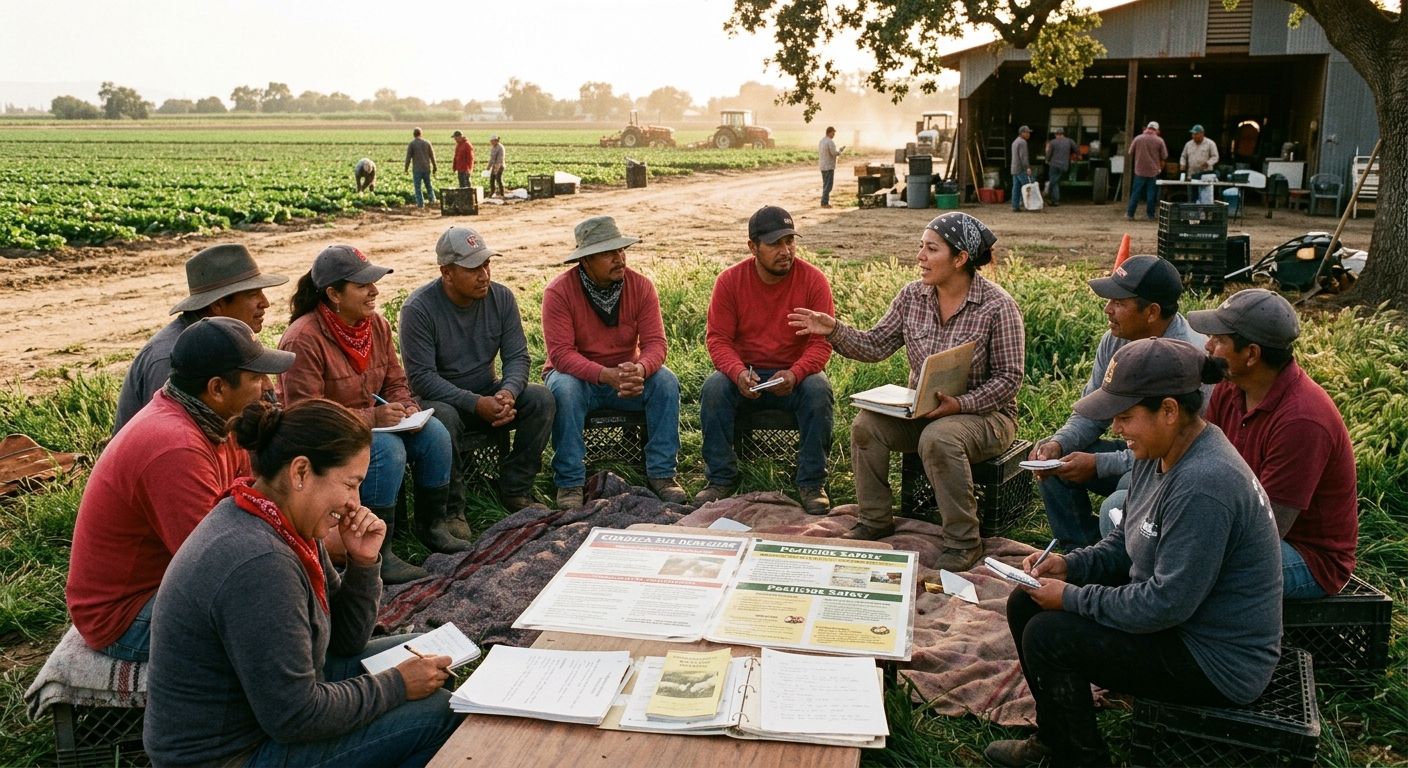
While traditional unions in the U.S. and Europe debated whether and how to adapt their structures, migrant workers were already building their own. The rise of worker centers in the 2000s and 2010s represented a parallel labor movement, one built from the ground up around the actual conditions of precarious work organizing.
Organizations like WeCount! in South Florida operated on a simple premise: if federal labor law excludes you, build power outside federal labor law. As Oscar Londoño, WeCount!'s co-executive director, has pointed out, the structure of the National Labor Relations Act itself created this problem. Agricultural workers, domestic workers, and independent contractors were carved out of NLRA protections when the law was written in 1935, and those exclusions were designed to maintain racial hierarchies. They continue to disproportionately affect migrant workers today.
The innovations that emerged from this exclusion are striking. The Fair Food Program in Florida's tomato industry and the Milk with Dignity program in Vermont's dairy sector both secured enforceable standards for migrant farmworkers without going through the NLRB election process. They did it through market pressure, binding agreements with buyers, and worker-to-worker education programs conducted in the languages workers actually speak. These aren't symbolic victories. They include concrete mechanisms for monitoring compliance, and they've survived changes in presidential administrations that would have gutted enforcement-dependent models.
The Economic Policy Institute's research on temporary labor migration programs documented why these alternative structures matter so much. Freedom of association is a fundamental right under international law, but guestworkers face enormous barriers to exercising it. The structure of temporary labor migration programs makes workers inherently vulnerable to retaliation. Your employer controls your visa. Your employer controls your housing. Your employer can send you home. In that context, filing an NLRB charge isn't a realistic option for most workers. Cultural competency in unions has to include understanding these power dynamics and building strategies around them rather than pretending they don't exist.
The Blue Ribbon Commission Breakthrough
On December 8, 2021, something unusual happened in Washington, D.C. Migrant workers from across the country testified before Department of Homeland Security officials at a public hearing organized by the Blue Ribbon Commission on Protections for Immigrant Workers. The workers described what organizers have known for decades: employers routinely weaponize immigration enforcement to suppress labor complaints. The 2019 raids on Mississippi poultry plants, where ICE detained nearly 700 workers on the first day of school, had made the dynamic impossible to ignore.
The commission's work led to a policy shift with real operational consequences. The Department of Labor issued guidance establishing that immigrant workers filing labor complaints could seek immigration-related prosecutorial discretion from DHS. In plain language: if you report wage theft, unsafe conditions, or retaliation, immigration enforcement is supposed to stand down while your case proceeds. The Department of Labor's migrant worker rights page now explicitly states that federal labor laws protect workers from retaliation for exercising their rights, regardless of immigration status.
This policy didn't solve the problem. Workers in precarious positions still feared coming forward, and a qualitative study published in Frontiers in Psychiatry found that recent immigrants in precarious work environments constantly feared making mistakes and carried the added stress of demonstrating competence. Participants tolerated racism, discrimination, and exploitation and rarely complained because of job insecurity and financial instability. The study also found that cultural taboos about seeking help, combined with language barriers and lack of familiarity with available services, kept migrant workers from accessing mental health support.
But the prosecutorial discretion framework created a concrete tool that organizers can use. And it established a principle that prior administrations had refused to codify: labor rights and immigration enforcement are separate tracks, and mixing them serves only the employer.
Building Cultural Infrastructure Into the Campaign
The chronological record makes one thing clear: unions that bolted on "diversity programming" after designing their campaigns failed. The ones that succeeded built cultural infrastructure into their organizing from the start.
What does that look like in practice? LIUNA, the Laborers' International Union of North America, anchored its immigration principles in three commitments: humane border enforcement, a path to citizenship, and opposition to expanded guest worker programs that create captive labor pools. That policy framework matters because it tells migrant members, before they sign a card, that the union has thought about their specific situation.
At the campaign level, cultural competency in unions means several concrete things. It means holding organizing meetings in community spaces where migrants already gather, not in union halls that feel institutional and unfamiliar. This connects to broader lessons about why organizers need to get into communities rather than expecting workers to come to them. It means training bilingual workers as peer organizers rather than relying on professional staff who parachute in. It means understanding that a Haitian Creole-speaking warehouse worker and a Spanish-speaking warehouse worker may share an employer but face different community dynamics, different immigration pathways, and different histories with institutions.
The AFL-CIO's current immigration platform includes resources to help union members defend immigrant family and community members in the event of workplace immigration enforcement. These materials exist because organizers learned, through painful experience, that the universalistic approach of treating everyone identically left migrant members exposed when ICE showed up.
And the lessons extend beyond immigration-specific campaigns. Any organizer working in sectors with high migrant populations, which increasingly means construction, meatpacking, agriculture, hospitality, healthcare, and warehousing, needs to understand that leading with institutional power rather than worker relationships is especially destructive when workers have reasons to distrust institutions.
Where This Lands Now
The labor movement's relationship with migrant workers has traveled from exclusion to conditional inclusion to something more genuinely participatory, but the distance still to cover is significant. Research on precarious work organizing consistently shows that forms and consequences of precarious work vary across countries due to institutional, cultural, and historical differences. There is no single playbook that works everywhere.
What the chronological record teaches is that the most effective migrant worker organizing happens when unions stop treating cultural and legal adaptation as special accommodations and start treating them as core strategy. The CITEs model in Spain, the worker center model in the U.S., and the prosecutorial discretion framework all share a common thread: they were built around the actual conditions migrant workers face, not around an idealized version of the labor movement that pretends those conditions don't exist.
The gap between the standard union playbook and what migrant workers actually need remains wide in most locals. Closing it requires structural changes. Unions need multilingual staff at every level of the organization, not just at the front desk. They need legal partnerships that can handle immigration cases alongside labor cases. They need to fund and respect worker centers as legitimate partners rather than viewing them as competitors. And they need to confront the mental health toll of precarious migrant work, which current union health and safety programs are almost entirely unequipped to address.
Intersectional union strategy sounds like an academic concept, and it originated in academic literature. But the workers who need it are dealing with very concrete problems: a supervisor who threatens to call immigration when they report an injury, a shift schedule designed to prevent them from attending English classes, a grievance process that only exists in a language they don't read. When unions address those specific, layered forms of exploitation, they don't weaken the principle of worker solidarity. They make it real for people who have been told, in a hundred different ways, that solidarity wasn't meant for them.
The Union Edge Staff
Also in the paper