
From Listening to Leading: Why Organizers Who Assume Workers' Needs Lose Campaigns
The most common reason union organizing campaigns collapse has nothing to do with employer interference, bad timing, or weak labor law. It's that the organizer talked too much.

From Listening to Leading: Why Organizers Who Assume Workers' Needs Lose Campaigns
The most common reason union organizing campaigns collapse has nothing to do with employer interference, bad timing, or weak labor law. It's that the organizer talked too much. When someone walks onto a shop floor already convinced they know the grievances, already armed with a pre-built platform of demands, they're not organizing. They're performing. And workers can tell the difference within minutes.
We've watched this pattern repeat across industries and decades: an organizer arrives full of conviction, pitches a vision of what the union will fix, and genuinely believes they're serving the workers. But 48% of American workers say they'd vote to form a union if given the chance, and yet unions win only about 31% of private-sector campaigns after employer pressure kicks in. That gap isn't explained solely by corporate opposition. A significant share of it comes from campaigns that never built authentic worker commitment because the organizer substituted their own analysis for the workers' lived experience.
This is a civil rights issue. The right to organize is, at its core, the right to self-determination at work. When an organizer presumes to know what a warehouse worker, a nurse, or a janitor needs without asking, they replicate the exact power imbalance the union is supposed to dismantle.
The 70/30 Rule That Almost Nobody Follows
There's a principle taught in virtually every serious organizer training program: in a one-on-one conversation, the organizer should be talking 30% of the time and listening 70%. As the Fire with Fire organizing blog puts it plainly, "The most common and yet damaging mistake organizers make is talking too much."
Thirty-seventy. It sounds simple. It isn't.
In practice, the ratio flips. Organizers come in knowing the statistics on wage theft in a given industry. They've read the OSHA complaint history for the facility. They have pamphlets. And so when they sit across from a worker on a lunch break, they lead with solutions instead of questions. They say, "Did you know your employer is violating Section 7?" instead of, "What's the hardest part of your day?"
The distinction matters enormously. When you lead with solutions, you position yourself as the expert and the worker as the passive recipient. That's not organizing. That's a sales pitch. And workers who feel sold to, rather than heard, tend to disengage the moment employer pressure arrives. The foundation was never theirs to begin with.
We've written before about moving beyond solutions and into workers' real problems, and the core insight holds: people don't fight for someone else's analysis. They fight for their own. Your job as an organizer isn't to be right about the grievances. It's to help workers articulate what they already know in their bones.
This isn't just soft-skills advice. It's structural. As Organizing.work notes, "The issues are not going to organize the shop for you. You need to listen to people and identify their grievances in order to find out how work affects them, because that's what inspires them to fight." If you skip the listening, you skip the fight. Full stop.
Assumed Needs Reproduce the Boss's Playbook
Here's the part that makes organizers uncomfortable: when you assume what workers need, you're mimicking the management style you're supposed to be challenging.
Think about it. What do bad employers do? They make decisions about workers' lives without consulting workers. They decide the schedule. They decide the safety protocols. They decide which complaints are legitimate and which aren't. The entire premise of collective bargaining is that workers deserve a voice in those decisions. But when an organizer arrives with a pre-packaged campaign built around issues they selected, they've just re-created a top-down structure with a union logo on it.
Research backs this up. Top-down approaches can be efficient, but they create power imbalances within organizations. Bottom-up approaches, where people work together toward making decisions, build something different: genuine ownership. And ownership is what carries a campaign through the brutal counter-offensive that employers mount.
Consider what happens when a campaign is built on assumed needs. The organizer decides the core issue is wages. But the workers' actual burning concern is that their supervisor retaliates against anyone who reports injuries. Or the organizer builds the campaign around scheduling fairness, while the real fury in the break room is about a racist manager who's never been held accountable. These aren't just strategic miscalculations. They're failures of respect. They signal to workers that the organizer, like the boss, doesn't really see them.
And employers exploit this gap ruthlessly. Roughly 75% of private employers hire union avoidance consultants during organizing drives. Those consultants are trained to find daylight between the union's messaging and workers' actual concerns. If the organizer has been pushing wages while workers care about safety, the consultant will say: "See? They don't even know what you're dealing with. How are they going to represent you?"
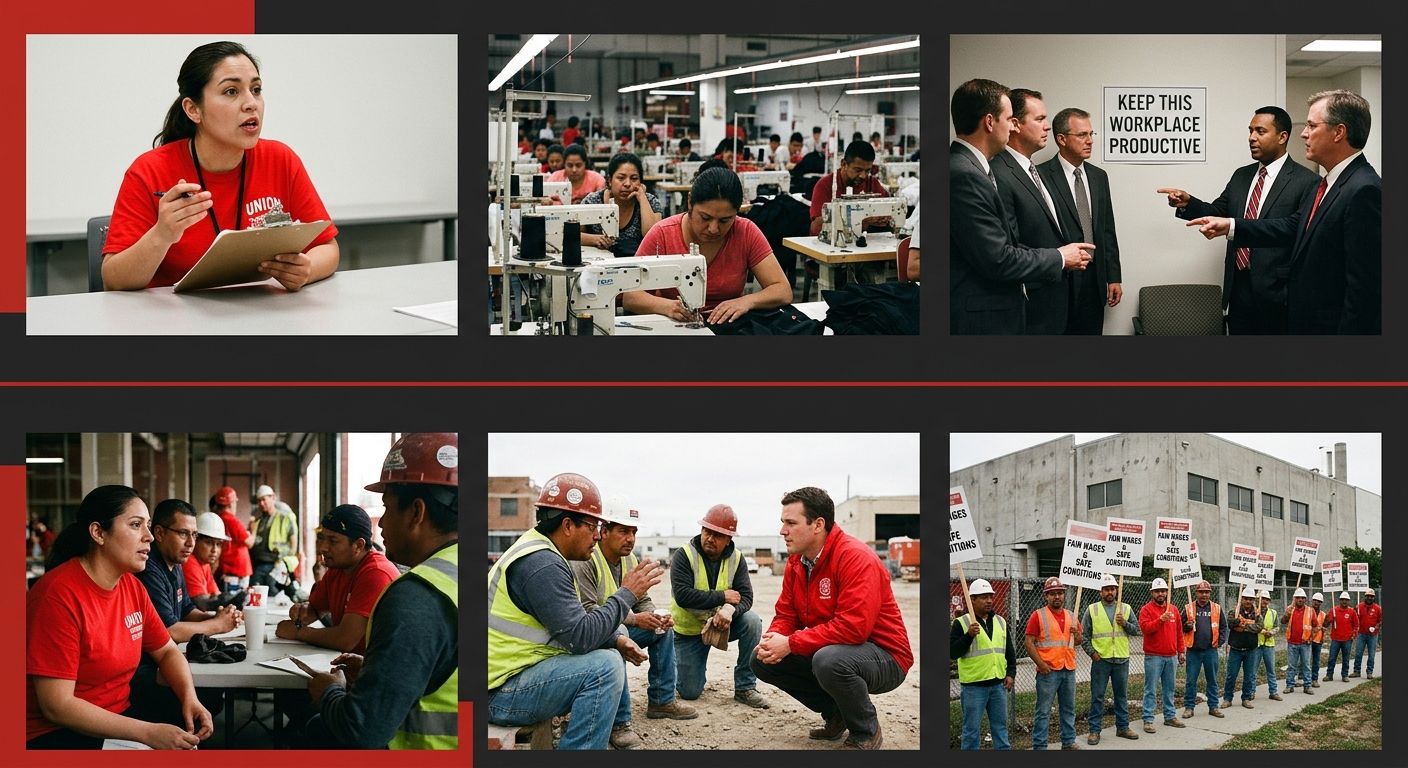
This is why understanding the gap between corporate promises and actual conditions matters so much. Workers already know that gap exists. They live inside it every shift. The organizer's role isn't to explain the gap. It's to help workers name it themselves, on their own terms.
Worker-Led Campaigns Build the Only Kind of Power That Lasts
The evidence for worker-led campaigns doesn't just come from theory. It comes from the field.
One of the most instructive examples is Familias Unidas por La Justicia (FUJ), which organized over 500 immigrant farmworkers at Sakuma Brothers Berry Farm. That campaign took four years. It succeeded because it was rooted in the actual, specific grievances of those specific workers, identified through deep community engagement, not imposed from outside. The result was a contract with a $12/hour minimum wage and an average of $15 under a revised piece-rate system. According to the American Academy of Arts and Sciences, mobilizing union-led campaigns with Latino immigrants helped those workers "transcend barriers, including limited English language skills and low formal education levels." The union didn't overcome those barriers for them. It created the conditions for workers to overcome them collectively.
That's the difference between organizing and advocacy. Advocacy says, "We will fight for you." Organizing says, "We will build the conditions for you to fight, and we'll fight alongside you."
And that difference shows up in staying power. One of the biggest problems in the labor movement is that 37% of newly formed unions still lack a first contract two years after winning their election. We've covered why post-recognition strategy determines real workplace change, and the pattern is consistent: campaigns that relied on organizer-driven energy rather than worker-driven commitment tend to stall after the election. The organizer moves on. The employer digs in. And the workers, who were passengers rather than drivers, don't have the muscle memory of self-organization needed to push through to a contract.
By contrast, campaigns built on listening-based organizing produce workers who already know how to run a meeting, identify an issue, and mobilize their coworkers. Because that's what they did to get to the election in the first place.
As Labor Politics observes, "Organizers often freeze because they are more worried about making a mistake than taking action." But the deeper freeze happens when organizers are more worried about their campaign plan than the workers in front of them. The plan should be a living document, constantly reshaped by what workers are actually saying. If it isn't, it's just a map to a destination nobody asked to visit.
The Discipline of Shutting Up
So what does this look like in practice? It looks like discipline. Specifically, the discipline of shutting up.
Before your first one-on-one, write down every assumption you have about what workers at that shop care about. Be honest. Then put that list away and don't look at it until you've had at least 20 conversations. After those conversations, compare what you assumed with what you heard. In our experience, the mismatch is usually startling.
When building your grassroots power building strategy, treat every conversation as data. Not data for your spreadsheet, though tracking matters. Data for the campaign's identity. The issues that emerge from 50 real conversations will be more compelling, more specific, and more unifying than anything you could draft at headquarters.
And when workers raise something you didn't expect, resist the urge to redirect. That unexpected issue might be the one that turns a cautious bystander into a shop-floor leader. Some of the most successful union campaigns in recent memory were organized around concerns no outside organizer would have predicted: a specific supervisor's habit of denying bathroom breaks, a policy of confiscating tips from night-shift workers, an HVAC system that made a particular floor unbearable six months a year.
These aren't small issues. To the people who endure them daily, they are the whole world. And a union organizing strategy that starts from those specifics, rather than descending from generalizations, is a strategy that wins because it belongs to the workers who built it.
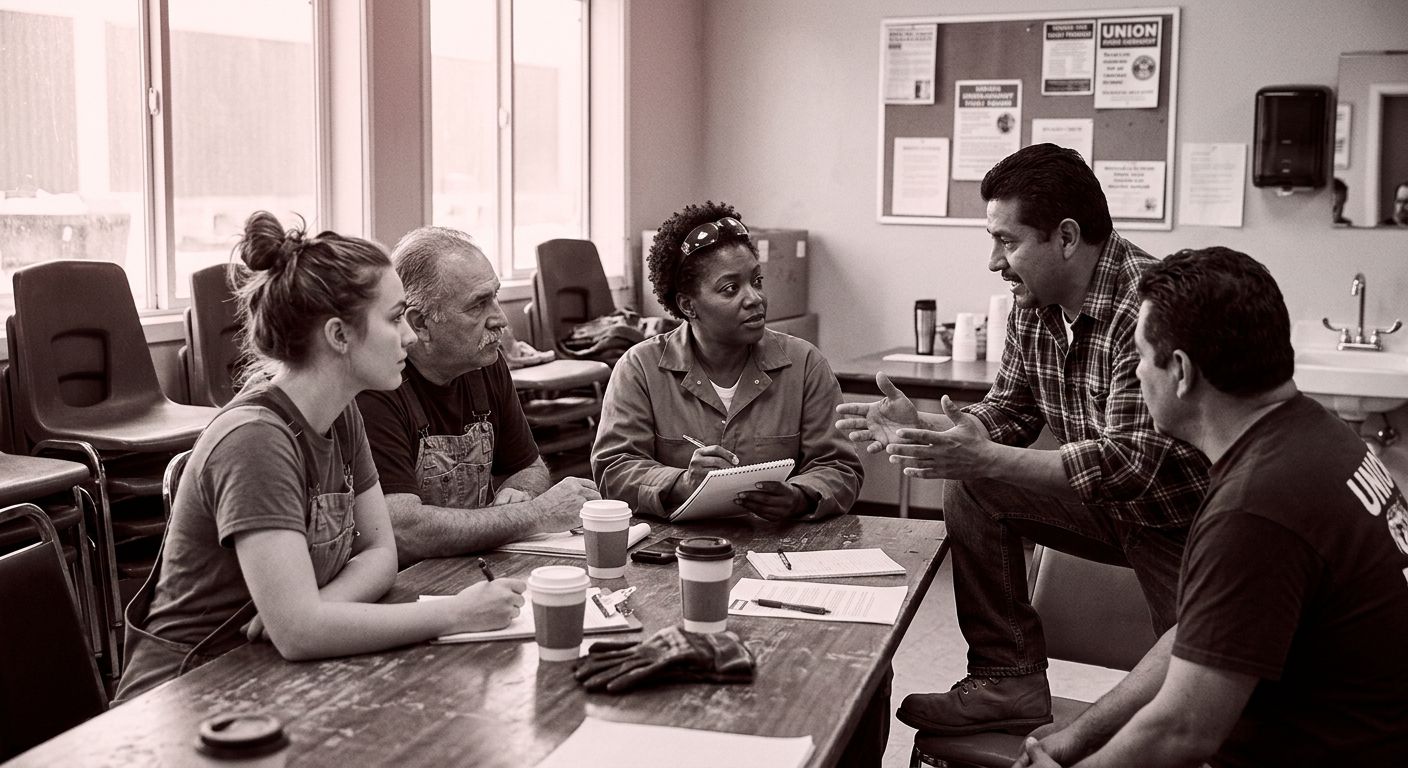
If you're an organizer reading this, we know the temptation. You've seen patterns. You know the data. You've read the field guides to organizing campaigns. And all of that knowledge is valuable. But it's valuable as context for listening, not as a substitute for it. The moment your expertise replaces a worker's voice, you've stopped organizing and started managing. And workers already have enough managers.
The campaigns that win, the ones that survive employer opposition, that reach first contracts, that build lasting democratic unions, all share one trait. They started by treating workers as the experts on their own lives. Not as data points. Not as constituencies to be mobilized. As people whose knowledge of their own workplace is the single most important resource the campaign will ever have. Every organizer mistake that leads to a lost campaign can be traced back to forgetting that fact, and the most effective organizing begins by listening until workers are ready to lead.
The Union Edge Staff
Frequently Asked Questions
- Why do union organizing campaigns fail?
- The most common reason organizing campaigns collapse is that organizers talk too much and listen too little, arriving with pre-built platforms of demands rather than asking workers about their actual grievances. When organizers substitute their own analysis for workers' lived experience, they fail to build authentic worker commitment, which is essential for surviving employer pressure.
- What is the 70/30 rule in union organizing?
- The 70/30 rule states that in one-on-one conversations, organizers should listen 70% of the time and talk only 30% of the time. This principle is taught in serious organizer training programs but is rarely followed in practice, with organizers typically flipping the ratio by leading with solutions instead of questions.
- How should organizers identify worker grievances?
- Organizers should listen to workers describe their actual concerns rather than assuming what issues matter to them. By asking open-ended questions like "What's the hardest part of your day?" instead of leading with solutions, organizers help workers articulate their own grievances, which is what truly inspires them to fight.
- Why do top-down organizing campaigns fail?
- When organizers arrive with pre-packaged campaigns based on issues they selected, they replicate the top-down power structure they're supposed to challenge, mimicking the very management style that created workers' grievances. Employers exploit these gaps by pointing out that the union's messaging doesn't match workers' actual concerns.
- What makes worker-led campaigns more successful?
- Worker-led campaigns build genuine ownership and lasting power because workers participate in identifying their own grievances from the start. These campaigns produce workers who already know how to run meetings, identify issues, and mobilize coworkers—skills needed to push through to a first contract after winning an election.
- How can organizers prepare for one-on-one conversations?
- Before conducting one-on-one conversations, organizers should write down their assumptions about worker concerns, then set that list aside and have at least 20 conversations before comparing what they assumed with what they actually heard. This discipline helps organizers avoid imposing their own analysis on the campaign.
- What percentage of newly formed unions lack a first contract?
- Approximately 37% of newly formed unions still lack a first contract two years after winning their election, typically because campaigns that relied on organizer-driven energy rather than worker-driven commitment tend to stall after the election when the organizer moves on.
Also in the paper