
Missouri Labor-Abortion Rights Coalition Deploys $1 Million to Unseat Lawmakers Who Repealed Paid Sick Leave
A coalition of Missouri labor unions and reproductive rights organizations announced a $1 million campaign in August 2026 targeting Republican state legislators who voted to repeal the state's paid sick leave requirement, according to the Missouri Independent.

Missouri Labor-Abortion Rights Coalition Deploys $1 Million to Unseat Lawmakers Who Repealed Paid Sick Leave
A coalition of Missouri labor unions and reproductive rights organizations announced a $1 million campaign in August 2026 targeting Republican state legislators who voted to repeal the state's paid sick leave requirement, according to the Missouri Independent. The effort marks the latest collaboration between two movements that have delivered a string of ballot-box victories over the past eight years despite Republican dominance in the state legislature.
The partnership helped defeat Amendments 4 and 5 in the August 2026 election, ballot proposals that would have altered the state's initiative petition process and eliminated the state income tax. The coalition now faces a November test when Missouri voters will decide whether to repeal the abortion rights amendment they approved in 2024 and reinstate an abortion ban.
"We've tried to figure out in the kind of swing-back that we've seen from the legislature how to not get picked off one-by-one, but stand as a united front against the attacks," said Caitlyn Adams, executive director of Missouri Jobs with Justice, in a statement to the Independent.
A Decade of Coalition-Building
The alliance between Missouri labor organizations and reproductive rights advocates evolved over more than a decade of shared legislative battles. The two movements delivered four major ballot initiative victories between 2018 and 2024: repealing a right-to-work law in 2018, expanding Medicaid in 2020, and approving both abortion rights and a higher minimum wage with paid sick leave in 2024.
M'Evie Mead, campaign director for Protect Majority Rule—a committee created to oppose Amendment 4—told the Independent that building an "incredibly powerful, interconnected movement of people" made these victories possible in a Republican-dominated state. "We can win these concrete victories that improve people's economic and reproductive lives," Mead said.
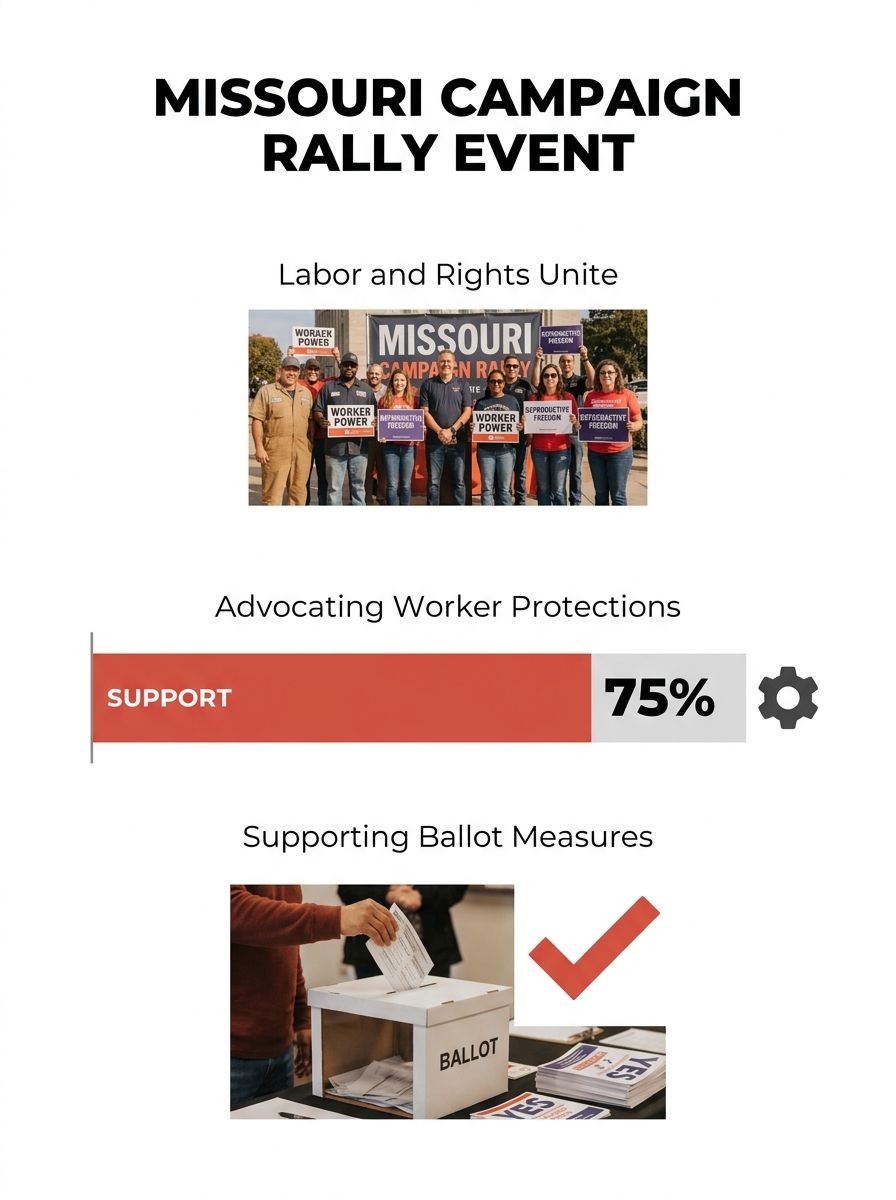
Nancy Cross, former vice president of SEIU Local 1, identified 2011 as a turning point when reproductive rights groups backed union efforts against right-to-work legislation for the first time. "They understood from the beginning that if this happens, we're all in jeopardy," Cross said of the cross-movement support.
From Separate Struggles to Unified Strategy
The coalition strategy represents a sharp departure from earlier decades when the movements sometimes found themselves at odds. Michael Wolff, former chief justice of the Missouri Supreme Court and dean emeritus at the St. Louis University School of Law, noted that labor unions historically had members and legislators "friendly to labor, but unfriendly to reproductive rights" when Democrats controlled the state.
Cross, who moved to Missouri in 2004 to work for the Service Employees International Union, recalled that early collaboration required leaders from both movements to meet regularly—sometimes simply to agree not to oppose each other's initiatives rather than to reach full consensus. The most resistance came from Catholic union leaders in St. Louis, she said.
The 2017 passage of right-to-work legislation by the state legislature accelerated the partnership. "All of a sudden you realize, 'they're coming after me, even if I don't get engaged with this issue,'" Cross said of labor leaders' response at the time. Voters repealed the law in 2018 by a decisive margin.
Clarke Wheeler, a senior policy analyst with the National Women's Law Center, described Missouri as a "shining example of the power of cross-movement organizing and what it looks like on the ground in real life." The state's coalition has excelled at connecting labor issues and reproductive rights in ways that resonate with voters, Wheeler said.
November Vote Looms
The coalition's next test arrives in November when Missouri voters will decide whether to repeal the 2024 abortion rights amendment and reinstate the state's abortion ban. The $1 million campaign announced in August focuses on unseating legislators who voted to repeal paid sick leave, part of the minimum wage measure voters approved in 2024 alongside the abortion amendment.
The collaboration draws on lessons learned over years of organizing. "Even if you're pro-life, the ability to have a choice of whether or not you want to have a child or not, is a right that impacts your work," Cross told the Independent. "Because maybe you don't have a lot of benefits for working there. Maybe you don't have health insurance."
Mead, who served as executive director of NARAL Pro-Choice Missouri (now Abortion Action Missouri) before joining Planned Parenthood Advocates in Missouri, noted that shifting political attitudes within labor required framing reproductive healthcare as a reality of union members' lives rather than solely a wedge issue. "That just took conversations and time," she said.
The coalition's approach mirrors broader trends in cross-movement organizing that have gained traction nationally as unions and advocacy groups seek use in states where single-issue campaigns face legislative resistance.
The Takeaway
Missouri's labor-reproductive rights coalition demonstrates how sustained cross-movement organizing can deliver electoral victories in states where legislatures actively resist both union protections and abortion access. The $1 million campaign targeting lawmakers who repealed paid sick leave tests whether the coalition can translate ballot-box success into legislative accountability—a model that organizers in other Republican-controlled states are watching closely. With a November vote on repealing abortion rights ahead, the alliance faces its most consequential challenge since forming, one that will indicate whether the partnership can withstand direct attacks on its core 2024 victories.
The Union Edge Staff
Related Articles

The PRO Act Is Dead Again — and Labor's Legislative Strategy Needs a Hard Reset
The Richard L. Trumka Protecting the Right to Organize Act has been introduced in four consecutive Congresses. It passed the House once, never reached a Senate floor vote, and changed zero lines of federal labor law.

UnityPoint Nurses Turn to Lawmakers After Employer Delays Union Certification
Nurses at UnityPoint Health in Des Moines, Iowa, met with state and federal lawmakers this week to discuss delayed union certification nearly one year after voting to join Teamsters Local 90, according to a statement from the union. The employer has filed objections that have prevented the National

Springfield Cannabis Workers Ratify First Union Contract After Four-Year Campaign
Cannabis workers at Key Cannabis Dispensary in Springfield, Missouri, ratified their first collective bargaining agreement in late July 2026, securing wage increases, bonuses, and expanded paid time off after a four-year organizing campaign that began with a 6-3 union vote in 2022, according to the
Also in the paper