
UnityPoint Nurses Turn to Lawmakers After Employer Delays Union Certification
Nurses at UnityPoint Health in Des Moines, Iowa, met with state and federal lawmakers this week to discuss delayed union certification nearly one year after voting to join Teamsters Local 90, according to a statement from the union. The employer has filed objections that have prevented the National

UnityPoint Nurses Turn to Lawmakers After Employer Delays Union Certification
Nurses at UnityPoint Health in Des Moines, Iowa, met with state and federal lawmakers this week to discuss delayed union certification nearly one year after voting to join Teamsters Local 90, according to a statement from the union. The employer has filed objections that have prevented the National Labor Relations Board from certifying the election results.
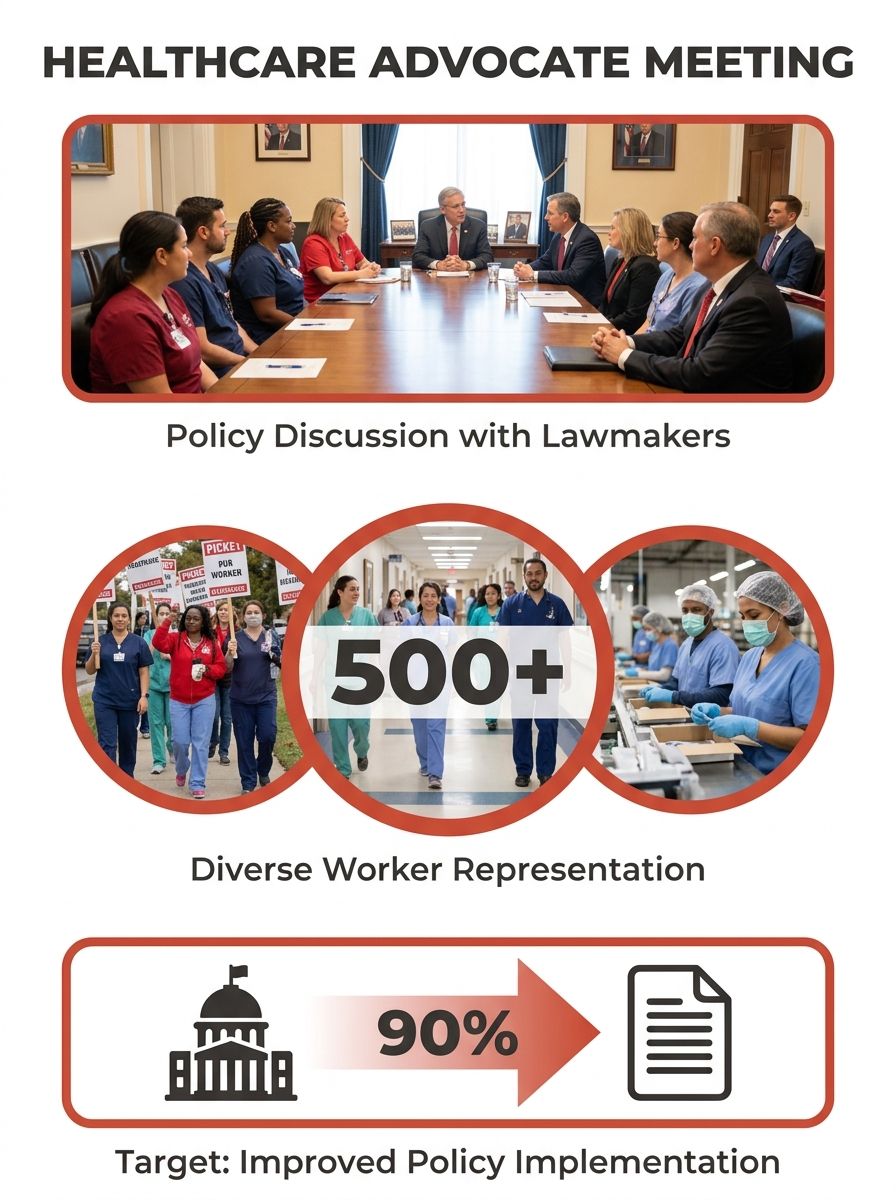
The roundtable discussions on May 15 included State Senator Zach Wahls, U.S. Senator Elizabeth Warren, and Iowa State Auditor Rob Sand, who is running for governor. Topics centered on union-busting tactics, staffing levels, and rural healthcare access—the same issues that drove the organizing campaign.
Political Pressure Campaign Takes Shape
The meetings represent a shift in strategy for nurses who voted to organize in 2025 but have been unable to secure formal recognition. By engaging elected officials, the workers are applying political pressure on UnityPoint Health while legal challenges remain pending before the NLRB.
"These workers have fought too hard to be ignored," said Alano De La Rosa, Secretary-Treasurer of Local 90. The discussions addressed safe staffing ratios, compensation, and working conditions that affect both nurses and patients, De La Rosa said in the statement.
Election Victory Meets Employer Objections
Nurses at the Des Moines facility voted to join the Teamsters in 2025 after what the union described as a multimillion-dollar campaign by UnityPoint Health to discourage unionization. Despite winning the election, workers have not received certification due to objections filed by the employer—a delay tactic that can stretch months or years as cases move through NLRB administrative proceedings.
The certification delay means nurses cannot legally compel the employer to begin contract negotiations. Under federal labor law, employers must bargain in good faith only after the NLRB certifies election results. Objections filed during the post-election period freeze the process until an administrative law judge or the board itself resolves disputed issues.
This pattern mirrors authorization card threshold challenges that organizers face at earlier stages of campaigns, where procedural hurdles can derail momentum even after workers demonstrate majority support.
Nurses Cite Financial Priorities Over Patient Care
Deb Henning, a registered nurse at UnityPoint Health, said the employer continues prioritizing financial performance over staffing investments and worker retention. "We have been exploited for our compassion and dedication to our patients for long enough," Henning said in the union statement.
The staffing concerns align with broader issues in healthcare organizing, where patient safety arguments often serve as the foundation for union campaigns. Nurses typically frame organizing drives around workload and staffing ratios rather than wages alone, appealing to public sentiment about quality care.
Henning called on UnityPoint to stop delaying the process, recognize the union, and begin contract negotiations.
Healthcare Organizing in the Midwest
Teamsters Local 90 represents workers across multiple industries in Iowa. The UnityPoint campaign marks one of several healthcare organizing efforts in the Midwest, where nurses have increasingly turned to unionization amid staffing shortages that intensified during the COVID-19 pandemic.
The involvement of Senator Warren, a Massachusetts Democrat who has supported labor organizing nationally, signals potential federal attention to NLRB certification delays. State-level officials like Wahls and Sand can influence regulatory oversight of healthcare employers in Iowa but lack direct authority over federal labor law enforcement.
Policy Implications
The UnityPoint case illustrates how employer objections to union elections can indefinitely postpone collective bargaining even after workers vote to organize. While the National Labor Relations Act guarantees the right to unionize, enforcement mechanisms allow employers to contest results through administrative channels that lack firm deadlines. Reforms proposed in Congress, including the PRO Act, would impose stricter timelines on certification and increase penalties for employers who delay recognition, though no such legislation has advanced in the current session.
For healthcare workers, the intersection of patient safety and labor organizing creates distinct leverage points that may not exist in other industries. Public pressure campaigns involving elected officials can amplify worker demands when legal processes stall, particularly in sectors where community health concerns resonate with voters. The strategy deployed by UnityPoint nurses—engaging gubernatorial and Senate candidates—reflects an understanding that political visibility can force employer action where labor law alone may not.
The outcome at UnityPoint will likely influence organizing strategy at other Iowa healthcare facilities, where workers face similar questions about whether election victories translate into actual union contracts. For organizers, the case underscores the gap between winning representation elections and achieving recognized bargaining status—a gap that employer objections are designed to exploit.
The Union Edge Staff
Related Articles

Leadership Density Over Card Counts: Why Union Authorization Metrics Fail and What Actually Predicts Organizing Success
Authorization cards measure interest, not resilience.
Nurses at Central Maine Medical Center Vote to Unionize With 91% Approval
Nurses at Central Maine Medical Center in Lewiston, Maine, voted 204-21 in favor of joining the Maine State Nurses Association on September 24, according to WGME. The 91% approval margin came after hospital management fired 15 nurses and suspended five others in the weeks leading up to the election.

More Than Two-Thirds of Ohio Nurses Experienced Workplace Violence in Past Year, New Report Finds
Nearly 69 percent of direct care nurses in Ohio experienced workplace violence, including verbal abuse, threats, or physical assault, in the past 12 months, according to the Registered Nurses Association of Ohio's 2026 Workplace Safety Report released today.
Also in the paper