
Springfield Cannabis Workers Ratify First Union Contract After Four-Year Campaign
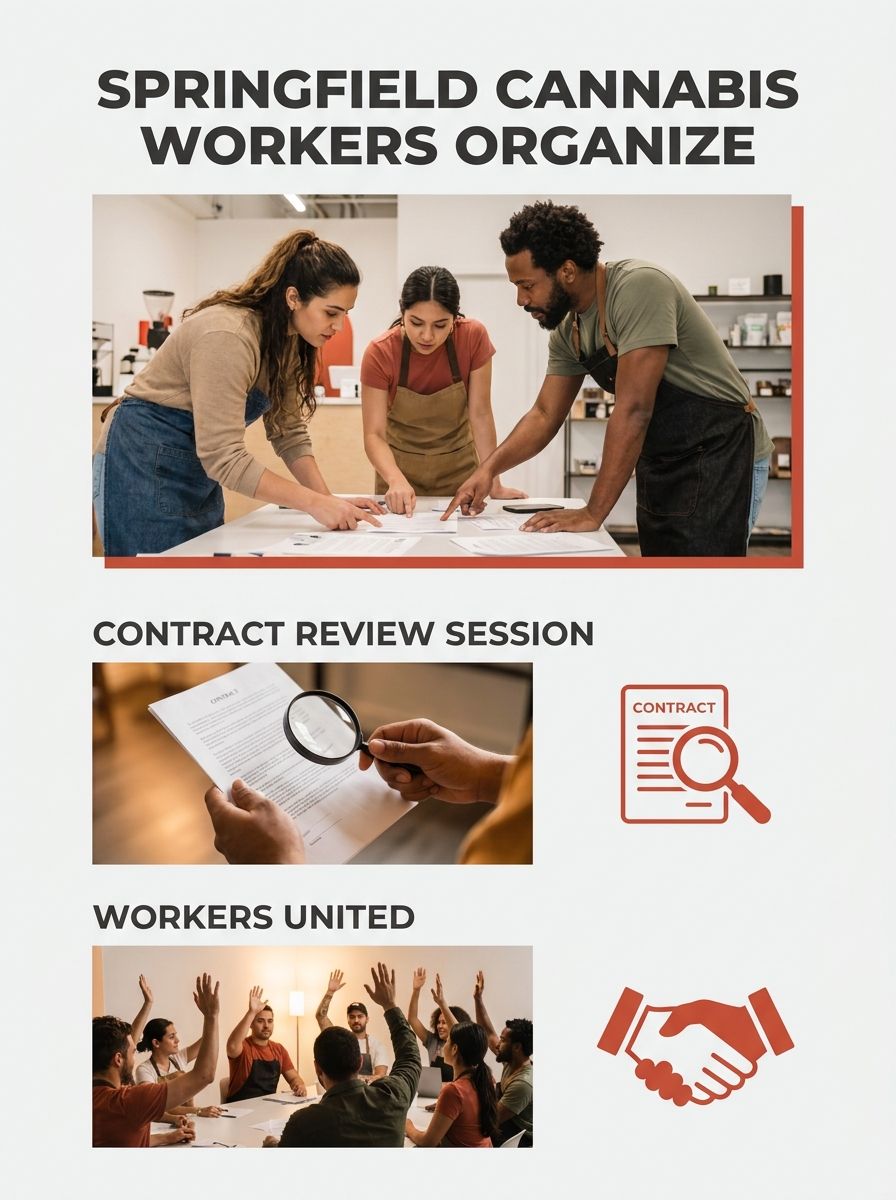
Cannabis workers at Key Cannabis Dispensary in Springfield, Missouri, ratified their first collective bargaining agreement in late July 2026, securing wage increases, bonuses, and expanded paid time off after a four-year organizing campaign that began with a 6-3 union vote in 2022, according to the

Springfield Cannabis Workers Ratify First Union Contract After Four-Year Campaign
Cannabis workers at Key Cannabis Dispensary in Springfield, Missouri, ratified their first collective bargaining agreement in late July 2026, securing wage increases, bonuses, and expanded paid time off after a four-year organizing campaign that began with a 6-3 union vote in 2022, according to the Missouri Independent.
The agreement marks a rare labor victory in Missouri's nascent marijuana industry, where recreational sales launched in 2023 but organized labor has made limited progress. The Springfield workers are only the second group of cannabis employees in the state to finalize a union contract, highlighting the challenges workers face converting successful organizing votes into enforceable workplace protections.
Contract Delivers Immediate Wage and Benefit Gains
The ratified agreement delivered immediate financial benefits to the bargaining unit. Wage increases took effect in August, while ratification bonuses were distributed to workers who had gone more than two years without pay adjustments during the extended negotiation period, according to company and union statements.
Sally Powell, a retail associate at the dispensary, told the Missouri Independent that the contract established more predictable scheduling and clearer disciplinary procedures. The agreement includes non-discrimination and anti-harassment provisions that workers identified as essential protections in an industry that employs significant numbers of LGBTQ+ and gender-nonconforming staff, Powell said.
Expanded paid time off provisions took effect immediately upon ratification. The contract also establishes job security language that workers said was previously absent from their employment terms.
Ownership Change Prolonged Bargaining Timeline
The four-year gap between the 2022 union vote and contract ratification stemmed partly from a January 2024 ownership transfer. Bloom Medicinal sold the Springfield location to Elevate Cannabis mid-way through the organizing process, forcing the new owner to assume bargaining obligations for a workforce it had not employed during the union election.
Nico Pento, chief legal officer for Elevate Cannabis, told the Missouri Independent that the company was "thrown into the middle" of the unionization process when it acquired several Bloom facilities. Elevate Cannabis operates 14 dispensaries and two manufacturing and cultivation facilities across Missouri, making it one of the state's largest cannabis companies. The company is owned by a group of family and friends based in the Kansas City area.
The ownership transition created a hiring and compensation freeze that lasted until contract terms were finalized. Pento said the wage increases negotiated in the agreement represented a "true-up" to bring workers to compensation levels they would have reached had the collective bargaining process not delayed merit increases. The ratification bonus was intended to offset the two-year period without raises, according to Pento's statement to the Missouri Independent.
Union Representation Secured Under UFCW Local 2
The Springfield workers voted 6-3 in 2022 to join United Food and Commercial Workers Local 2, initiating the collective bargaining process that concluded in July 2026. Chad Price, UFCW Local 2 director of collective bargaining and retail servicing, said in a statement that the union welcomed the workers and committed to continuing to build contracts that improve workplace conditions.
The labor negotiation process extended beyond typical commercial agreements, Pento noted, because collective bargaining traditionally requires in-person sessions and physical document exchanges rather than digital redline review. Pento credited union representative Saul Guerrero with maintaining constructive communication throughout the multi-year process.
The Springfield contract follows limited union organizing success in Missouri's cannabis sector, which has expanded rapidly since the state authorized recreational marijuana sales. The federal court decision voiding New Jersey's mandatory union labor requirements for cannabis facilities demonstrates that cannabis industry labor organizing faces both state-level regulatory variation and legal challenges that complicate workers' efforts to secure collective bargaining rights.
Policy Implications
The Springfield cannabis workers' four-year path to a ratified contract exposes structural obstacles facing labor organizing in emerging industries. The ownership change that froze compensation for two years illustrates how asset transfers can disrupt worker protections during vulnerable organizing periods—a pattern that may accelerate as cannabis industry consolidation continues nationwide.
Missouri's experience suggests that successful union elections in nascent industries do not guarantee timely contract wins. With only two unionized cannabis workforces in the state despite recreational sales beginning in 2023, organizers confront the reality that rapid industry growth has not translated to proportional labor density. The Springfield timeline—48 months from vote to contract—may deter workers in other dispensaries from pursuing representation if they perceive that years without raises and job security are the cost of organizing.
The contract's non-discrimination and anti-harassment language responds to documented workforce composition in cannabis retail, where LGBTQ+ workers are overrepresented relative to other retail sectors. Whether these protections become industry standard or remain isolated to unionized facilities will test whether cannabis employers adopt progressive HR policies voluntarily or only under collective bargaining pressure.
The Union Edge Staff
Related Articles
Eleven Greenlight Dispensary Workers in Missouri Allege Firing for Union Organizing
Eleven employees at a Greenlight Dispensary in Springfield, Missouri, were terminated in late September 2026 after meeting to discuss unionization, according to statements the workers gave to local media.

Federal Court Voids New Jersey's Mandatory Union Labor Requirements for Cannabis Industry
A federal district court ruled on August 10, 2026, that New Jersey cannot force cannabis businesses to sign labor peace agreements with unions as a condition of licensure, striking down a state mandate that had governed the industry since legalization. United States District Judge Michael A.

Examples of Collective Bargaining Success
At nearly 3am on November 25, 2024, graduate workers at the University of Minnesota and university administrators finalized a tentative first collective bargaining agreement after more than 30 hours of continuous mediation over two days, according to UE News.
Also in the paper