
UC Attending Physicians Launch Nation's Largest Doctor Unionization Campaign
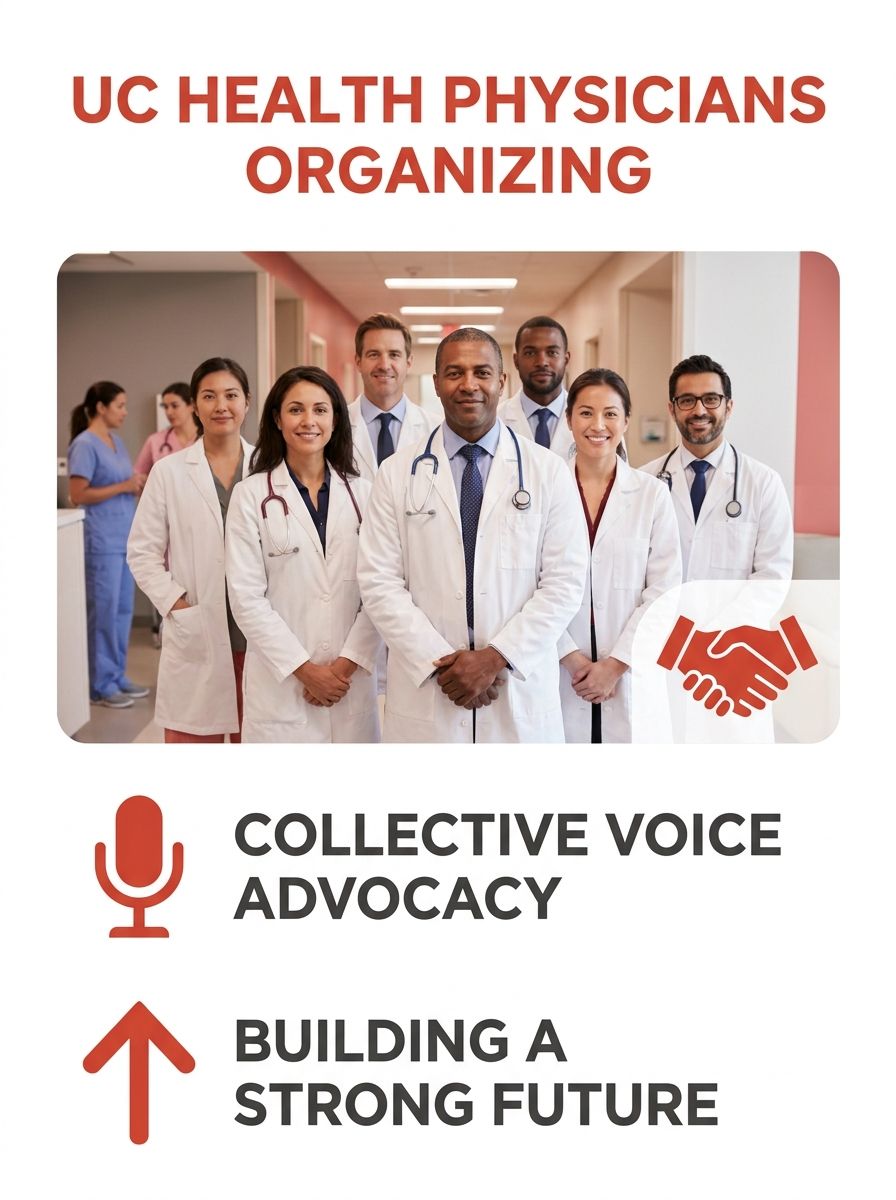
Attending physicians at the University of California health system launched a union organizing campaign on July 31 that organizers describe as the largest effort among attending doctors in the United States, according to an announcement reported by The Daily Californian.

UC Attending Physicians Launch Nation's Largest Doctor Unionization Campaign
Attending physicians at the University of California health system launched a union organizing campaign on July 31 that organizers describe as the largest effort among attending doctors in the United States, according to an announcement reported by The Daily Californian. The campaign marks a significant expansion of physician unionization beyond the resident and fellow ranks that have dominated recent healthcare labor organizing.
Campaign Priorities Focus on Staffing and Burnout
The organizing physicians are prioritizing three core demands: improved staffing levels, institutional commitment to medical education, and enhanced workplace safety protections. These objectives aim to address burnout and improve working conditions across the UC health system, according to the announcement.
Attending physicians occupy the most senior clinical roles in academic medical centers, distinguishing this campaign from the wave of resident and fellow unionization that has reshaped graduate medical education labor relations over the past decade. Residents at UC facilities have been represented by the Union of American Physicians and Dentists since the 1990s, but attending physician unionization in academic medicine remains rare.
UC Health System Spans Six Medical Centers
The University of California operates six academic medical centers across the state: UC Davis Medical Center, UC Irvine Medical Center, UCLA Health, UC San Diego Health, UC San Francisco Health, and UC Riverside School of Medicine's clinical facilities. The combined UC health enterprise employs thousands of attending physicians across these campuses.
The timing of the announcement coincides with broader labor activity across UC campuses, where academic workers, postdoctoral scholars, and service employees have all conducted high-profile organizing and contract campaigns in recent years. UC has been a focal point for public-sector labor organizing in California since 2022, when academic student workers staged a six-week strike that shut down instruction at multiple campuses.
Physician Unionization Remains Uncommon in Academic Medicine
Attending physician unionization faces distinct obstacles compared to resident organizing. Attending physicians typically hold greater individual bargaining power due to their specialized skills and ability to move between institutions, which historically reduced collective organizing incentives. Legal classification questions around supervisory status and independent contractor arrangements have also complicated organizing efforts in some settings.
The American Medical Association has historically opposed physician unionization, though breakaway organizations like the Union of American Physicians and Dentists and Doctors Council SEIU have grown membership in recent years. Massachusetts nurses launched the state's largest healthcare strike in January 2026 over staffing and wage concerns, and Brigham and Women's Hospital nurses conducted a five-day work stoppage earlier this year, illustrating intensifying labor tensions in academic medical centers.
What This Means for Union Members
The UC attending physician campaign represents a structural shift in healthcare labor organizing, moving beyond the trainee workforce to the senior clinical staff who control patient care decisions and institutional policy. If successful, the effort would create the largest bargaining unit of attending physicians in the country and establish a template for similar campaigns at other academic medical centers facing staffing shortages and burnout.
The campaign's emphasis on staffing ratios and workplace safety aligns with broader healthcare worker demands that have driven recent strikes and organizing victories, from Ohio nurses reporting workplace violence to detention healthcare workers winning safety protections in California. For labor organizers, the campaign demonstrates that even highly compensated professional workers are turning to collective bargaining when institutional conditions deteriorate.
The outcome will test whether California's public-sector labor framework—which has enabled successful organizing across UC's non-physician workforce—can accommodate the distinct legal and professional status questions that attend physician unionization raises. A win would likely accelerate organizing efforts at other University of California campuses and peer institutions nationwide.
The Union Edge Staff
Related Articles

UAW 4811 Adds 12,000 University of California Workers in Largest Single-Year Expansion
United Automobile Workers Local 4811 added 12,000 University of California employees to its membership rolls, according to The Daily Californian, bringing the union's total membership to 60,000 across all UC campuses. The expansion incorporates Student Services and Advising Professionals and Researc

University of California Averts Strike With Last-Minute Deal for 40,000 Healthcare Workers
The University of California and AFSCME Local 3299 reached a tentative labor agreement late on May 13, preventing a planned strike by more than 40,000 healthcare and service workers hours before a May 14 walkout deadline, according to Bloomberg Law. The deal secures minimum wage increases to $30.10

Leadership Density Over Card Counts: Why Union Authorization Metrics Fail and What Actually Predicts Organizing Success
Authorization cards measure interest, not resilience.
Also in the paper