
University of California Averts Strike With Last-Minute Deal for 40,000 Healthcare Workers
The University of California and AFSCME Local 3299 reached a tentative labor agreement late on May 13, preventing a planned strike by more than 40,000 healthcare and service workers hours before a May 14 walkout deadline, according to Bloomberg Law. The deal secures minimum wage increases to $30.10

University of California Averts Strike With Last-Minute Deal for 40,000 Healthcare Workers
The University of California and AFSCME Local 3299 reached a tentative labor agreement late on May 13, preventing a planned strike by more than 40,000 healthcare and service workers hours before a May 14 walkout deadline, according to Bloomberg Law. The deal secures minimum wage increases to $30.10 per hour by 2029 and caps healthcare premiums for workers who had been without a contract since their previous agreement expired in 2024.
The settlement marks a significant victory for Local 3299, which represents roughly 30,000 healthcare workers and several thousand custodians, groundskeepers, and food service employees across the University of California system. Union members will vote on ratification from May 19 to May 21, with the contract running through November 2029 if approved.
Wage Increases and Unfair Labor Practice Leverage
Under the agreement, the minimum wage for represented workers will climb from $25 per hour in 2025 to $30.10 per hour by the contract's expiration in 2029. The university will also provide a $1,500 lump sum payment for non-probationary career workers and a $1,000 longevity payment in July for employees with 20 years of experience.
AFSCME had been preparing for an open-ended unfair labor practice strike starting May 14. The union alleged that UC illegally implemented a healthcare plan without bargaining and refused to negotiate over housing benefits—claims that gave the union legal grounds for a strike unbound by typical cooling-off period restrictions.
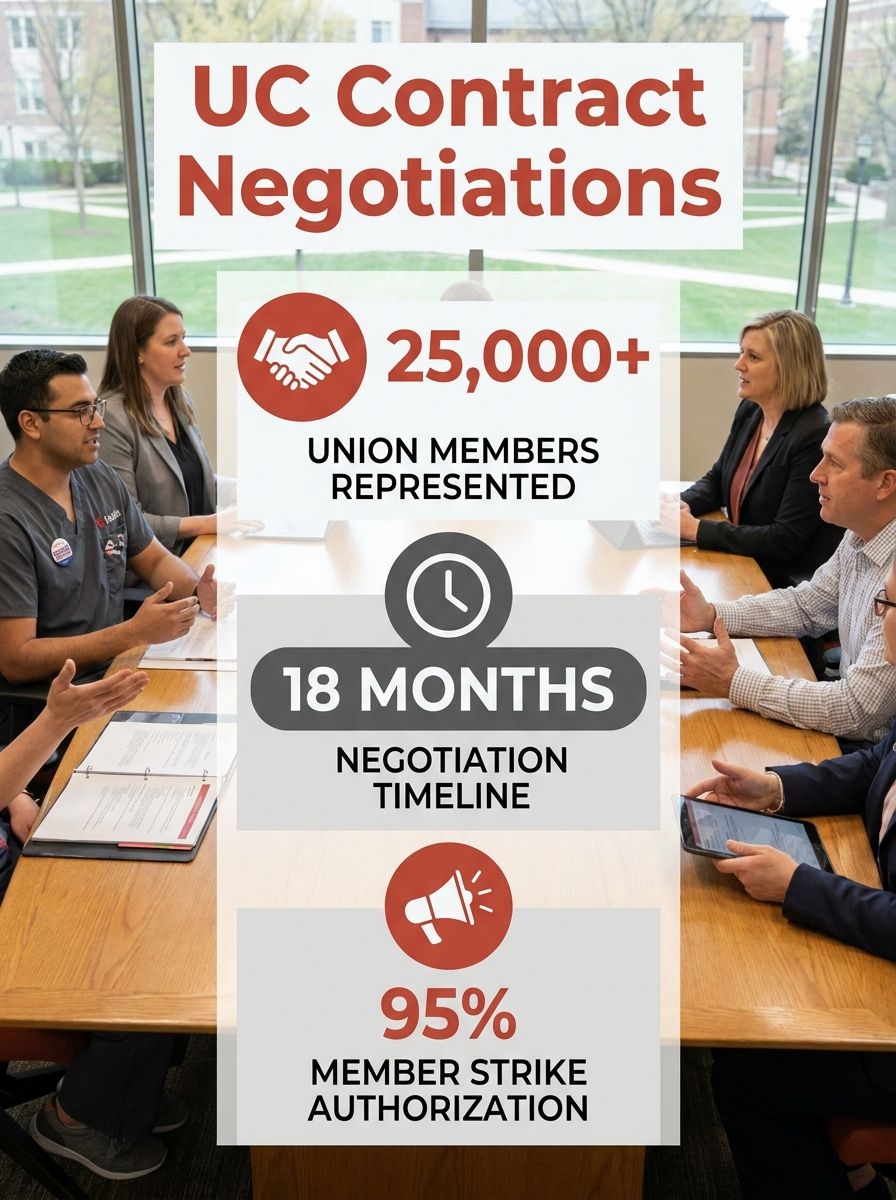
"For nearly three years, the frontline workers that we represent have stood shoulder to shoulder, demanding the university take meaningful action to address the affordability crisis," AFSCME Local 3299 President Michael Avant said in a statement. The deal "delivers long-overdue security to the frontline service and patient care professionals who make UC run," he added.
Staffing Protections and Healthcare Sector Context
The agreement adds layoff protections and establishes respiratory therapist ratios to maintain adequate staffing levels—provisions that reflect broader healthcare worker demands nationwide. Approximately 46,000 nurses and other healthcare workers walked off the job in California, New York, and Hawaii earlier this year over similar concerns about staffing shortages and wage compression, highlighting how Local 3299's settlement fits into a pattern of healthcare sector labor actions across multiple states.
The respiratory therapist ratio language addresses a chronic complaint among UC healthcare workers that understaffing compromises patient care quality. By securing these provisions in contract language rather than relying on management discretion, the union created enforceable standards that mirror collective bargaining strategies increasingly common in healthcare sector negotiations.
University Response and Ratification Timeline
Missy Matella, associate vice president for systemwide employee and labor relations for the University of California, said the contract "delivers meaningful pay increases and addresses some of the real affordability pressures our employees are facing" while allowing the institution to focus on patient care, teaching, and research.
The ratification vote runs from May 19 through May 21, giving members three days to review the full contract language before deciding whether to accept the deal. A rejection would send negotiators back to the table and potentially revive strike authorization, though union leadership's endorsement of the tentative agreement typically signals strong internal support for ratification.
The settlement averts what would have been one of the largest healthcare worker strikes in California this year, affecting UC's five medical centers and ten campuses across the state system.
The Takeaway
AFSCME Local 3299's use of unfair labor practice allegations as strike leverage demonstrates how unions can amplify negotiating power when employers violate labor law. By preparing for an open-ended ULP strike rather than a traditional economic strike, the union removed legal constraints that typically limit walkout duration and gave management a clearer incentive to settle before facing operational disruption with no guaranteed end date.
The wage floor increase to $30.10 per hour by 2029 also sets a benchmark for other public sector healthcare negotiations in California, particularly as cost-of-living pressures continue to price workers out of the communities they serve. For organizers watching healthcare sector labor actions, the UC settlement reinforces that staffing ratio language and layoff protections are now baseline demands rather than stretch goals—a shift that reflects how pandemic-era working conditions permanently altered what healthcare workers will accept in contract terms.
The Union Edge Staff
Related Articles

UAW 4811 Adds 12,000 University of California Workers in Largest Single-Year Expansion
United Automobile Workers Local 4811 added 12,000 University of California employees to its membership rolls, according to The Daily Californian, bringing the union's total membership to 60,000 across all UC campuses. The expansion incorporates Student Services and Advising Professionals and Researc

HCA Healthcare Workers Stage Pickets at Dozen Hospitals During Contract Talks Over Pay and Staffing
Twenty-two thousand unionized workers at HCA Healthcare hospitals picketed locations across California, Texas, Nevada, and Florida this week as contract negotiations stalled over demands for a $25-per-hour wage pathway and improved staffing ratios, according to the Guardian.

UC Attending Physicians Launch Nation's Largest Doctor Unionization Campaign
Attending physicians at the University of California health system launched a union organizing campaign on July 31 that organizers describe as the largest effort among attending doctors in the United States, according to an announcement reported by The Daily Californian.
Also in the paper