
Productivity Tracking Isn't a Safety Tool — It's a Discipline System, and Workers Should Treat It That Way
Amazon's fulfillment centers track a metric called "time off task" down to individual seconds. The system logs every pause a warehouse worker takes, generates automated warnings, and can produce termination paperwork without a single manager making the call.

Productivity Tracking Isn't a Safety Tool — It's a Discipline System, and Workers Should Treat It That Way
Amazon's fulfillment centers track a metric called "time off task" down to individual seconds. The system logs every pause a warehouse worker takes, generates automated warnings, and can produce termination paperwork without a single manager making the call. Productivity surveillance, in practice, operates as an algorithmic discipline system.
Inside JFK8's Productivity Machine
The JFK8 fulfillment center in Staten Island, New York, employed roughly 8,000 workers at its peak. Each one carried a scanner that recorded how many items they processed per hour ("rate") and how many seconds elapsed between scans ("time off task," or TOT). The target rate for stowers hovered around 270 items per hour. Fall below it consistently, and the system flagged you. Accumulate enough TOT minutes, and the system escalated from a coaching notification to a written warning to a termination recommendation, all generated by software.
Amazon publicly described this tracking infrastructure as a tool for operational efficiency and workplace safety. The company argued that monitoring worker pace helped identify bottlenecks, prevented injuries caused by rushed movement, and ensured equitable distribution of work. That framing shaped how the media covered warehouse technology for years.
But the workers at JFK8 experienced something different. The TOT tracker didn't function like a safety system. It functioned like a supervisor who never blinked, never exercised judgment, and never accepted that a 4-minute bathroom break wasn't a performance failure. Researchers studying algorithmic control systems have confirmed this pattern across industries. A 2025 study published in the European Journal of Information Systems found that algorithmic disciplining "involves deciding whether or not an AC system has the authority to take disciplinary action, including issuing rewards or sanctions." At JFK8, the system had that authority. It used it constantly.
Amazon's reported annual turnover rate in its U.S. warehouses reached approximately 150%, a figure so high that internal documents showed executives worried about literally running out of available workers in some metro areas. The TOT system contributed directly to that churn. Workers who might have been coached or retrained under a human supervisor were instead cycled through an automated pipeline that treated every deviation from target rate as a disciplinary event.
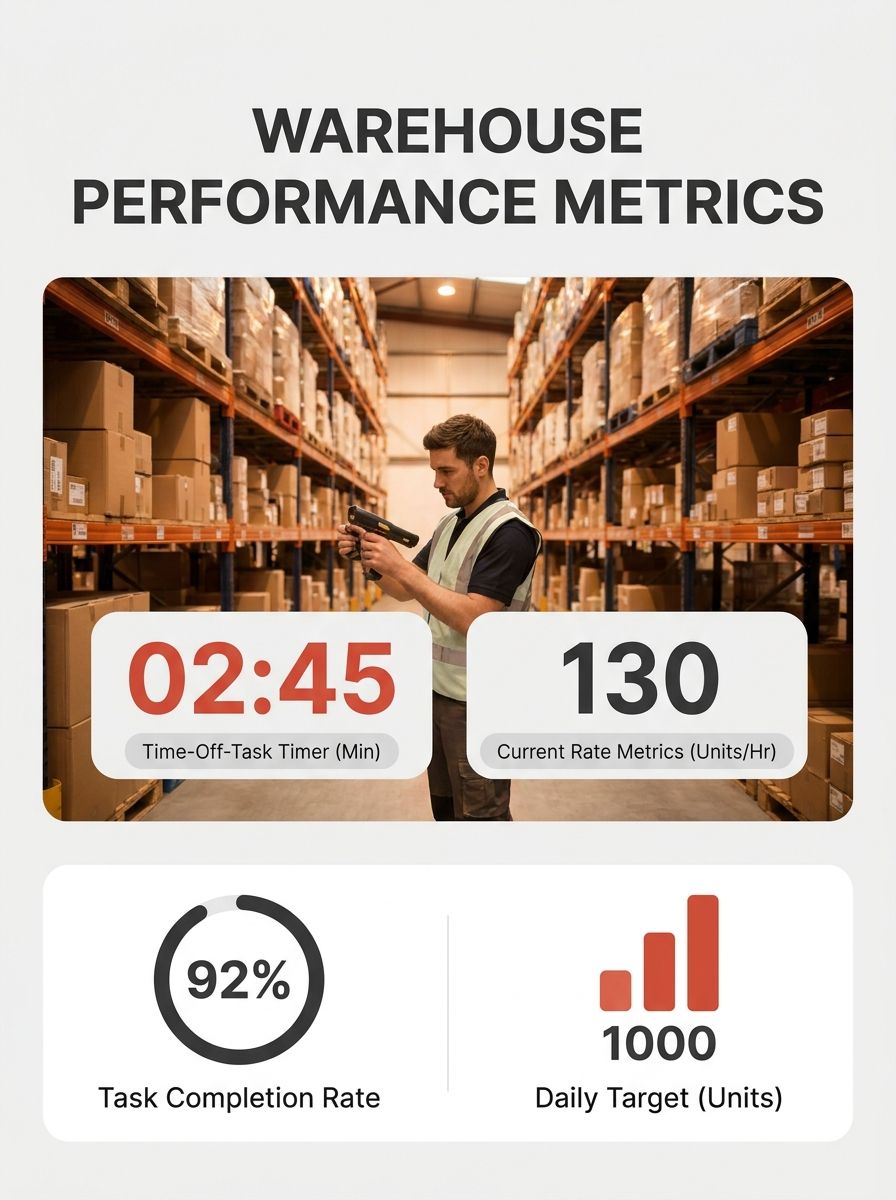
The Scanner as Judge: How TOT Replaced Human Supervisors
The critical distinction between traditional workplace monitoring and what happened at JFK8 is the removal of discretion. A floor manager who sees a worker slow down can ask why. The answer might be a sore back, a confusing bin location, or an aisle blocked by a fallen pallet. The manager can adjust. The algorithm cannot.
Research from a 2026 interdisciplinary review in Frontiers in Sociology documented this dynamic across platform and warehouse work, concluding that "algorithmic management often reproduces and intensifies managerial control, raising urgent questions about worker autonomy, fairness, and wellbeing." A separate bibliometric analysis published in ScienceDirect found that "algorithms also retain the capacity to circumvent worker agency entirely, making decisions autonomously." These aren't theoretical concerns. They describe what JFK8 workers lived through daily.
The effect on workers' bodies was measurable. Research on electronic monitoring at work has shown that while properly implemented monitoring can increase work output by roughly 22%, excessive productivity surveillance drives productivity down by 9% to 10% annually due to stress, resentment, and the cognitive burden of feeling watched. At JFK8, workers reported skipping bathroom breaks, rationing water, and ignoring early signs of repetitive strain injuries because pausing long enough to address any of those needs meant accumulating TOT.
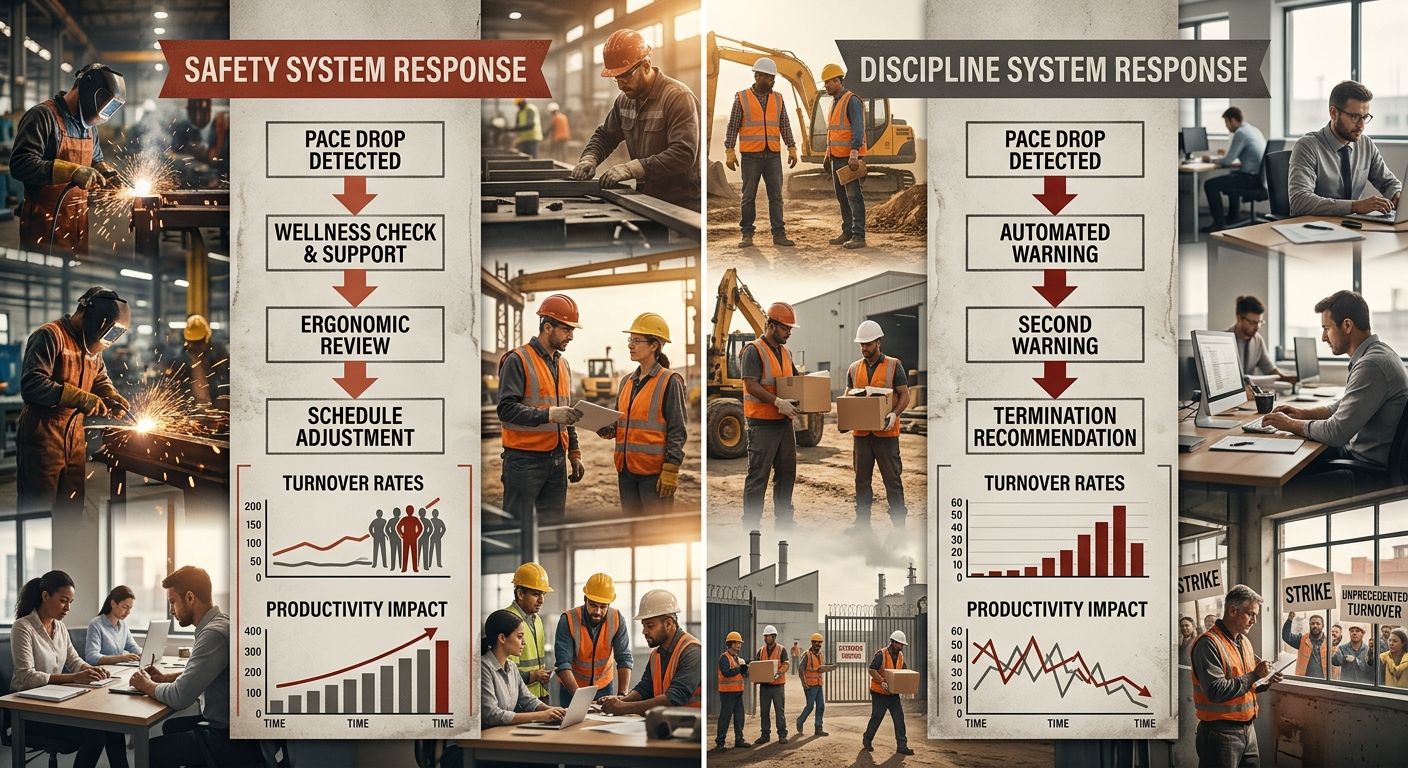
This is the core of the discipline-system argument. A genuine safety tool would flag a worker whose pace suddenly dropped and route that information to a trained safety coordinator for a wellness check. Amazon's TOT system flagged the same worker and routed the information toward termination. The incentive structure pointed in one direction: keep scanning, keep your rate up, or face consequences the system will impose without a conversation.
For workers navigating how AI-driven safety tools can double as surveillance weapons, JFK8 became a case study in exactly how that transition happens. The tracking technology was identical in both its safety and disciplinary applications. The difference was entirely in which output the employer chose to act on.
What Federal Law Actually Permits (and What It Doesn't Require)
The legal framework governing worker monitoring technology in the United States gives employers enormous latitude. The Electronic Communications Privacy Act (ECPA), passed in 1986, is the primary federal statute governing electronic monitoring rights. It permits employers to monitor employee communications when there's a "legitimate business reason" and the systems are company-owned. Under current U.S. employee monitoring laws, any device provided by an employer is classified as company property, which means the employer has the legal right to monitor internet traffic, screen content, and GPS tracking conducted through that device.
The ECPA was written before the internet was commercially available. It predates smartphones by two decades. It has no provisions for wearable tracking in the workplace, real-time biometric monitoring, or algorithmic discipline systems that use tracked data to make termination decisions. Federal law, in other words, permits the architecture Amazon built at JFK8 without requiring the company to disclose how the data is used in disciplinary proceedings.
State-level protections vary considerably. New York requires private-sector employers to provide conspicuous notice of electronic monitoring practices upon hiring. Connecticut and Delaware have similar notice requirements. California has been considering limits on automated decision systems that affect employment, though no binding statute had passed as of early 2026. The result is a patchwork: in 46 states, an employer can install wearable tracking in the workplace, collect second-by-second productivity data, and use that data to generate automated termination recommendations without ever telling workers how the algorithm weighs their performance.
Legal experts at Nelson Mullins have recommended that employers "implement data minimization and retention controls to limit access, storage, and misuse of monitored data." That recommendation acknowledges the risk. But it remains voluntary guidance, not a legal requirement. Workers at JFK8 had no statutory right to see their own TOT data, challenge the algorithm's calculations, or appeal an automated warning before it escalated.
This legal gap matters for organizing. When unions bargain contracts that cover how unfair labor practice charges work, they're operating within a framework where the employer's right to monitor is broadly assumed. Challenging that assumption requires contract language, not litigation, because the law as written doesn't restrict it.
How JFK8 Workers Turned the Tracker Into an Organizing Issue
The Amazon Labor Union's campaign at JFK8, which culminated in a 2,654-to-2,131 election victory in April 2022, drew on a range of workplace grievances: wages, COVID-19 safety protocols, and the pace of work. But the TOT system gave organizers something specific and visceral to point to. Every worker in the building had a personal experience with the tracker. Everyone had received at least one automated notification. Many knew someone who had been terminated through the system.
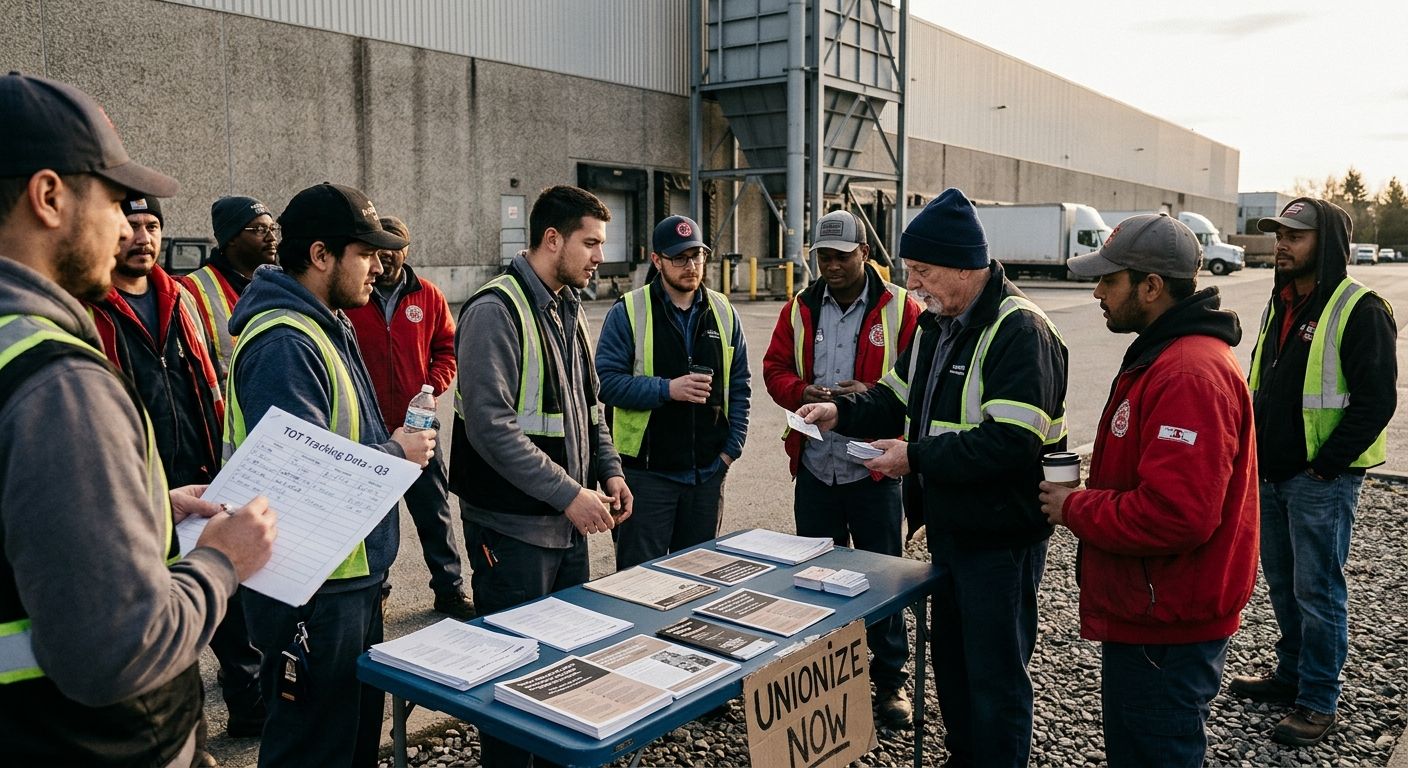
Christian Smalls and Derrick Palmer, the lead organizers, held meetings outside the facility where workers shared TOT stories the way earlier generations of organizers shared stories about abusive foremen. The parallel was exact. The TOT system was the foreman, except it never took a day off and couldn't be reasoned with.
The organizing strategy treated the tracking system as a bargaining issue rather than a fixed condition of employment. Workers didn't demand that Amazon stop monitoring them entirely (an unrealistic ask given federal law). They demanded transparency about how TOT data was calculated, the right to review their own records before disciplinary action, and human review of any termination recommendation generated by the algorithm. These demands reframed productivity surveillance from a management prerogative into a negotiable workplace condition.
This approach connects to broader patterns in first-contract bargaining, where new unions often fail because they don't prioritize the specific workplace systems that generated organizing energy in the first place. At JFK8, the TOT system was the organizing energy. Any first contract that didn't address it would have felt like a betrayal.
The NLRB's subsequent rulings regarding Amazon's labor practices, including ordering the company to rehire a worker terminated for union activity, reinforced the connection between monitoring systems and anti-union discipline. When the system that tracks your productivity is the same system that generates your termination, the employer doesn't need to fire you "for organizing." They can fire you for a rate deviation that the algorithm flagged during the same week you started collecting union cards.
The Unfinished Fight Over Who Controls the Data
JFK8's election victory did not resolve the algorithmic discipline problem. As of mid-2026, Amazon has continued to challenge the union's certification and has not reached a first contract with ALU-affiliated workers at the facility. The TOT system remains operational. Workers at other Amazon facilities across 110+ U.S. fulfillment centers face the same tracking infrastructure without any union representation.
The JFK8 case exposed a structural reality that extends well beyond Amazon. Wearable tracking in the workplace is expanding into construction, nursing, trucking, and food service. UPS drivers carry devices that track speed, idle time, and route deviation. Hospital systems monitor nurses' badge locations and patient-interaction frequency. Call centers record average handle time to the second. In each setting, the employer frames the monitoring as efficiency or safety. In each setting, the data feeds a discipline pipeline.
The research is unambiguous about what happens when that pipeline operates without checks. Workers under constant surveillance experience higher rates of stress, lower job satisfaction, and greater likelihood of leaving. Employers who over-monitor see the 9% to 10% annual productivity decline that the surveillance was supposed to prevent. And workers who attempt to organize face a system that generates a paper trail of "performance issues" on command.
Workers confronting these systems need to treat them as what they are. A workplace safety audit should include an assessment of whether monitoring technology is being used to improve conditions or to punish workers who fall outside algorithmically defined norms. Union contracts should include data-access provisions, algorithmic transparency clauses, and human-review requirements for any automated disciplinary action. And organizers talking to workers about why a union matters should start with the device in their hand, the scanner on their wrist, and the question of who gets to decide what the data means.
JFK8 answered that question once, in one building, with one vote. The tracker is still running. The fight over whether it serves workers or disciplines them is still open in every warehouse, hospital, and call center where the algorithm has the last word.
The Union Edge Staff
Related Articles

When AI Safety Tools Become Union-Busting Weapons: What Workers Need to Know About Algorithmic Surveillance
AI-powered surveillance systems sold to employers as workplace safety monitoring tools are being repurposed to track union sympathizers, suppress organizing conversations, and algorithmically discipline workers who exercise their legal right to collective action.

Digital Member Systems and Union Data Security: What Organizers Need to Know Before Going Digital
Every union digital organizing platform stores names, addresses, phone numbers, employer information, and authorization signatures. A breach of that data hands management a complete map of your organizing committee. These six rules protect your members and your campaign.

Tech Workers Push Union Recognition at Google and Meta as AI Reshapes Job Security
The Alphabet Workers Union delivered a 4,500-signature job security petition to Google executives last week, capping a year in which union actions at Alphabet doubled from 2024 levels, according to The Guardian.
Also in the paper