
When AI Safety Tools Become Union-Busting Weapons: What Workers Need to Know About Algorithmic Surveillance
AI-powered surveillance systems sold to employers as workplace safety monitoring tools are being repurposed to track union sympathizers, suppress organizing conversations, and algorithmically discipline workers who exercise their legal right to collective action.

When AI Safety Tools Become Union-Busting Weapons: What Workers Need to Know About Algorithmic Surveillance
AI-powered surveillance systems sold to employers as workplace safety monitoring tools are being repurposed to track union sympathizers, suppress organizing conversations, and algorithmically discipline workers who exercise their legal right to collective action. The NLRB's general counsel has warned that this practice violates workers' Section 7 rights under the National Labor Relations Act.
The Safety-to-Surveillance Pipeline
Workplace safety monitoring software typically enters a facility with a reasonable pitch: cameras that detect whether hard hats are worn, sensors that flag ergonomic risks, wearable devices that track fatigue. The employer installs the system, cites OSHA compliance obligations, and workers rarely object because the stated purpose protects them. But once the infrastructure is in place, the same data streams that monitor for safety hazards can be redirected to monitor for organizing activity. Georgetown Law's Poverty Journal documented this pattern, noting that employers have pushed back against unionization "using surveillance tools, including AI technology initially designed for military use, to undermine workplace unionization drives." The hardware stays the same. The software gets a new objective function.
Amazon provides the most visible case study. As The American Prospect reported in March 2025, the company's tactics include "algorithmic discipline on worker devices" and what researchers call "electronic whipping," a practice in which algorithms rapidly alter production quotas and rules to create constant pressure. Workers described mobile device spamming and real-time productivity tracking that made every bathroom break a data point. These tools were originally framed as efficiency and safety mechanisms. Their actual effect is to create an environment where workers are too surveilled, too exhausted, and too afraid of automated discipline to talk to one another about forming a union. That pivot from safety monitoring to union-busting technology follows a pattern we've tracked across the $1.5 billion anti-union consulting industry, where the tools change but the strategy stays consistent.
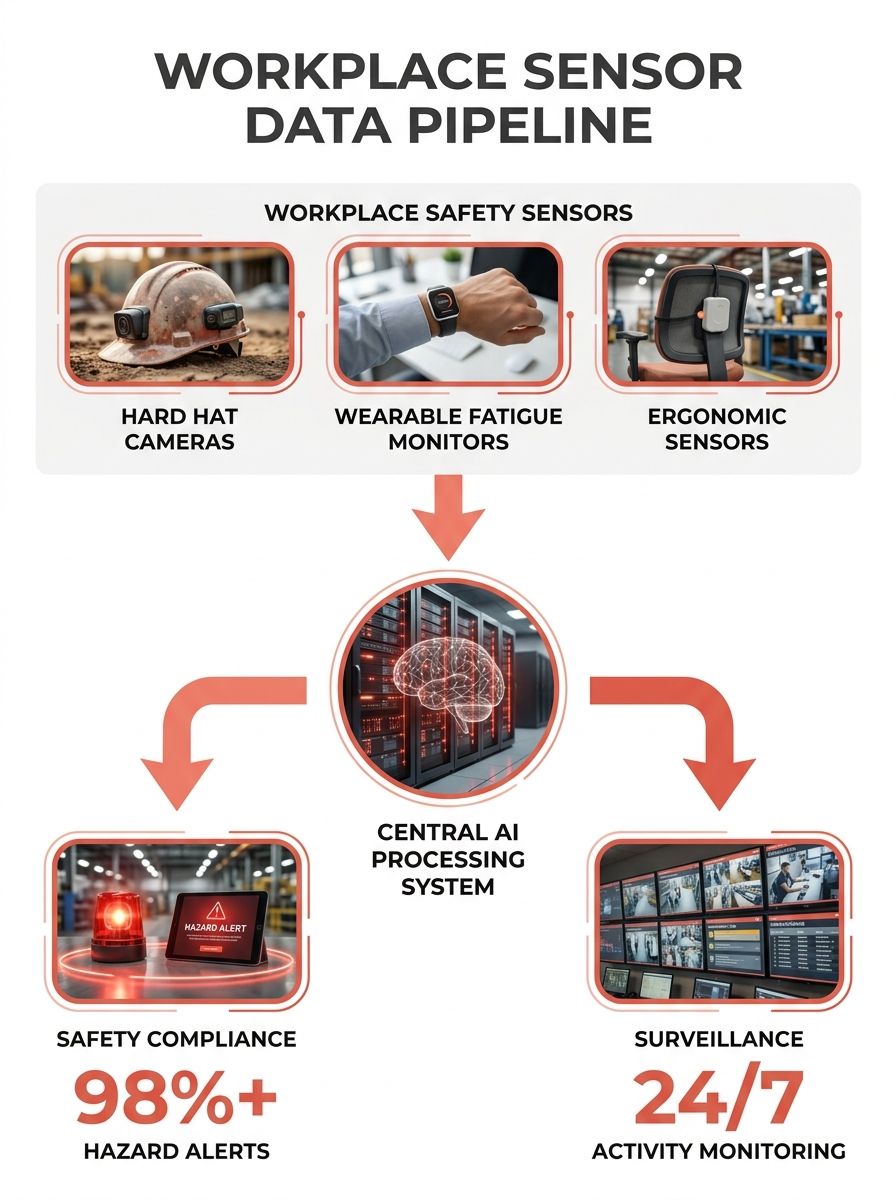
The Skadden law firm published an analysis identifying the legal risks this creates for employers, including "invasion of privacy, unfair labor practice charges, discrimination, unpaid wages and overtime and workplace injuries." That list reads like a catalog of every wrong that safety monitoring is supposed to prevent, turned back against the workforce. When a fatigue-tracking wearable records that three workers congregated in a break room for 22 minutes on a Tuesday, the safety system sees a rest period. The AI surveillance system, retrained on different parameters, sees a potential organizing meeting.
What the NLRB Has Already Said
On October 31, 2022, NLRB General Counsel Jennifer Abruzzo issued Memorandum GC 23-02, one of the most significant federal statements on AI surveillance and worker rights in the last decade. The Yale Journal on Regulation's analysis described the memo as targeting "the potential for omnipresent surveillance and other algorithmic management tools to interfere with the exercise of Section 7 rights." Section 7 of the NLRA protects workers' right to organize, bargain collectively, and engage in concerted activity for mutual aid or protection. Abruzzo's memo made clear that AI-powered monitoring systems fall within the scope of that protection when they chill those activities.
The memo established a framework that's worth understanding in detail. If an employer's business need for a surveillance tool outweighs workers' Section 7 rights, the GC stated she would still "urge the Board to require the employer to disclose to employees the technologies it uses to monitor and manage them, its reasons for doing so, and how it is using the information it obtains." This disclosure requirement is significant because most workers subjected to AI surveillance have no idea what data is collected, how it's analyzed, or whether their organizing conversations are being flagged by pattern-recognition algorithms. The UC Berkeley Labor Center's research on worker technology rights reinforced this principle, laying out policy frameworks that would give workers rights over their own workplace data and hold employers responsible for harms caused by algorithmic systems.
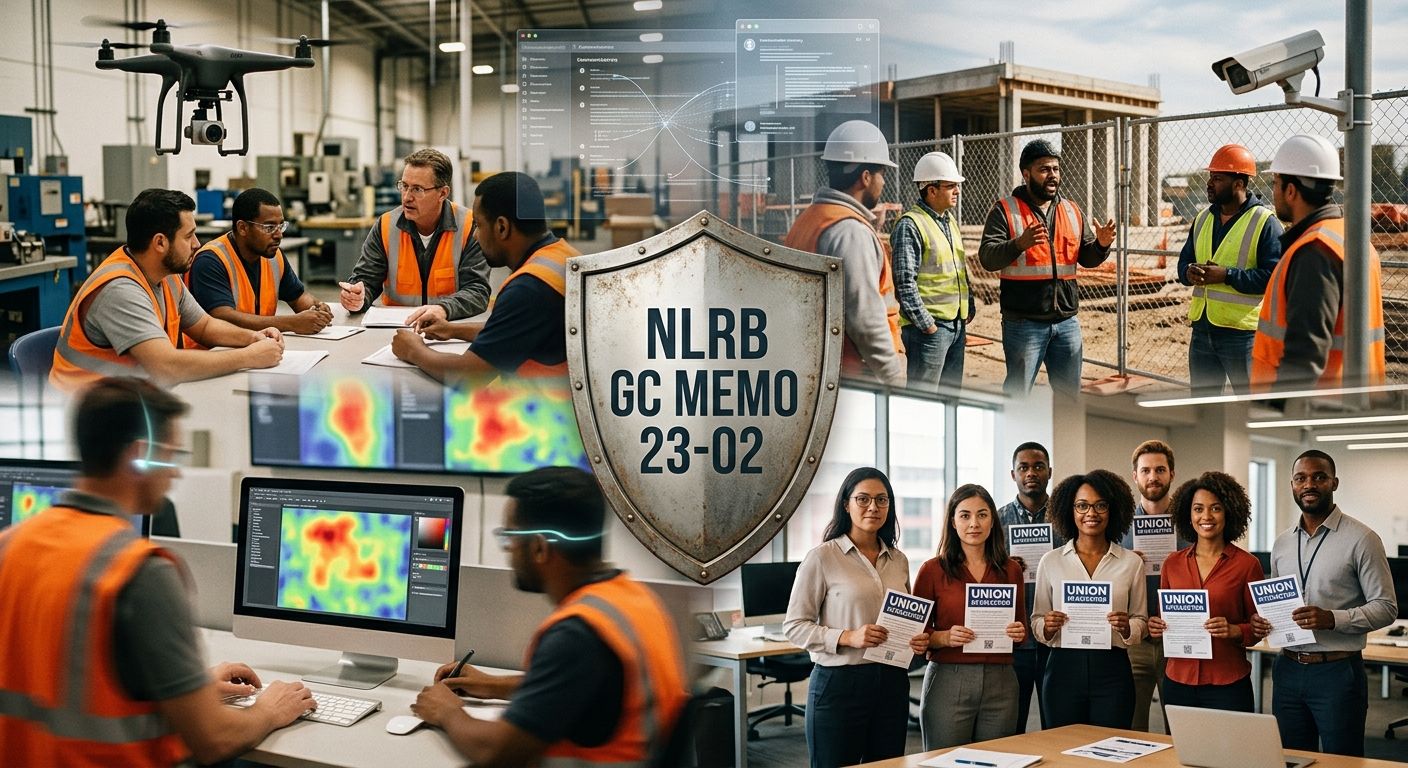
But a general counsel memorandum carries weight only so long as it guides prosecution decisions. It can be rescinded by the next GC. It doesn't carry the force of a Board decision or a federal regulation. And the Board's own composition shifts with each presidential administration, meaning the enforcement teeth behind Abruzzo's framework remain dependent on political appointment cycles. Workers who rely solely on federal labor law to protect them from algorithmic discrimination in the workplace are building on sand that shifts every four years. Harvard's Center for Labor and a Just Economy has argued that state and local governments offer a more durable path, using their authority to regulate worker privacy rights, civil rights protections, and digital surveillance "to protect other realms of workers' rights at risk in AI-enabled workplace environments."
How Algorithmic Discrimination Compounds the Damage
The surveillance problem and the discrimination problem are deeply intertwined. When an AI system trained to optimize for "safety compliance" collects data on worker movement, communication patterns, break frequency, and social clustering, that data creates a behavioral profile. If the employer then uses that profile to identify and discipline workers who show statistical patterns associated with organizing activity, the result is algorithmic discrimination dressed up as performance management. UnionTrack's research put it bluntly: anti-labor organizations are using AI to "profile, spy on, and retaliate against union sympathizers and workers who attempt to form a union," putting "a 21st-century twist on classic union busting."
This dynamic makes the concept of listening to workers' root concerns harder to practice when the act of having those conversations can be detected and punished by automated systems. Consider a warehouse where wearable sensors track movement speed throughout a shift. A worker who slows down to talk with a coworker about wage concerns generates a data anomaly. The algorithm flags the deviation as a productivity dip. The worker receives an automated warning on their handheld device. No supervisor made a decision. No human reviewed the context. The system's output looks like a neutral safety or performance intervention, but its effect is to punish the exact kind of concerted activity that Section 7 protects.
The implications for worker privacy rights extend beyond the organizing context. Employees using personal devices for work-related communication face what security researchers call "shadow prompting and insider misuse" risks, where employer AI tools monitor inputs and outputs on those devices without clear boundaries between work surveillance and personal data collection. This is why unions pushing for secure digital organizing infrastructure and strong data security protocols aren't being paranoid. They're responding to a documented threat environment where the same tools that track whether a worker wears safety goggles can track whether that worker downloaded a union authorization card.
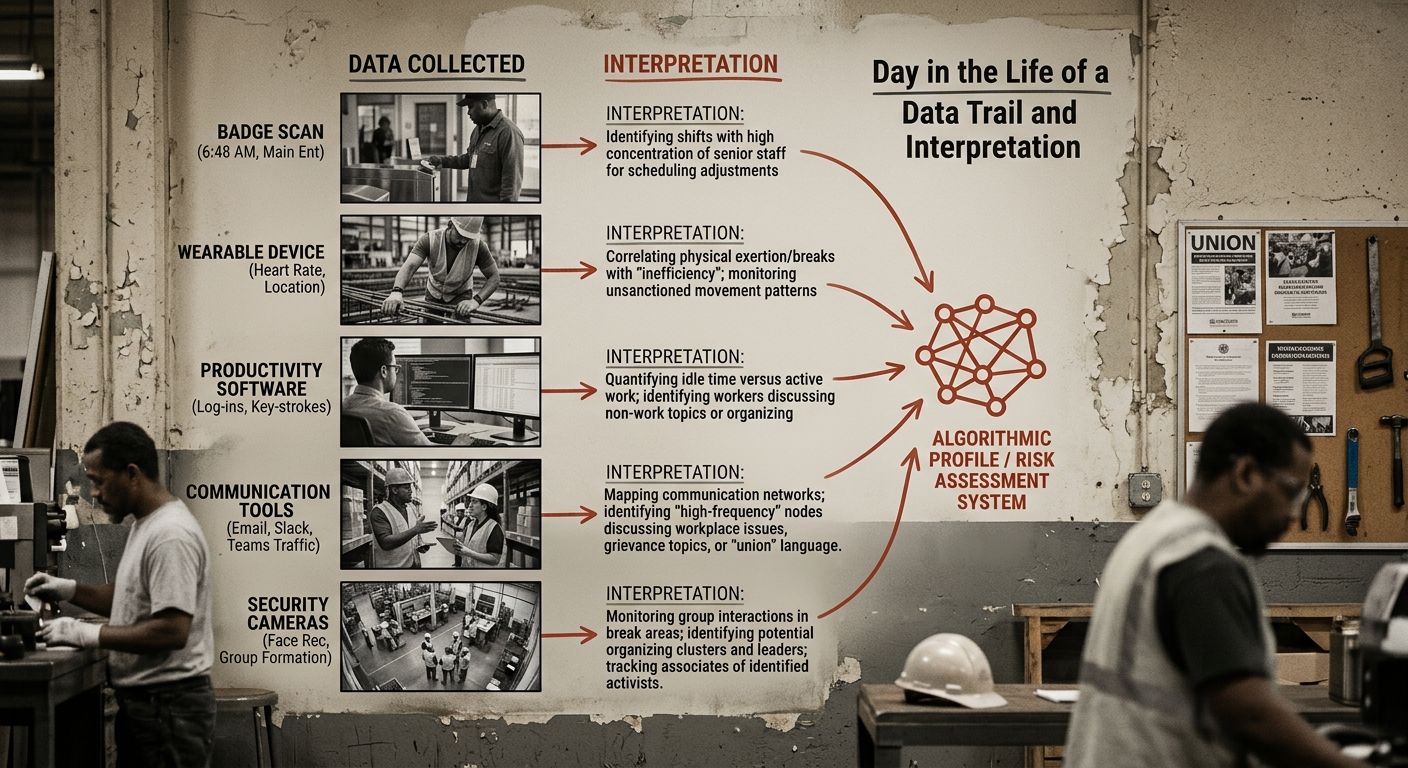
The racial and gender dimensions deserve attention too. Algorithmic management systems trained on historical performance data will replicate whatever biases existed in that data. If women or workers of color were previously disciplined at higher rates for the same behaviors, the algorithm encodes those disparities as baseline expectations. When layered on top of organizing activity, this means workers already facing disproportionate workplace discipline are the most vulnerable to AI-driven retaliation. Safety committees that include union representation, the kind we've covered in our analysis of joint hazard control, can serve as a check on these systems by demanding transparency about how algorithmic decisions are made and who they disproportionately affect.
Where the Protection Gap Remains
The uncomfortable truth is that federal labor law, state privacy statutes, and OSHA regulations were all written before AI surveillance existed in its current form. The NLRA was passed in 1935. OSHA was enacted in 1970. Even the most recent state-level privacy laws typically exempt employment data or provide carve-outs for "workplace safety" purposes. Employers have learned to route their surveillance through the safety exemption, purchasing tools that nominally serve a safety function while generating the behavioral data that feeds anti-organizing algorithms. The legal architecture hasn't caught up to this dual-use problem, and it's unclear when it will.
State-level action offers the most promising near-term protection, as the Harvard Center for Labor and a Just Economy has argued. States can require algorithmic impact assessments before employers deploy AI monitoring systems. They can mandate disclosure of what data is collected and how it's used. They can create private rights of action that let workers sue when algorithmic systems produce discriminatory outcomes. Some of this regulatory infrastructure is emerging in states like Illinois, California, and New York, where AI governance proposals have included provisions for worker notification and data access rights. But passage rates remain low, industry lobbying is intense, and enforcement resources are thin even where laws exist.
What we don't know is how much organizing has already been suppressed by these systems without anyone recognizing it. When a worker receives an automated productivity warning every time they pause to talk with a coworker, the chilling effect operates below the threshold of conscious awareness. The worker doesn't file an unfair labor practice charge because they don't perceive a discrete act of retaliation. They just feel constant pressure, constant monitoring, constant algorithmic nudging toward isolation. The data on this suppression effect is almost impossible to collect, precisely because the systems are designed to prevent the conversations that would surface it. The workers most affected are the ones least likely to know they have a claim, and the unions that would normally surface those claims can't reach workers who've been algorithmically trained to avoid exactly the kind of collective behavior that organizing requires.
The Union Edge Staff
Related Articles

Productivity Tracking Isn't a Safety Tool — It's a Discipline System, and Workers Should Treat It That Way
Amazon's fulfillment centers track a metric called "time off task" down to individual seconds. The system logs every pause a warehouse worker takes, generates automated warnings, and can produce termination paperwork without a single manager making the call.

Digital Member Systems and Union Data Security: What Organizers Need to Know Before Going Digital
Every union digital organizing platform stores names, addresses, phone numbers, employer information, and authorization signatures. A breach of that data hands management a complete map of your organizing committee. These six rules protect your members and your campaign.

Tech Workers Push Union Recognition at Google and Meta as AI Reshapes Job Security
The Alphabet Workers Union delivered a 4,500-signature job security petition to Google executives last week, capping a year in which union actions at Alphabet doubled from 2024 levels, according to The Guardian.
Also in the paper