
Eleven Greenlight Dispensary Workers in Missouri Allege Firing for Union Organizing
Eleven employees at a Greenlight Dispensary in Springfield, Missouri, were terminated in late September 2026 after meeting to discuss unionization, according to statements the workers gave to local media.
Eleven Greenlight Dispensary Workers in Missouri Allege Firing for Union Organizing
Eleven employees at a Greenlight Dispensary in Springfield, Missouri, were terminated in late September 2026 after meeting to discuss unionization, according to statements the workers gave to local media. The employees allege the company retaliated against their organizing effort, while Greenlight maintains the firings stemmed from policy violations related to cannabis consumption at work, according to NUG Magazine.
Madison Taylor, one of the terminated employees, told the Missouri Independent that the group met two weeks before the firings to discuss forming a union. Taylor said management learned of the meeting through a colleague who attended, and all participants were fired within days. The workers have been picketing outside the Springfield location since the terminations.
The Company's Response and Workers' Dispute
Greenlight issued a brief statement declining to discuss personnel matters but emphasized the company takes "compliance matters very seriously," according to the Missouri Independent. The statement did not address the union organizing allegations directly.
Elvin Kincheloe, another terminated employee, told Ozarks First that he was among the 11 workers fired on a Thursday. Each worker received the same accusation, Kincheloe said: consuming cannabis on company property or arriving to shifts under the influence. Kincheloe disputed the claim, stating he was terminated during a video call on his manager's phone and received no evidence—no date, time, or documentation—to support the allegation.
"It's three days after they found out we had a meeting," Kincheloe told Ozarks First, describing what he believes was a suspiciously timed mass termination. Kincheloe also reported that the company told workers they did not qualify to unionize, though the legal basis for that claim remains unclear.
Legal Framework and Worker Protections
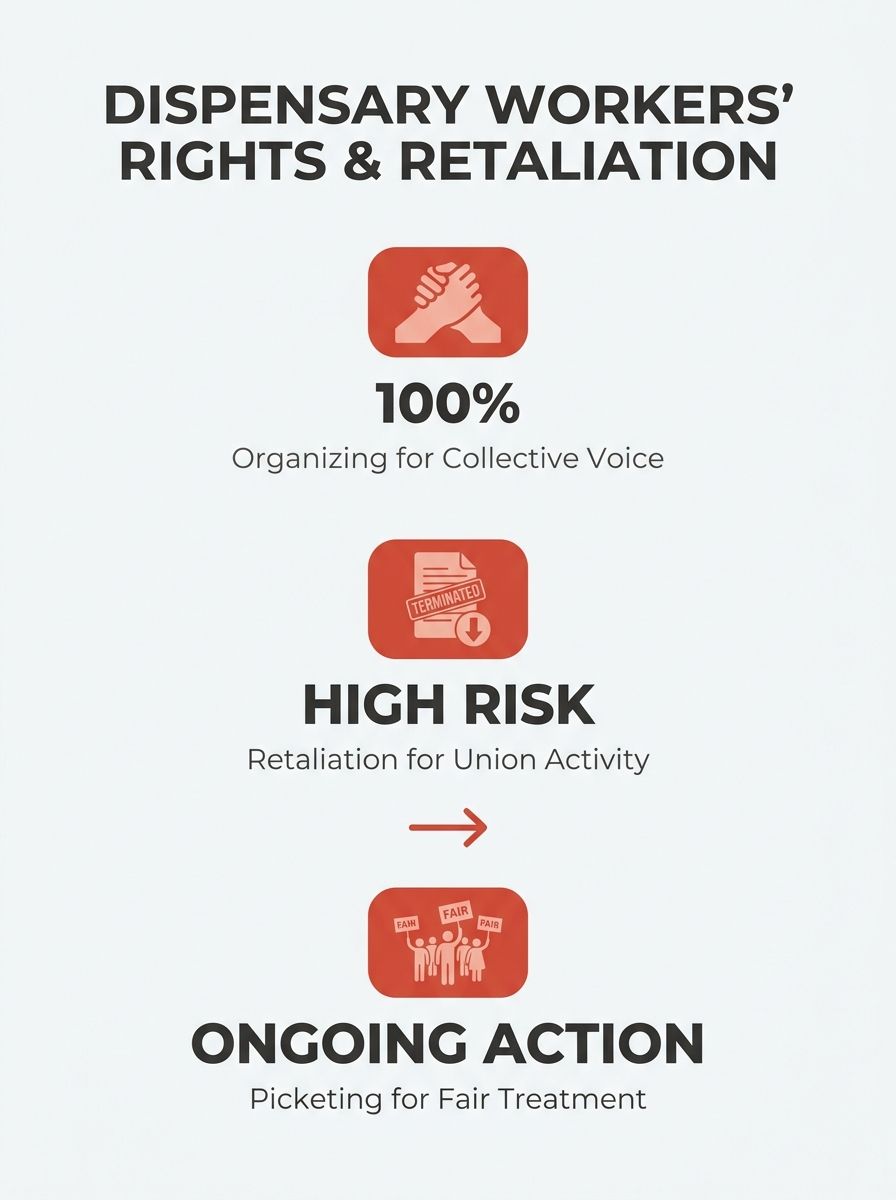
Federal labor law protects workers' right to organize under the National Labor Relations Act, which covers most private-sector employees including those in state-legal cannabis businesses. Firing employees for union activity constitutes an unfair labor practice, and workers who believe they were terminated for organizing can file charges with the National Labor Relations Board. The NLRB investigates such claims and can order reinstatement with back pay if it finds violations occurred.
Cannabis industry workers face unique organizing challenges because employers often argue that federal drug prohibition complicates workplace protections, though courts have generally rejected such defenses in NLRA cases. Workers in Missouri's medical marijuana program, which launched in 2020, have limited union representation compared to more established markets like California or Illinois.
Taylor told the Missouri Independent she would have pursued the union effort regardless of the outcome. The workers have maintained their picketing presence outside the dispensary through the weekend following the firings, with signs and chants calling attention to what they describe as retaliation.
Broader Context in Cannabis Labor
The cannabis industry has seen growing unionization efforts nationwide as the sector expands, though organizing success rates remain below other retail and service industries. Workers cite concerns about inconsistent scheduling, pay equity, workplace safety, and the lack of standard benefits that employees in traditional retail environments often receive. Similar union organizing campaigns at retail chains have encountered employer resistance, including allegations of anti-union campaigns and terminations.
Dispensary employees, often referred to as budtenders, typically earn near minimum wage in many markets despite working in a high-revenue industry. The lack of federal banking protections and ongoing Schedule I classification create operational challenges that some employers cite when resisting labor cost increases, though worker advocates argue these factors should not override basic organizing rights.
Taylor told the Missouri Independent that speaking out matters beyond the individual terminations. The former employees say they plan to continue raising awareness about what they describe as predatory business practices in the cannabis industry.
Why This Matters Now
The Springfield case represents a clear test of whether cannabis employers will respect organizing rights as the industry professionalizes, or whether workers in state-legal markets will face retaliation despite federal protections. Mass terminations following union discussions send a signal to other cannabis workers considering organizing efforts, potentially chilling protected activity across an industry where labor standards remain inconsistent.
The outcome of any NLRB complaint—if the workers file charges—could establish precedent for how quickly investigators act when employers in regulated cannabis markets allegedly violate organizing rights. Cannabis remains one of the fastest-growing employment sectors in states with legal programs, and labor advocates are watching whether worker protections keep pace with industry expansion.
For union organizers and labor rights groups, the Springfield firings illustrate the risks workers take when attempting to collectively bargain in industries without established labor traditions. The workers' public picketing strategy, rather than quiet legal proceedings alone, reflects a shift toward visibility campaigns that pressure employers through community awareness even when formal legal channels move slowly.
The Union Edge Staff
Related Articles

Springfield Cannabis Workers Ratify First Union Contract After Four-Year Campaign
Cannabis workers at Key Cannabis Dispensary in Springfield, Missouri, ratified their first collective bargaining agreement in late July 2026, securing wage increases, bonuses, and expanded paid time off after a four-year organizing campaign that began with a 6-3 union vote in 2022, according to the

Federal Court Voids New Jersey's Mandatory Union Labor Requirements for Cannabis Industry
A federal district court ruled on August 10, 2026, that New Jersey cannot force cannabis businesses to sign labor peace agreements with unions as a condition of licensure, striking down a state mandate that had governed the industry since legalization. United States District Judge Michael A.

UnityPoint Nurses Turn to Lawmakers After Employer Delays Union Certification
Nurses at UnityPoint Health in Des Moines, Iowa, met with state and federal lawmakers this week to discuss delayed union certification nearly one year after voting to join Teamsters Local 90, according to a statement from the union. The employer has filed objections that have prevented the National
Also in the paper