
Stellantis Signs Sale Agreement for Brampton Plant as Union Contract Expires in Five Days
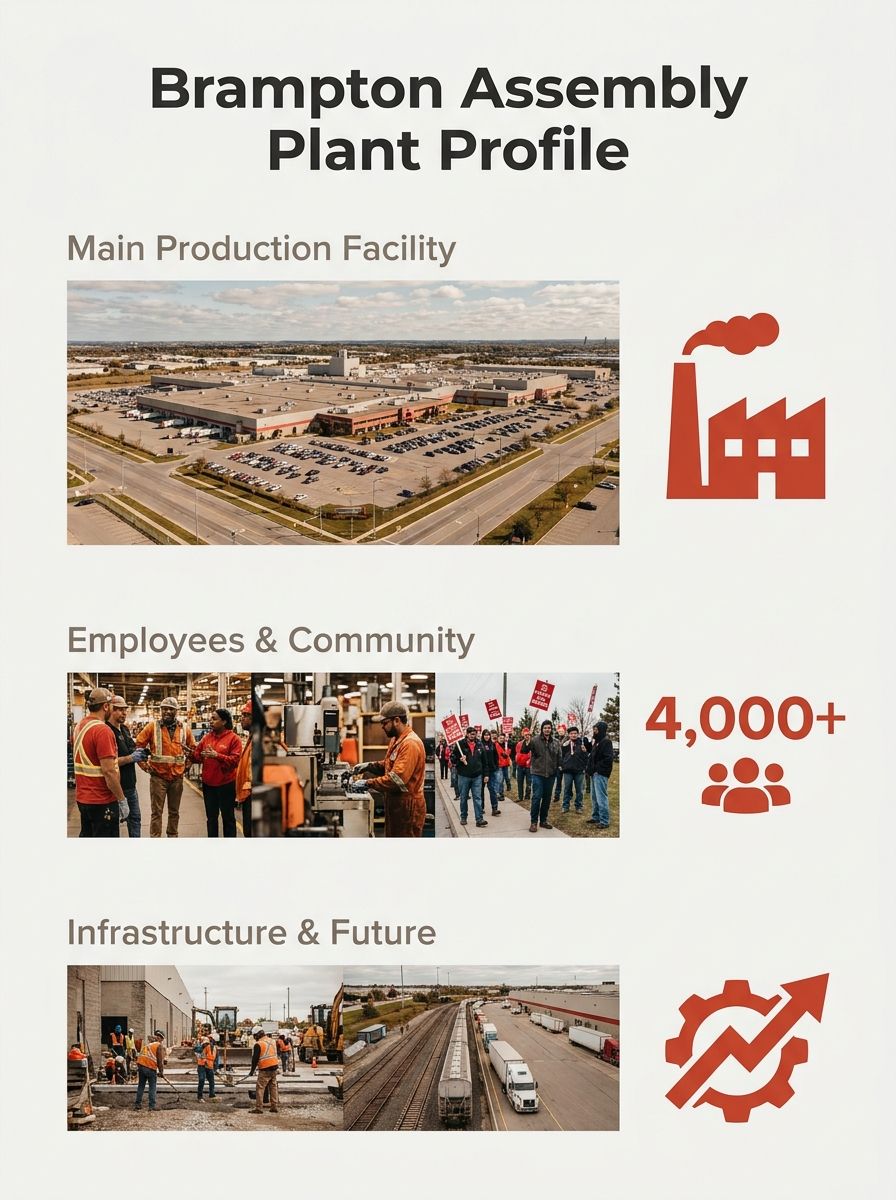
Stellantis signed a memorandum of understanding on September 15 with Roshel, a Canadian armored vehicle manufacturer, covering the potential sale of the Brampton Assembly plant in Ontario, according to Global News Canada.

Stellantis Signs Sale Agreement for Brampton Plant as Union Contract Expires in Five Days
Stellantis signed a memorandum of understanding on September 15 with Roshel, a Canadian armored vehicle manufacturer, covering the potential sale of the Brampton Assembly plant in Ontario, according to Global News Canada. The announcement arrives five days before Unifor's collective bargaining agreement with Stellantis expires on September 20 at 11:59 PM, placing the 2,000-plus laid-off workers at the center of a contract negotiation shaped by the automaker's plan to exit high-volume automotive production at the site.
Plant Sat Idle Three Years After Dodge, Chrysler Production Ended
Brampton Assembly stopped production in late 2023 after completing the final Dodge Charger, Challenger, and Chrysler 300C models. Stellantis laid off more than 2,000 workers when operations ceased. The Auburn Hills–based automaker initially announced plans in 2024 to retool the facility for Jeep sport utility vehicle production, but paused that work in 2025 and moved Jeep Compass production to a U.S. facility instead.
Roshel stated in company materials that the proposed defense manufacturing center would support more than 2,000 jobs if the transaction closes. Laid-off Stellantis employees would receive priority consideration for positions, the Brampton-based armored vehicle manufacturer said. The memorandum establishes a framework for pursuing the deal, though no purchase price or closing date has been disclosed.
Sale Proposal Undercuts Union Bargaining Position Days Before Contract Deadline
The timing of the sale announcement directly affects Unifor's use in contract negotiations. The union's outgoing collective agreement expires September 20, leaving organizers to bargain over a facility the employer is actively trying to sell. Stellantis confirmed in public statements that it considered several opportunities for Brampton Assembly before determining Roshel represented "the strongest path toward restoring sustainable operations."
Unifor has not released a public statement on the memorandum as of September 15. The union faces the challenge of securing contract terms for members whose jobs depend on a transaction that remains conditional on labor negotiations and government commitments.
Federal and Provincial Funding Frozen During Dispute Over Production Moves
The Canadian federal government announced up to CAD 529 million in support in 2022 as part of a CAD 3.6 billion investment to transition Brampton Assembly and Stellantis's Windsor facility toward electrified vehicle production. Ontario committed up to CAD 513 million under the same agreement. Government briefing materials later confirmed that payments under the agreement were placed on hold during a dispute-resolution process after Stellantis moved Jeep Compass production to Illinois.
The funding freeze adds a second layer of pressure to the Brampton plant's uncertain status. Stellantis has not publicly addressed whether the government subsidy dispute affects its willingness to complete the Roshel transaction or whether Ottawa and Ontario would support a shift from automotive to defense manufacturing at the site.
Industry Group Criticizes Armored Vehicle Plan as Small-Scale Operation
Flavio Volpe, president of the Automotive Parts Manufacturers' Association, criticized the proposed transaction in statements to Canadian media. Volpe argued that armored vehicle production would operate at a much smaller scale than high-volume automotive assembly. He stated that Stellantis still has future vehicle programs that could be assigned to Brampton Assembly, though the automaker has not identified any such programs publicly.
The APMA's objection centers on the economic impact of replacing a high-volume automotive plant with a defense contractor. Armored vehicle production typically operates in smaller batches than passenger vehicle assembly lines, which could reduce the number of supplier jobs dependent on the facility. Volpe's comments reflect broader concerns among parts manufacturers about the erosion of Canada's automotive supply chain as automakers consolidate production in the United States.
Why This Matters Now
The Brampton Assembly sale exposes how corporate restructuring decisions directly undermine union bargaining power when employers announce plant closures or asset sales during active contract negotiations. Unifor faces a five-day window to negotiate terms for thousands of workers whose jobs depend on a transaction the employer controls, illustrating the structural imbalance labor organizers confront when companies pivot away from unionized facilities. The memorandum gives Stellantis use to present the Roshel sale as a "jobs saved" outcome while avoiding commitments to maintain high-volume automotive production covered under existing labor agreements.
The frozen government subsidies add a second dimension: public investment intended to secure EV manufacturing jobs now sits on hold while the automaker pursues a sale that would permanently shift the facility away from the automotive sector. The dispute underscores the risk of subsidy agreements that lack enforceable production commitments, a concern relevant to labor advocates tracking industrial policy across North America as automakers negotiate billion-dollar support packages. For organizers studying how to protect union jobs during industry transitions, the Brampton case demonstrates the urgency of contract language that restricts plant sales during bargaining periods and ties government subsidies to verifiable employment guarantees rather than capital investment targets alone.
The Union Edge Staff
Related Articles

General Motors Deploys 50 Collaborative Robots at Michigan Plant as Over 1,000 Workers Face Layoffs
General Motors has deployed approximately 50 collaborative robots at its Factory Zero assembly plant in Michigan, a move that has coincided with workforce reductions affecting more than 1,000 employees, according to reports from Crain's Detroit Business. The automaker says the robots are intended to
AutoZone Workers in White Plains Push for First Union as Company Spends $200,000 Fighting Campaign
Eleven workers at an AutoZone store in White Plains, New York, will vote beginning September 25 on whether to join United Auto Workers Local 259 and form the first union at the nation's largest auto parts retailer, according to reporting in The Guardian.

UAW President Shawn Fain Seeks Re-Election Following 2023 Strike Wins and Organizing Setbacks
United Auto Workers President Shawn Fain is seeking a second four-year term leading the 400,000-member union, entering the race as the favorite after the historic 2023 strike that secured 25 per cent wage increases from Detroit automakers, according to CBC News. Delegates are expected to nominate ca
Also in the paper