
General Motors Deploys 50 Collaborative Robots at Michigan Plant as Over 1,000 Workers Face Layoffs
General Motors has deployed approximately 50 collaborative robots at its Factory Zero assembly plant in Michigan, a move that has coincided with workforce reductions affecting more than 1,000 employees, according to reports from Crain's Detroit Business. The automaker says the robots are intended to

General Motors Deploys 50 Collaborative Robots at Michigan Plant as Over 1,000 Workers Face Layoffs
General Motors has deployed approximately 50 collaborative robots at its Factory Zero assembly plant in Michigan, a move that has coincided with workforce reductions affecting more than 1,000 employees, according to reports from Crain's Detroit Business. The automaker says the robots are intended to improve workplace safety and reduce repetitive tasks, while the United Auto Workers has filed grievances challenging the installations and arguing that automation is shrinking union job opportunities.
The cobots are performing assembly line tasks including attaching vehicle body panels and other repetitive production processes at Factory Zero, a key facility for GM's electric vehicle manufacturing operations. Company spokesperson Kevin Kelly said the systems are part of a broader effort to integrate advanced technologies across GM's production facilities, with some affected employees placed on temporary layoff status without a specified return timeline.
Union Challenges Automation Rollout
James Cotton, president of UAW Local 22, told Crain's Detroit Business that the union believes workforce levels are being reduced because of the cobot installations. The UAW has filed grievances over the robot deployments and has questioned GM's safety justifications for the technology.
The dispute extends beyond Factory Zero. UAW president Shawn Fain has criticized the broader application of automation and artificial intelligence in manufacturing, arguing that productivity gains from new technology should benefit workers rather than contribute to job cuts. Fain's position reflects ongoing tensions between the UAW and automakers over how technological advances reshape employment in unionized plants.
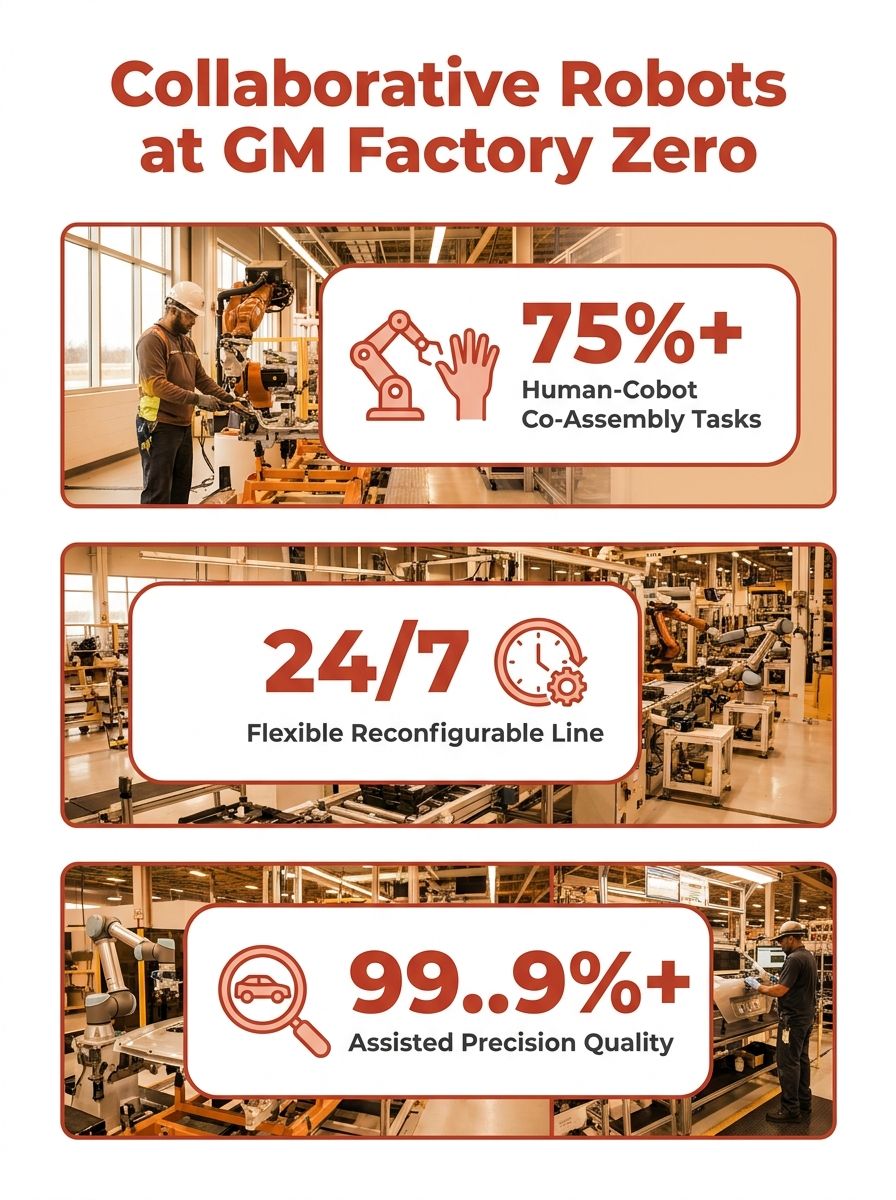
GM maintains that the collaborative robots are designed to work alongside human employees, not replace them entirely. Kelly stated that the technology aims to reduce physical strain from repetitive tasks and help factories remain competitive, echoing workplace safety justifications that employers frequently cite when introducing automation systems.
Automation Within Broader Cost-Cutting
The Factory Zero robot deployment is part of larger restructuring efforts at GM. The company has reduced headcount across engineering and IT functions in recent months—including layoffs affecting over 500 IT employees earlier this year—while simultaneously increasing investments in automation and AI-focused manufacturing systems.
Industry analysts view the changes as representative of a manufacturing sector trend toward advanced production technologies. The tension between productivity technology and workforce levels is expected to feature prominently in future labor negotiations across the automotive industry, particularly as electric vehicle production scales and traditional assembly methods evolve.
The UAW's grievance process over the cobots will test contractual language governing automation decisions and workforce protections. Union officials have not disclosed specific remedies sought through the grievances, but past disputes over similar technology deployments have centered on advance notice requirements, retraining programs, and limitations on automation scope.
What Happens Next
The grievances filed by UAW Local 22 will proceed through the contractual dispute resolution process, potentially setting precedent for how automation decisions at unionized GM facilities are handled. The outcome may influence automation clauses in future collective bargaining agreements, particularly as the UAW prepares for 2027 contract negotiations with Detroit automakers.
Workers on temporary layoff at Factory Zero remain in uncertain status without a confirmed return date, raising questions about whether GM views the workforce reductions as permanent headcount cuts or temporary adjustments to production volume. The company has not announced retraining programs or alternative placement options for displaced employees.
The dispute highlights a broader labor policy question facing manufacturing unions: how to secure contractual protections that allow technological advancement while preventing automation from becoming a workforce-reduction tool disguised as a safety initiative. As collaborative robots become more prevalent across automotive plants, unions will need to negotiate explicit terms governing their deployment, scope, and relationship to staffing levels.
The Union Edge Staff
Related Articles

Stellantis Signs Sale Agreement for Brampton Plant as Union Contract Expires in Five Days
Stellantis signed a memorandum of understanding on September 15 with Roshel, a Canadian armored vehicle manufacturer, covering the potential sale of the Brampton Assembly plant in Ontario, according to Global News Canada.

Uber Aligns With Labor Unions to Oppose Autonomous Vehicle Expansion in Washington
Uber and organized labor testified in mid-July before the Washington, D.C. Council in opposition to rapid autonomous vehicle deployment, forming an unlikely alliance in a city where 35,000 gig drivers make up 9% of the workforce, according to CNBC.

Tech Workers Push Union Recognition at Google and Meta as AI Reshapes Job Security
The Alphabet Workers Union delivered a 4,500-signature job security petition to Google executives last week, capping a year in which union actions at Alphabet doubled from 2024 levels, according to The Guardian.
Also in the paper