
UAW President Shawn Fain Seeks Re-Election Following 2023 Strike Wins and Organizing Setbacks
United Auto Workers President Shawn Fain is seeking a second four-year term leading the 400,000-member union, entering the race as the favorite after the historic 2023 strike that secured 25 per cent wage increases from Detroit automakers, according to CBC News. Delegates are expected to nominate ca

UAW President Shawn Fain Seeks Re-Election Following 2023 Strike Wins and Organizing Setbacks
United Auto Workers President Shawn Fain is seeking a second four-year term leading the 400,000-member union, entering the race as the favorite after the historic 2023 strike that secured 25 per cent wage increases from Detroit automakers, according to CBC News. Delegates are expected to nominate candidates at the UAW convention in Detroit this week, with the election scheduled for fall 2026.
The 57-year-old former Chrysler electrician led a six-week walkout in 2023 against Ford Motor, General Motors, and Stellantis—the first time in UAW history the union struck all three automakers simultaneously. The action produced record wage increases and broad support among rank-and-file members. However, Fain's tenure has also been marked by a federal monitor's allegations of retaliation against union leadership and a $40 million organizing drive that yielded mixed results.
Strike Victory Anchors Campaign
Fain's 2023 negotiating approach represented the most combative stance the Detroit automakers had faced in decades. During bargaining, he livestreamed updates to members and, in one widely viewed moment, threw a company contract proposal in a trash can. The theatrics accompanied substantive gains: the collective bargaining agreements delivered 25 per cent wage increases and restored cost-of-living adjustments that the union had surrendered in previous contracts.
"Shawn Fain's communication efforts, the willingness to strike, the gains we got, were very welcome," Eric Hall, a union member for nearly 40 years who works as an electrician at Ford's Kansas City assembly plant, told Reuters.
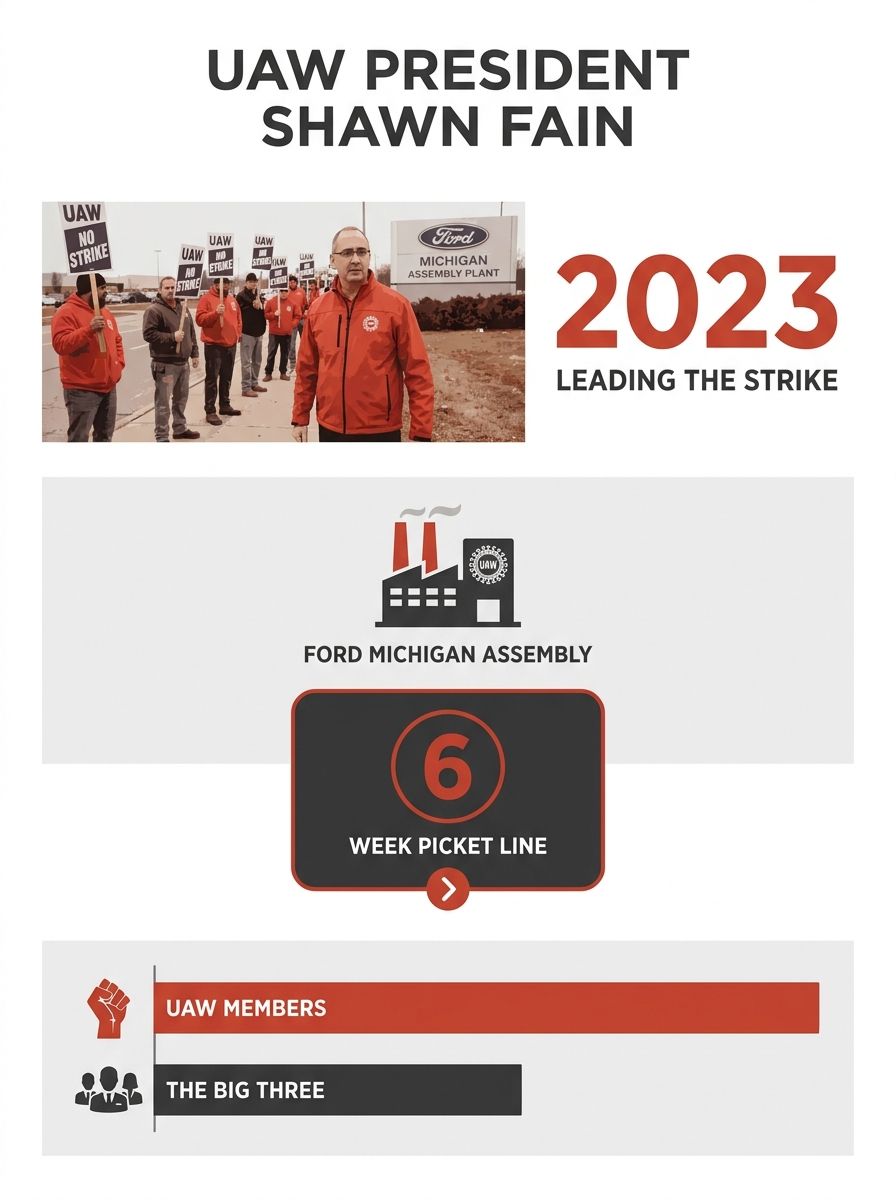
The strike's success came after Fain became the first UAW president elected directly by union members rather than through a delegate system. The union membership voted for direct elections in 2021 following a corruption scandal that resulted in federal oversight.
Organizing Losses Temper Momentum
Since the 2023 contract victories, the UAW's national organizing campaign has produced uneven results. The union invested $40 million in efforts to organize non-union automakers across the South, winning a representation election at Volkswagen's Tennessee plant but losing a high-profile vote at Mercedes-Benz's Alabama facility.
"We've done things in three years that haven't been done in 30," Fain said in an interview with Reuters. "We're just getting started."
Labor experts suggested the organizing setbacks may not significantly harm Fain's re-election prospects. "The stalled organizing drive has been an epic, if somewhat predictable, failure, but it probably won't play any role in the outcome of the election," said John Logan, a labor professor at San Francisco State University. Logan noted that contract gains during a member's first term typically outweigh organizing metrics in union leadership races.
Federal Monitor Allegations Cloud Record
A federal watchdog appointed in 2021 to oversee UAW management has accused Fain of retaliating against the union's secretary-treasurer, Margaret Mock, by reassigning some of her duties. The monitor's report stated that Fain's chief of staff, Chris Brooks, participated in the retaliation campaign. Brooks later departed the union.
The union's executive board has also faced scrutiny over investment portfolio management. The monitor issued recommendations for enhanced governance and investment-management processes. The UAW stated it has been in compliance with its investment policy for almost a year and would implement the monitor's recommendations.
"Every board had its challenges," Fain said. "Everything we've done, we've done by putting this membership first." He added that the UAW has "adopted almost every reform suggested by the monitor."
Challengers Focus on Transparency, Technology
Fain faces several opponents in the fall election, including Brian Keller, Will Lehman, Greg Mooney, and Tricia Geiger, all of whom confirmed their candidacies to Reuters. Their platforms include calls for responsible implementation of artificial intelligence and automation in auto manufacturing, additional wage increases, and increased transparency in union operations.
The election will be closely watched by Ford, General Motors, and Stellantis, whose U.S. factory workforces consist largely of UAW members. The outcome will determine the union's bargaining posture ahead of the next round of contract negotiations.
What This Means for Union Members
Fain's re-election bid tests whether direct-election reforms have fundamentally changed how UAW members evaluate leadership. The 2021 shift from delegate selection to member voting was designed to make union officers more accountable to rank-and-file workers rather than institutional power structures. Fain's first term provided that model's first major stress test.
The contrast between strike success and organizing setbacks reflects a broader tension in labor strategy: whether unions build power through aggressive action at existing bargaining units or through expansion into unorganized workplaces. Fain's ability to win re-election despite the organizing losses suggests that UAW members—like members in many industrial unions—prioritize contract gains over growth metrics when casting leadership votes.
The federal monitor's continued presence, however, signals that internal governance remains a vulnerability. Unions operating under consent decrees face heightened scrutiny of leadership decisions, and allegations of retaliation carry consequences beyond electoral politics. Fain's handling of the monitor's recommendations between now and the fall vote will likely determine whether governance concerns gain traction with members who might otherwise support him based on the 2023 contract alone.
The Union Edge Staff
Related Articles

The Organizing Committee Trap: Why Worker Committees Fail and How to Build Leadership Density That Actually Wins
Organizing committees at VW Chattanooga failed twice before the plant's 2024 election finally succeeded. The difference was structural: the winning campaign built trained leadership at a ratio of one worker-leader for every twenty-five employees, covering 90 percent of the plant by election day.
AutoZone Workers in White Plains Push for First Union as Company Spends $200,000 Fighting Campaign
Eleven workers at an AutoZone store in White Plains, New York, will vote beginning September 25 on whether to join United Auto Workers Local 259 and form the first union at the nation's largest auto parts retailer, according to reporting in The Guardian.
Union Organizers and Labor Veterans Run for Congress in 2026 Midterm Push
More than three dozen Democratic and independent nominees with backgrounds as labor union representatives or members are running for open House and Senate seats in the 2026 midterm elections, according to a Guardian analysis published September 19.
Also in the paper