
What Is the Minimum Salary Wage in California
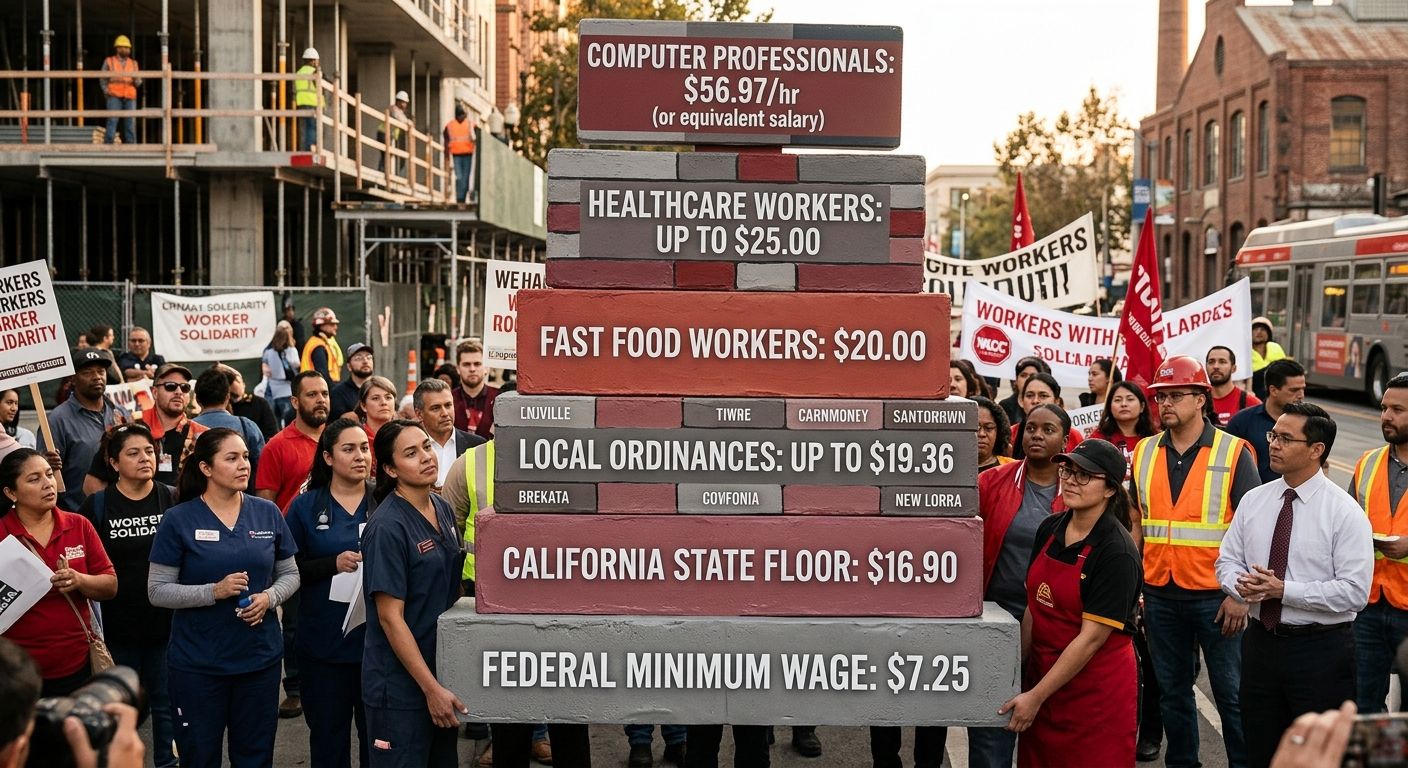
California's minimum wage is $16.90 per hour as of January 1, 2026, and that single number sets off a chain reaction across salary thresholds, industry-specific floors, and local ordinances that together determine what every worker in the state must legally be paid.

What Is the Minimum Salary Wage in California?
California's minimum wage is $16.90 per hour as of January 1, 2026, and that single number sets off a chain reaction across salary thresholds, industry-specific floors, and local ordinances that together determine what every worker in the state must legally be paid. The phrase "minimum salary wage" typically refers to the annual exempt-employee threshold, which is now $70,304 per year, a figure derived directly from the hourly minimum and one that catches many employers off guard.
How California's Minimum Wage Is Defined
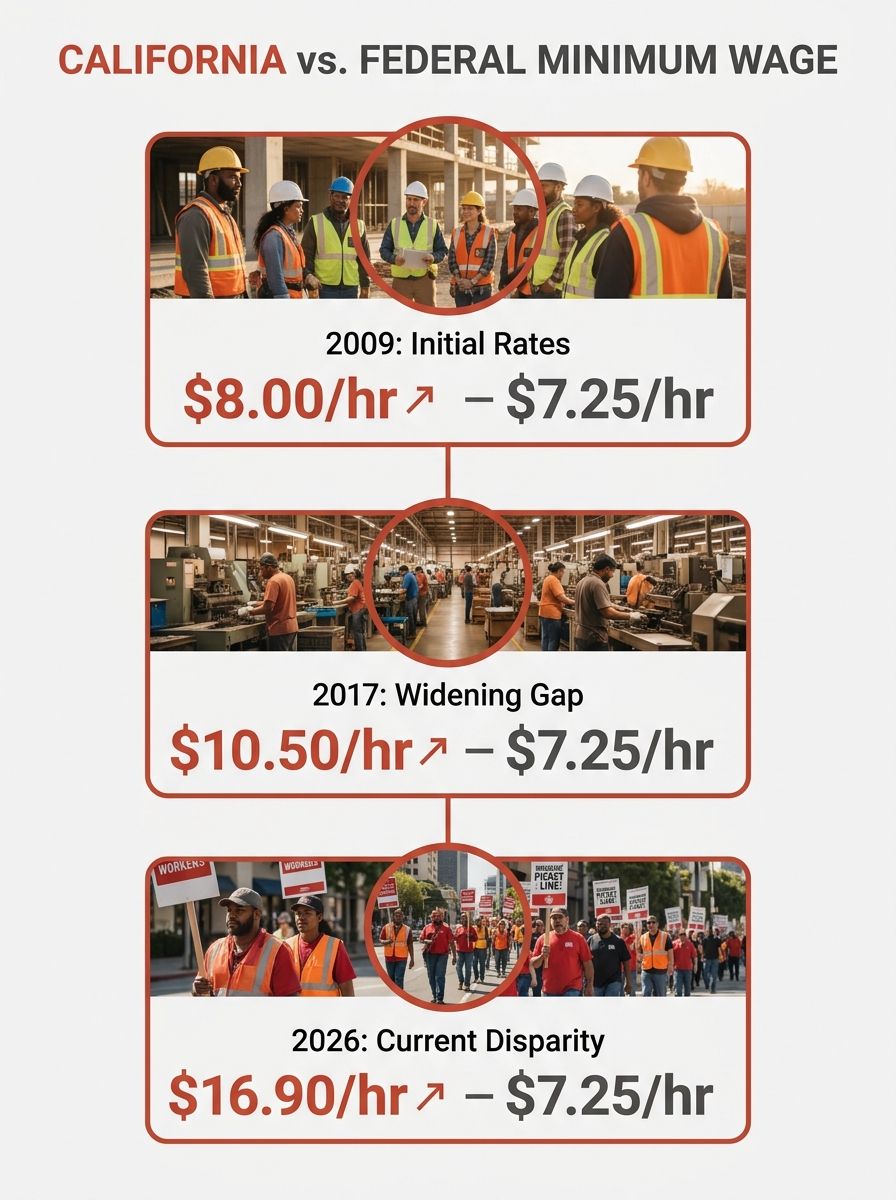
The California Department of Industrial Relations sets the statewide minimum wage, which applies to all employers regardless of size. The current rate of $16.90 per hour took effect on January 1, 2026, representing a 2.49% increase over the prior year's rate. This is an inflation-adjusted figure, California Labor Code Section 1182.12 requires annual adjustments tied to the consumer price index, a mechanism that has been in place since the state completed its phased increase to $15.00 per hour.
The federal minimum wage, by contrast, has been frozen at $7.25 per hour since 2009. That 17-year gap between the federal floor and California's rate is the widest in history. Under both federal and state law, when two minimum wages apply, employers must pay the higher one. Every worker in California is entitled to at least $16.90 per hour, and in practice the federal rate is irrelevant within the state's borders. Compare that to states like Texas, where workers still earn the federal floor by default.
The Salary Exemption Threshold and Why It Matters
The minimum salary wage in California for exempt employees is calculated using a simple formula: twice the state minimum wage multiplied by 2,080 hours (a standard full-time year). At $16.90 per hour, that math produces $70,304 annually, or $1,352 per week. Any salaried worker classified as exempt, meaning they don't receive overtime pay, must earn at least this amount, or their employer is violating California wage law.
This threshold catches employers who haven't updated their payroll since the last rate change. A salaried manager earning $68,000 per year was legally exempt in 2025. That same salary became illegal for exempt classification on January 1, 2026. The employer faces liability for unpaid overtime going back to the date the classification became invalid.
The exempt salary floor also interacts with industry-specific rates. Healthcare facilities paying their salaried administrative staff based on the general $16.90 rate may discover those same employees are actually covered by a higher industry floor, pushing the exemption threshold even further up. We've seen similar threshold confusion play out in Michigan's minimum wage changes, where phased increases caught small employers mid-payroll cycle.
Industry-Specific Floors: Healthcare and Fast Food
California's wage structure operates on multiple tiers, and two industries have mandatory floors that exceed the general $16.90 rate by significant margins.
Fast food workers at restaurants belonging to national chains with 60 or more locations must earn at least $20.00 per hour, a rate that has been in effect since April 1, 2024. The Fast Food Council, created by AB 1228, has authority to raise this rate further in future years. The $20.00 floor applies to line cooks, cashiers, shift leads, and other non-exempt restaurant employees covered by the law's definition of "fast food restaurant."
Healthcare facility employees operate under a separate and more complex schedule. The California Department of Industrial Relations confirms that healthcare minimum wages took effect on October 16, 2024, with rates that vary by facility type and size:
Facility Type | Minimum Hourly Rate |
|---|---|
Large health systems (10,000+ employees) | $25.00 |
Hospitals (other) | $23.00 |
Clinics and other facilities | $21.00–$24.00 (phased) |
Smaller/rural facilities | $18.63 (phased increases) |
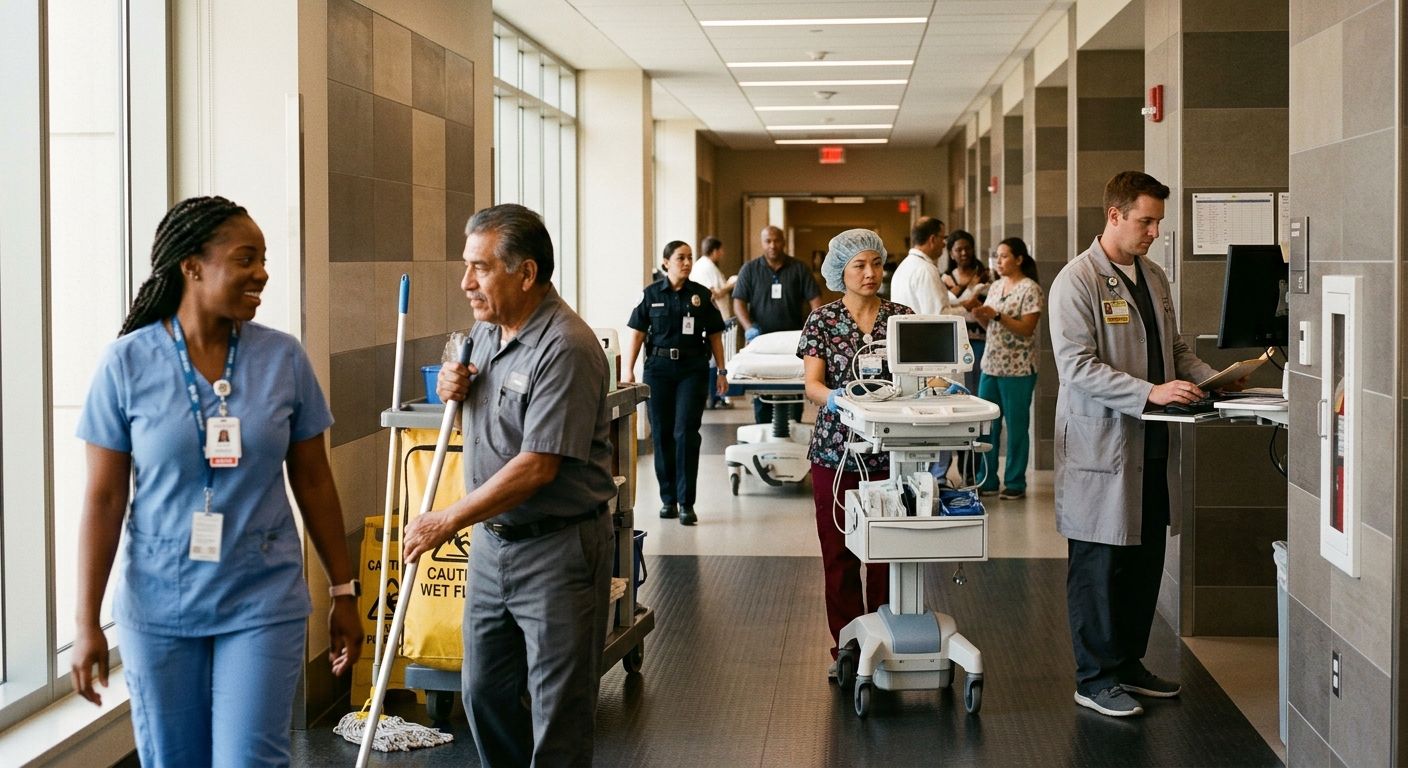
These rates apply to virtually everyone working inside a covered healthcare facility, nurses, techs, janitorial staff, cafeteria workers, security guards. The law was a direct result of SEIU-UHW's sustained organizing campaign across California's hospital systems, and it represents one of the largest industry-specific wage mandates in U.S. history.
For salaried exempt employees in healthcare, the math shifts dramatically. A healthcare worker at a large system covered by the $25.00/hour floor would need to earn at least $104,000 annually to qualify as exempt (twice $25.00 times 2,080 hours). That's $33,696 more than the general exempt threshold.
Local Ordinances Add Another Layer
The state rate of $16.90 per hour is a floor, and dozens of California cities and counties have built above it. According to the UC Berkeley Labor Center's inventory of local wage ordinances, California has more local minimum wage laws than any other state, and many of them update on January 1 or July 1 each year.
The highest local rates as of 2026:
City | Minimum Wage (per hour) |
|---|---|
Emeryville | $19.36 |
West Hollywood | $19.08 |
San Francisco | $18.67 |
Los Angeles (City) | $17.28 |
San Diego | $17.25 |
Some municipalities also differentiate rates based on employer size, with smaller businesses given a lower rate or a longer phase-in period. The worker's entitlement is determined by where they physically perform the work, not where the employer is headquartered. A healthcare aide employed by a staffing agency based in Riverside but assigned to a clinic in West Hollywood earns the West Hollywood rate while working there.
This creates real compliance headaches. An employer with staff at multiple locations across Los Angeles County could be managing five or six different minimum wage rates simultaneously. Mobile healthcare workers, home health aides, traveling nurses, phlebotomists who visit multiple clinics, trigger the local rate of each site they visit during a shift. For a broader look at how local ordinances compare to state floors, our coverage of California's county-level wage variation maps the full picture.
Computer Professionals and the Overlooked Exemption
One additional carve-out deserves attention because it affects a significant number of California workers who don't think of themselves as covered by minimum wage law. The computer software professional exemption sets its own hourly floor at $56.97 per hour, or an annual salary of $118,657.43. Employees performing work in systems analysis, software engineering, or programming who earn below this threshold cannot be classified as exempt from overtime under this particular exemption category.
This rate is indexed separately and has been rising faster than the general minimum wage. It functions as a protection for mid-level tech workers who might otherwise be misclassified as exempt and worked 50- or 60-hour weeks without overtime compensation.
Where the Model Breaks
California's layered minimum wage system is the most protective in the country, and it still has gaps that leave workers exposed.
Tipped workers are covered by the full minimum. Unlike 43 other states, California does not allow a tip credit, employers cannot pay below $16.90 and count tips toward the difference. This is one area where the model works cleanly. But enforcement depends on workers knowing their rights and filing complaints, and the Division of Labor Standards Enforcement has historically been underfunded relative to the number of claims filed.
Piece-rate and commission workers fall through. Agricultural workers paid by the piece, garment workers paid per unit, and commission-based sales employees are all entitled to earn at least the minimum wage when their piece-rate or commission earnings are averaged across hours worked. In practice, verifying compliance requires detailed time records that many employers in these industries don't maintain. Healthcare staffing agencies that pay per visit rather than per hour face the same problem, if a home health aide is paid $35 per patient visit but spends 2.5 hours per visit including travel, their effective hourly rate drops below the minimum.
Independent contractor misclassification remains rampant. California's AB 5 law narrowed the legal definition of independent contractor, but enforcement is complaint-driven. Healthcare facilities, home care agencies, and tech companies continue to classify workers as contractors to avoid both the minimum wage and the exempt salary threshold entirely. The state has recovered over $100 million in misclassification penalties in recent years, but the practice persists because the financial incentive to misclassify outweighs the risk of getting caught for many employers.
The annual adjustment mechanism has no downward floor. If inflation turns negative, the statute technically allows the minimum wage to remain flat but not decrease. The governor retains emergency authority to pause increases under specific economic conditions, a provision that has never been invoked but exists as a safety valve, and a vulnerability.
Common Questions
Does California have a different minimum wage for small employers?
No. California eliminated the two-tier employer-size system when the state completed its phase-in to $15.00 per hour. The current $16.90 rate applies to all employers regardless of how many workers they employ. Some local ordinances still differentiate by employer size, but the state rate is uniform.
What happens if my city's minimum wage is lower than the state rate?
The higher rate always applies. If a city's ordinance has been surpassed by the state minimum, as happened with San Leandro's local ordinance, the state rate of $16.90 becomes the effective floor. Workers are always entitled to whichever applicable rate is highest: federal, state, or local.
Are healthcare workers guaranteed $25.00 per hour statewide?
No. The $25.00 rate applies only to employees of large health systems with 10,000 or more employees. Smaller hospitals, clinics, and rural healthcare facilities follow a phased schedule with rates currently ranging from $18.63 to $24.00, depending on facility type. All covered healthcare facilities will eventually reach $25.00, but the timeline varies.
How does the $70,304 exempt salary threshold work for part-time salaried workers?
The threshold is based on full-time employment. A part-time salaried worker classified as exempt must still earn at least $70,304 annually, there is no pro-rated exemption. In practice, this means very few part-time positions can legally be classified as exempt in California, because the salary requirement applies regardless of hours worked.
Is the minimum wage going up again in 2027?
The state has not officially announced the 2027 rate, but the inflation-adjustment mechanism in Labor Code Section 1182.12 will produce a new figure based on the consumer price index. Projections suggest the rate will land near $17.40 per hour, which would push the exempt salary threshold above $72,000. The announcement typically comes in the fall of the preceding year.
The Union Edge Staff
Frequently Asked Questions
- What is California's minimum wage in 2026?
- California's minimum wage is $16.90 per hour as of January 1, 2026, representing a 2.49% increase over the prior year. This rate is adjusted annually based on the consumer price index and applies to all employers regardless of size.
- What is the minimum salary for exempt employees in California?
- The minimum annual salary for exempt employees in California is $70,304 per year, calculated as twice the state minimum wage ($16.90) multiplied by 2,080 hours. Any salaried worker classified as exempt must earn at least this amount, or the employer is violating California wage law.
- How much do fast food workers earn in California?
- Fast food workers at restaurants belonging to national chains with 60 or more locations must earn at least $20.00 per hour, a rate that has been in effect since April 1, 2024. The Fast Food Council has authority to raise this rate further in future years.
- What are healthcare worker minimum wages in California?
- Healthcare facility minimum wages in California vary by facility type and size, ranging from $18.63 per hour for smaller/rural facilities to $25.00 per hour for large health systems with 10,000+ employees. These rates took effect on October 16, 2024, and apply to nearly all employees working inside covered healthcare facilities.
- Which California cities have the highest local minimum wages?
- Emeryville has the highest local minimum wage at $19.36 per hour, followed by West Hollywood at $19.08 and San Francisco at $18.67. These local rates exceed the state minimum of $16.90 and workers are entitled to whichever applicable rate is highest.
- Can California employers pay workers less if they receive tips?
- No. California does not allow a tip credit, so employers must pay the full minimum wage of $16.90 per hour regardless of tips received. This is unlike 43 other states that allow employers to count tips toward the minimum wage.
- What is the minimum wage for computer software professionals in California?
- Computer software professionals performing work in systems analysis, software engineering, or programming must earn at least $56.97 per hour (or $118,657.43 annually) to be classified as exempt from overtime. Employees earning below this threshold cannot be classified as exempt under this particular exemption category.
Related Articles

Minimum Wage California: 2024 Updates & Rates
AB 1228, SB 525, Labor Code Section 1182.12, and at least 38 local ordinances all set binding minimum wages in California, and the highest rate that applies to a given worker is the one the employer must pay.

Minimum Wage in California: 2024 Rules & Requirements
California's minimum wage is a formula-driven system that recalculates every January 1 based on changes in the Consumer Price Index, capped at 3.5% annually. The statewide floor rose from $16.00 per hour in 2024 to $16.

California Minimum Wage 2025: What's Changed
Three separate legal floors governed what California employers owed their workers during 2025: a $16.50 statewide baseline, a $20.00 fast-food sector rate, and a healthcare scale climbing as high as $23.00 per hour at large hospital systems.
Also in the paper