
Criminal Charges Filed Against Contractor and Metro Officials After 70-Year-Old Worker Dies in Electrocution at Bengaluru Construction Site
Bengaluru police filed criminal negligence charges on June 29 against a contractor, site supervisors, and Bengaluru Metro Rail Corporation Limited officials following the electrocution death of Gurappa P., a 70-year-old contract worker, at a Namma Metro construction site on M.G. Road three days earl

Criminal Charges Filed Against Contractor and Metro Officials After 70-Year-Old Worker Dies in Electrocution at Bengaluru Construction Site
Bengaluru police filed criminal negligence charges on June 29 against a contractor, site supervisors, and Bengaluru Metro Rail Corporation Limited officials following the electrocution death of Gurappa P., a 70-year-old contract worker, at a Namma Metro construction site on M.G. Road three days earlier, according to The Hindu. The First Information Report filed by Ulsoor police charges Suraj of M.R. Electricals, supervisors Rajesh and Manasa, and unnamed BMRCL officials under Section 106 of the Bharatiya Nyaya Sanhita for causing death by negligence.
Gurappa P., a resident of Mutturayaswamy Doddi near Bannerghatta, was working as a daily wage laborer when M.R. Electricals officials contacted him by phone on June 26 and directed him to report to the Trinity junction construction site. Around 3:30 p.m., while removing concrete chipping between two metro pillars on the median, Gurappa contacted a live electric line and suffered a fatal shock.
Negligence Allegations Detail Safety Equipment Failures
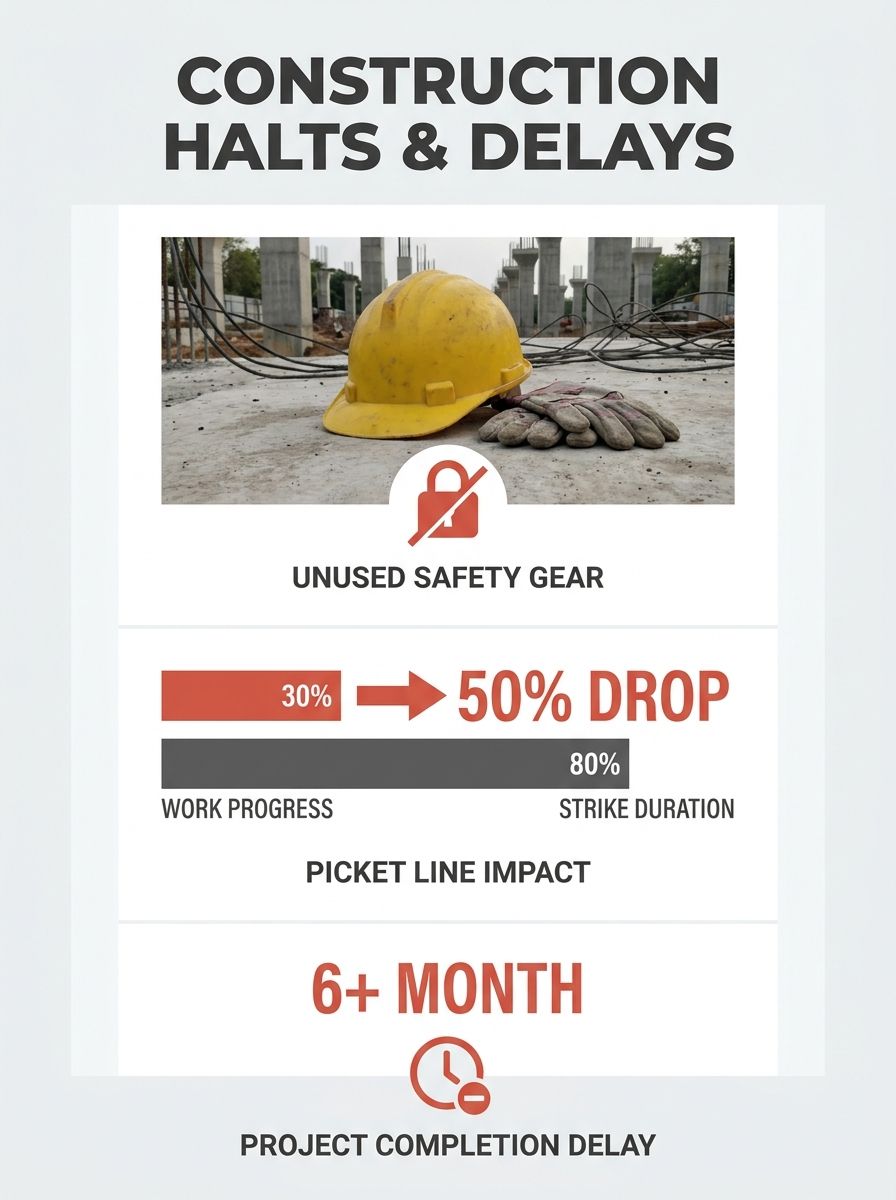
The complaint filed by Gurappa's son alleges the contractor and supervising officials failed to provide essential safety equipment including helmets, safety gloves, and other protective gear. The family further alleges supervisors took no adequate precautionary measures despite the hazardous nature of working near live electrical infrastructure.
The case parallels broader workplace safety enforcement gaps documented across construction sectors, where contract workers face disproportionate fatality risks. The complaint names four sets of defendants: contractor Suraj as the primary accused, site supervisors Rajesh and Manasa, and BMRCL officials whose specific identities the FIR does not yet detail.
Investigation Focuses on Protocol Violations at Public Infrastructure Site
Ulsoor police initiated an investigation to determine whether safety protocols were violated at the construction site and to establish responsibility for the fatal accident. The Bengaluru Metro Rail Corporation Limited operates the Namma Metro system and contracts construction work to private firms including M.R. Electricals.
The timing of the phone call directing Gurappa to the site on June 26 and the 3:30 p.m. accident raises questions about whether the 70-year-old worker received any safety briefing or training before beginning work involving electrical hazards. The complaint makes no mention of safety orientation or hazard communication.
Section 106 of the Bharatiya Nyaya Sanhita criminalizes causing death by negligent acts not amounting to culpable homicide. The provision carries a maximum sentence of five years imprisonment and applies when death results from rash or negligent conduct.
Contractor Accountability in Layered Public-Private Arrangements
The case highlights accountability challenges in public infrastructure projects where state agencies contract construction work to private firms that hire daily wage workers. BMRCL's inclusion as a defendant in the FIR signals investigators are examining whether the public agency adequately supervised contractor safety practices.
Contract workers in India's construction sector frequently work without formal employment relationships, safety training, or protective equipment. The complaint's allegation that supervisors failed to provide basic gear including helmets and gloves suggests systemic safety failures rather than isolated oversights.
The investigation will likely examine whether M.R. Electricals maintained records of safety equipment distribution, conducted hazard assessments before assigning work near live electrical lines, and followed lockout-tagout procedures required when working on or near energized equipment.
Why This Matters Now
This fatality demonstrates how multi-layered contracting arrangements in public infrastructure projects create enforcement gaps that leave older workers particularly vulnerable. At 70, Gurappa was working as a daily wage laborer in one of India's most hazardous sectors, directed by phone to a site where basic protective equipment was allegedly unavailable. The criminal charges filed against both the private contractor and the public metro agency establish a precedent for holding multiple parties accountable when safety failures span organizational boundaries.
For union organizers and safety advocates, the case provides a clear study in what enforcement looks like when family members demand accountability through the criminal system rather than relying solely on labor inspectorates. The son's complaint triggered the FIR that named specific individuals and a government agency, moving beyond the common pattern where construction deaths are treated as accidents rather than negligence requiring prosecution.
The investigation's focus on whether safety protocols existed and were followed creates documentation that can support broader safety demands at metro construction sites across Bengaluru and other Indian cities expanding rapid transit infrastructure through contract labor. Each protocol violation the police document becomes a reference point for demanding systematic changes in how public agencies oversee contractor safety practices.
The Union Edge Staff
Related Articles

Workplace Safety Failures Kill 30 Workers Across Three Countries in Four-Day Span
At least 30 workers died in workplace accidents across Greece, China, and the United States between July 9 and July 12, 2026, prompting regulators to impose safety penalties exceeding half a million dollars and order operational shutdowns at facilities in three countries, according to enforcement fi

Amazon Launches Internal Probe After Fire Kills Two Workers at Partner Facility in India
Amazon initiated an internal investigation after a June 5 fire at a third-party delivery partner facility in Uttarakhand, India, killed two workers, according to a Reuters report published July 3. Police findings show the M&M Logistics Solutions facility lacked a valid fire safety clearance and esse

National Commission for Women Documents Systematic Harassment at TCS Nashik Unit
A National Commission for Women investigation documented systematic workplace harassment, religious discrimination, and deliberate targeting of young female employees at Tata Consultancy Services' Nashik unit, according to a report released May 12, 2026.
Also in the paper