
Prevailing Wage Determination: Processing Timelines
The Department of Labor's National Prevailing Wage Center is processing standard OES wage requests filed in March 2026, putting prevailing wage determination processing time at roughly 3 months per case.

Prevailing Wage Determination Processing Time: 7 Rules Workers and Organizers Need
The Department of Labor's National Prevailing Wage Center is processing standard OES wage requests filed in March 2026, putting prevailing wage determination processing time at roughly 3 months per case. That's fast by recent standards, but the full PERM labor certification pipeline still averages 503 days, and every delay in that pipeline gives employers room to suppress wages or quietly swap workers out.
These seven rules apply to any worker whose job depends on a prevailing wage determination, whether you're the sponsored employee, a union rep protecting area wage standards, or an organizer watching employers game the system.
File the prevailing wage request the day the position is approved
The OFLC's official recommendation is to submit prevailing wage requests at least 60 days before the determination is needed for H-2B programs. For PERM-based green card cases, the realistic window is far longer. As of June 2026, the NPWC is issuing determinations for OES requests filed in March 2026, according to the March 2026 processing update from Reddy Neumann Brown PC. That 3-month turnaround looks good on paper, but it fluctuated between 6 and 8 months through much of 2025, per Envoy Global's tracking data.
Prevailing Wage Consulting LLC noted in its 2026 analysis that "we are currently seeing prevailing wage determinations issued in approximately 3 months," calling it "substantial progress" from periods when the average "hovered closer to six months."
The rule breaks when seasonal demand spikes. H-2A and H-2B temporary labor certifications flood the NPWC during planting and tourism seasons, and the DOL has historically prioritized those filings over PERM cases. The October 2025 government shutdown paused operations for nearly a month, pushing everything backward. If your employer tells you they "just filed" a prevailing wage request, ask for the receipt date and check it against the NPWC's published processing calendar yourself.
Track the NPWC's rolling processing dates, not the quoted averages
The DOL publishes its current processing dates on flag.dol.gov, updated regularly. These dates show which filing month the agency is currently reviewing — a far more useful indicator than any average. As of June 8, 2026, both OES and non-OES requests filed in March 2026 are being processed. Redetermination requests (appeals of initial wage findings) filed in February 2026 are under review.
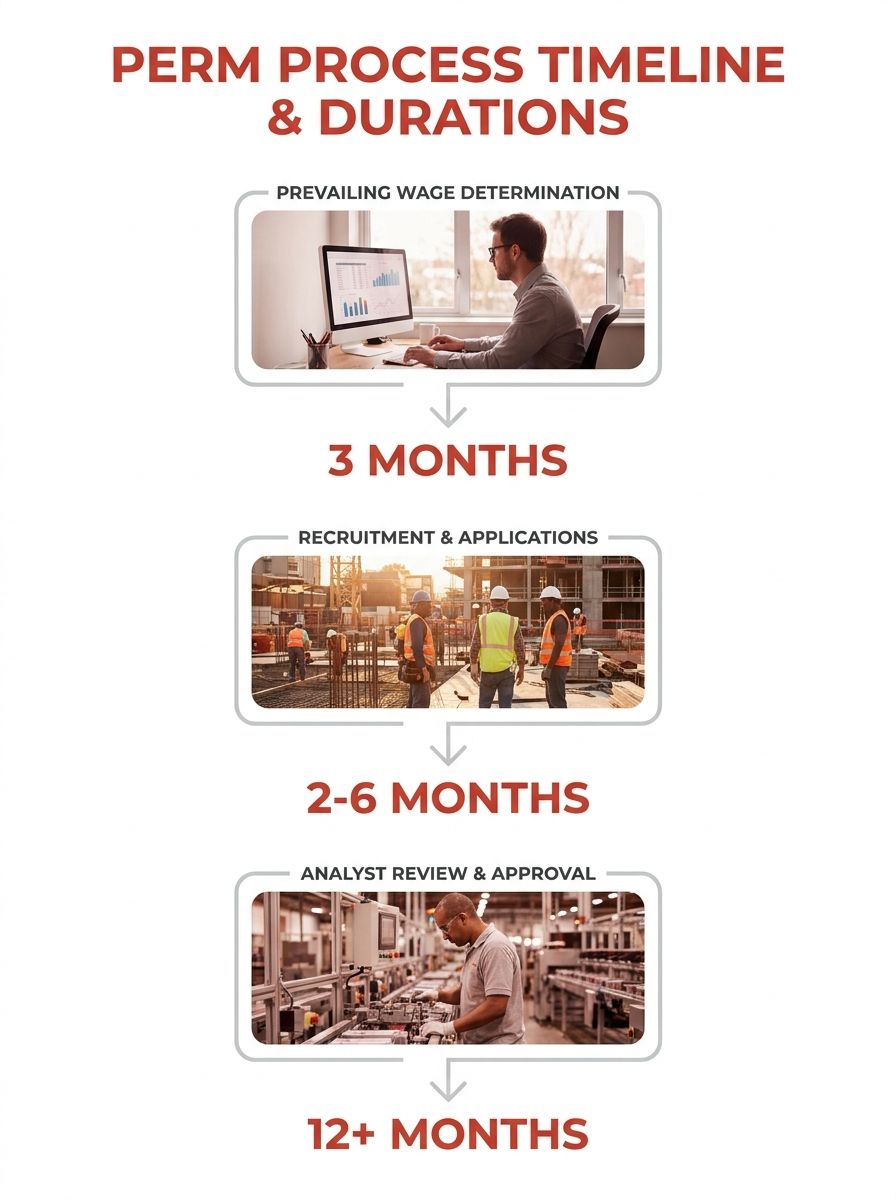
This matters for workers because averages obscure dangerous variation. As of January 31, 2024, the DOL was reviewing PERM applications filed in January 2023 or earlier, according to Fragomen's processing time analysis. That was a 12-month lag on analyst review alone. By contrast, the prevailing wage step at that same point ran 6-8 months. An employer quoting you "3 months" for the wage determination may be technically accurate while hiding the 12+ months of analyst review that follows it.
Check the official processing times page yourself. If your employer or their immigration attorney won't share the filing receipt date, that's worth noting — and potentially relevant if you're part of a collective bargaining unit negotiating sponsorship terms.
Never let an expired determination force a restart
Prevailing wage determinations carry a validity period of 90 days to one year. If the employer doesn't file the PERM application within that window, the determination expires and the entire process restarts — with potentially updated wage data. This is one of the most common ways workers lose months or years in the sponsorship pipeline.
BAL Immigration Law's employer guidance states that the recruitment phase takes "a legal minimum of two months but can be up to six months" after the prevailing wage is approved. That means an employer who drags on recruitment can burn through a determination's validity window without ever filing the PERM application.
Workers covered by union contracts that include immigration sponsorship provisions have real protection here. The contract can specify filing timelines that employers must meet, turning a bureaucratic deadline into an enforceable obligation. This approach has already shown results in industries from healthcare to construction.
Demand transparency on which wage level your employer selected
The prevailing wage determination uses one of four skill levels (Level I through Level IV) based on the job's complexity and the worker's experience. The difference between levels can reach tens of thousands of dollars annually. Level I covers entry-level positions. Level IV covers positions requiring the highest degree of independent judgment and specialized skill.
Employers have an obvious incentive to describe jobs at the lowest possible level. A software engineer classified at Level I in a major metro area can see a prevailing wage $30,000-$40,000 lower than the same title at Level III. The DOL's OES wage data, drawn from Bureau of Labor Statistics surveys, sets these rates, but the employer writes the job description that determines which level applies.

If you're a union steward or organizer in a shop that sponsors workers, review the Form ETA-9141 submissions. The job duties listed should match the actual work being performed. When they don't, the worker gets paid below area standards, and that downward pressure affects wages for every worker in the same occupation and geography. This connects directly to the broader fight for fair prevailing wage protections across industries.
Challenge private wage survey determinations that undercut area standards
Employers can request prevailing wage determinations based on private wage surveys instead of the standard OES data. The NPWC processes both types. As of the March 2026 update, the processing timeline for non-OES (private wage survey) requests matches the standard OES timeline, with cases filed in December 2025 currently under review. But equivalent processing speed doesn't guarantee equivalent outcomes.
Private wage surveys can produce lower determinations than OES data when the survey sample is narrow — covering only a subset of employers in a region or only non-union shops. The 2023 three-step calculation method (Majority Rule, 30% Rule, Weighted Average) attempted to standardize how the DOL handles these surveys, though a June 2024 injunction temporarily halted specific provisions affecting material suppliers and delivery truck drivers.
Unions with members in affected occupations should file redetermination requests when private survey-based wages fall substantially below OES levels. The redetermination process, currently reviewing cases filed in February 2026, adds weeks but can correct determinations that would otherwise suppress area wages. This is especially critical in construction trades covered by prevailing wage statutes like Davis-Bacon, where these determinations directly set pay rates on federally funded projects.
Build the full PERM timeline before signing anything
The prevailing wage determination is one step in a much longer process. The full PERM labor certification, from initial filing through approval, averages 503 days — roughly 16.5 months. According to Waylit's 2026 processing analysis, the analyst review stage alone can take over 12 months, with DOL analysts currently reviewing cases filed in January 2024.
Here's what the full timeline looks like in practice:
PERM Stage | Typical Duration | Current Status (Mid-2026) |
|---|---|---|
Prevailing Wage Determination | ~3 months | Processing March 2026 filings |
Recruitment & Quiet Period | 2-6 months | Employer-controlled |
PERM Application Filing | Immediate after recruitment | Employer-controlled |
DOL Analyst Review | 12+ months | Reviewing January 2024 filings |
Audit (if triggered) | Additional months | Reviewing late 2022 cases |
Total | ~18-24 months minimum | — |
Envoy Global's guidance describes the green card process as requiring a certified prevailing wage determination in "approximately 6-8 months" under normal conditions — a figure that's already outdated given the 3-month turnaround in mid-2026, but that illustrates how fast these numbers shift.
Workers considering a job offer that includes PERM sponsorship should understand this full timeline before accepting. An employer promising a green card "in a couple years" may be understating the process by a year or more, especially if an audit is triggered. And during the entire PERM process, the worker's immigration status is typically tied to the sponsoring employer, creating a power imbalance that organizers should recognize and address through contract language.
The connection to broader labor market policy is direct: every month a worker spends locked into a specific employer through the PERM process is a month they can't freely negotiate wages, change jobs, or participate openly in workplace organizing without risking their immigration case.
When These Rules Collapse
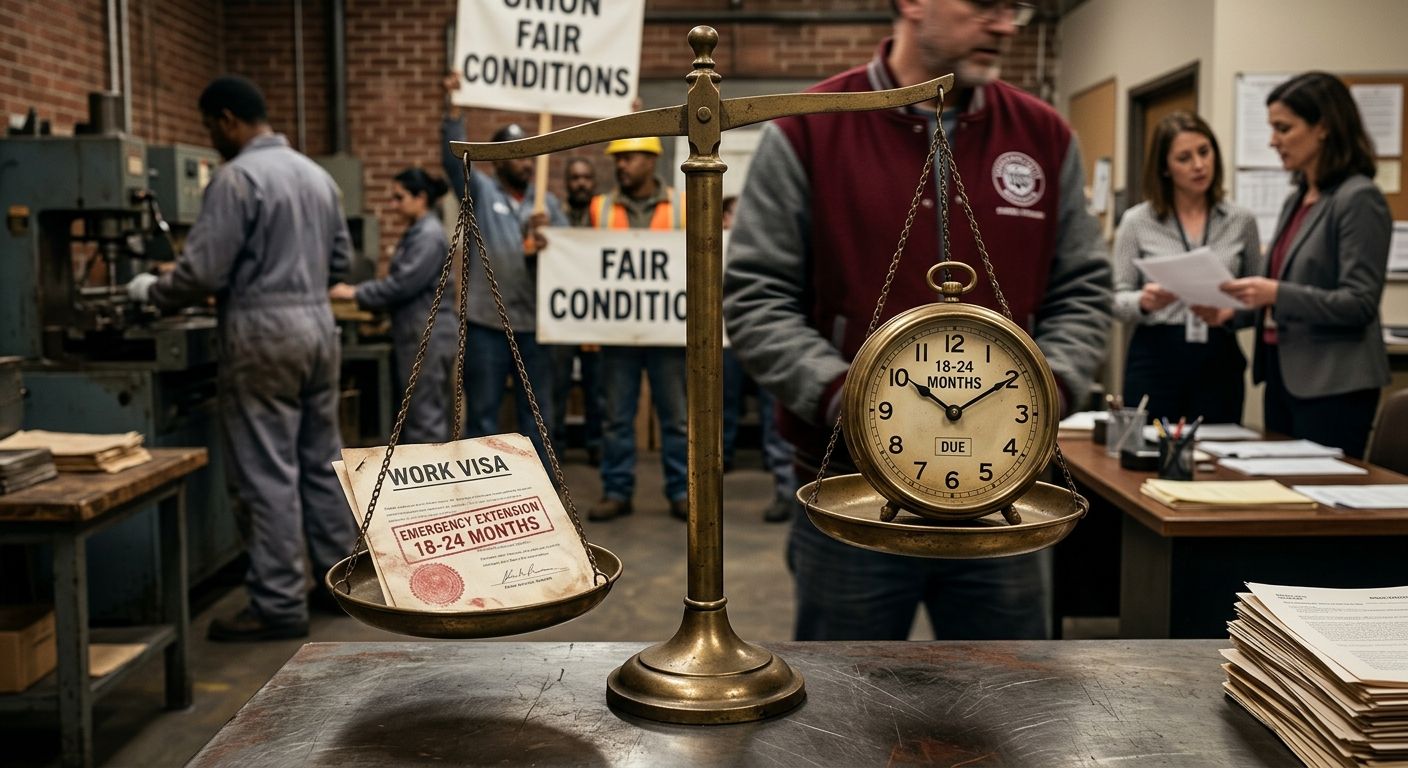
These rules assume the system functions as designed. Government shutdowns, like the October 2025 closure, freeze all processing and create cascading delays that take months to clear. Sudden regulatory changes — the June 2024 injunction on wage survey calculation methods is a recent example — can retroactively alter determinations already in progress. And the current 3-month prevailing wage determination processing time is a snapshot, not a guarantee. This time two years ago, workers were waiting 6-8 months for the same step.
The rules also assume employers are acting in good faith. Some aren't. The PERM process was designed to protect U.S. workers by ensuring foreign hires don't undercut prevailing wages, but the same process gives employers enormous control over timelines and terms. When an employer deliberately classifies a job at Level I instead of Level III, or lets a wage determination expire so they can refile at a lower rate, the system meant to protect wages becomes the instrument for suppressing them.
Union representation changes the calculus. Contracts that specify sponsorship timelines, require transparency on wage determination filings, and give stewards access to Form ETA-9141 data convert these bureaucratic checkpoints into enforceable protections. The prevailing wage determination processing time will keep shifting — 3 months now, maybe 6 months after the next budget fight or seasonal surge. What won't shift is the structural advantage that collective bargaining gives workers navigating a system built around employer discretion. The contract outlasts any single DOL processing update, and the solidarity behind it is the only thing that makes these rules more than suggestions on a page.
The Union Edge Staff
Related Articles

What Is Prevailing Wage? Legal Definition & Requirements
A prevailing wage is the minimum hourly rate, including fringe benefits, that contractors and subcontractors must pay workers on government-funded projects, as determined by the U.S. Department of Labor or a state equivalent.

How Prevailing Wage Laws Actually Work — and Why Enforcement Determines Whether They Mean Anything
The Davis-Bacon Act requires contractors on federal construction projects to pay locally determined wage rates. It has done so since 1931.

California Prevailing Wage: Complete Legal Guide
California's Director of Industrial Relations sets prevailing wage rates for every county and trade classification in the state, drawing primarily from collectively bargained union agreements.
Also in the paper