
Oklahoma Voters Decide Ballot Measure to Raise Minimum Wage to $15 by 2029
Oklahoma voters cast ballots today on State Question 832, a measure that would raise the state's minimum wage from the current $7.25 per hour to $15 by 2029, according to KGOU. The ballot question would decouple Oklahoma's wage floor from the federal minimum, which has remained unchanged since 2009,

Oklahoma Voters Decide Ballot Measure to Raise Minimum Wage to $15 by 2029
Oklahoma voters cast ballots today on State Question 832, a measure that would raise the state's minimum wage from the current $7.25 per hour to $15 by 2029, according to KGOU. The ballot question would decouple Oklahoma's wage floor from the federal minimum, which has remained unchanged since 2009, and establish automatic cost-of-living adjustments starting in 2030.
Polls opened at 7 a.m. and close at 7 p.m. statewide. If approved, the measure would implement a $12 minimum wage beginning in January 2027, followed by $1.50 annual increases through 2029. After 2030, the state minimum wage would adjust annually based on the U.S. Department of Labor's Consumer Price Index for Urban Wage Earners and Clerical Workers.
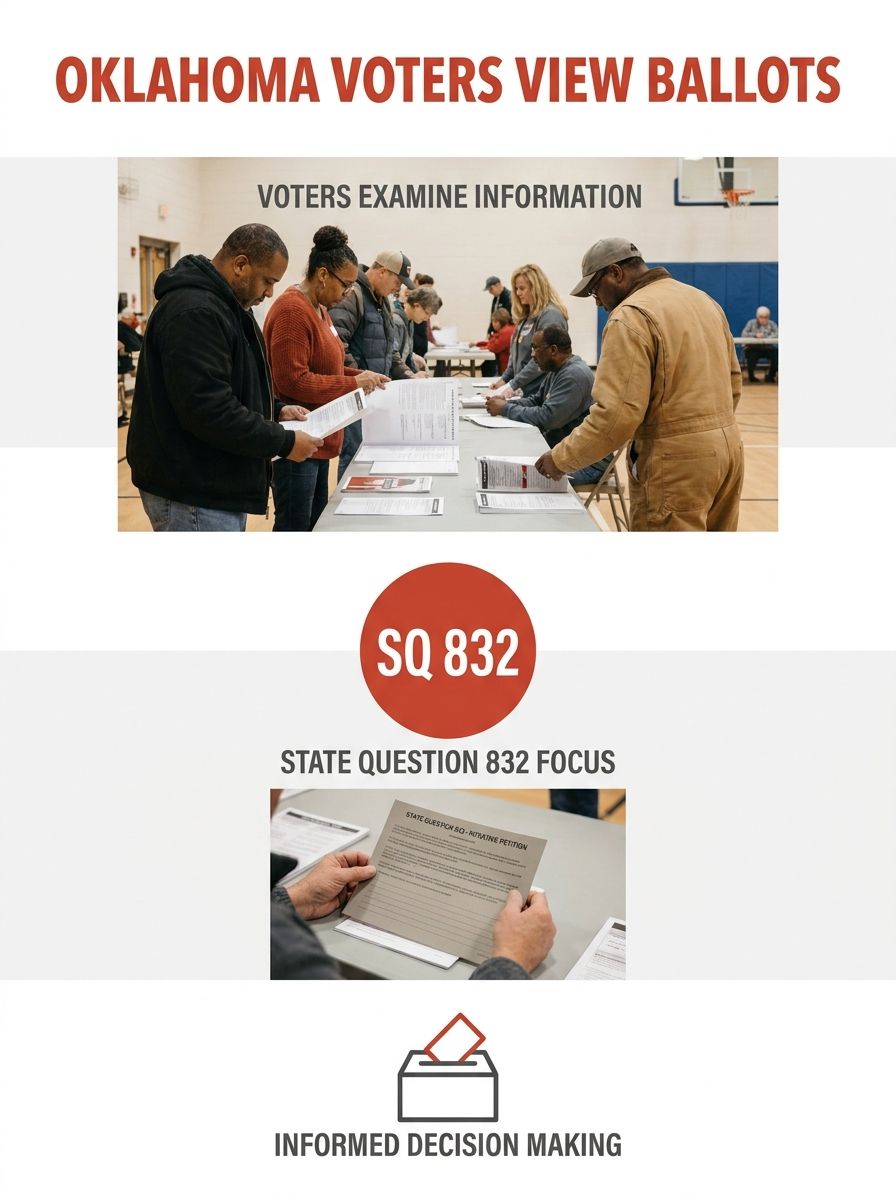
Three-Year Path From Petition to Ballot
Organizers began developing the minimum wage proposal in 2023 and collected signatures throughout 2024. After petition verification confirmed the measure met Oklahoma's signature threshold, advocates expected State Question 832 to appear on the November 2024 ballot.
Governor Kevin Stitt exercised his authority to delay the measure until June 2026, citing a desire to avoid spending nearly $2 million on a standalone special election. The governor's office called the delay a cost-saving measure. Advocates noted that Stitt had previously authorized a special election in March 2023 for a state question on recreational marijuana legalization, drawing attention to the selective application of the cost-savings rationale.
The two-year gap between drafting and voting created a ballot-language complication. The measure's text references increasing the minimum wage to $9 in 2025, with subsequent $1.50 annual increases, even though 2025 has ended and Oklahoma's minimum wage remains $7.25. If voters approve the measure, state policy would skip directly to the $12 rate scheduled for 2027, bypassing the earlier increments mentioned in the ballot language.
Competing Claims on Economic Impact
Supporters of State Question 832 argue that seventeen years without a federal minimum wage increase has left Oklahoma workers in essential jobs unable to afford basic living expenses. The federal minimum wage was last raised in 2009, when it increased to $7.25 per hour. Inflation since that time has eroded purchasing power for workers earning at or near the wage floor.
Opponents contend that most Oklahoma employers already pay above the $7.25 minimum, making the measure's impact smaller than proponents claim. They argue that mandating a $15 minimum wage could prompt employers to reduce headcount or cut hours to offset higher labor costs, particularly in rural areas and small businesses operating on thin margins.
The measure includes no exemptions for small employers, tipped workers, or specific industries. All employees covered by Oklahoma wage law would see the same rate increases on the same schedule.
Automatic Inflation Adjustments After 2029
State Question 832's indexing provision sets it apart from static minimum wage laws. Beginning in 2030, Oklahoma's minimum wage would adjust annually to match cost-of-living increases measured by the CPI-W, the same index used to adjust Social Security benefits. This mechanism would prevent the wage floor from losing value over time, a pattern that has characterized the federal minimum wage's history.
Twenty-one states currently set their minimum wages above the federal floor. Thirteen of those states include automatic inflation adjustments, according to the Economic Policy Institute. Oklahoma would join that group if voters approve the measure.
The indexing provision does not cap wage increases or allow decreases during deflationary periods. The measure specifies that adjustments round to the nearest five cents.
Why This Matters Now
Oklahoma's vote on State Question 832 comes as federal minimum wage legislation remains stalled in Congress despite repeated attempts to raise the $7.25 floor. The ballot measure represents a state-level workaround to federal inaction, a strategy workers' advocates have pursued in multiple states since 2012. Eight states have passed $15 minimum wage laws through either legislative action or ballot measures, with implementation timelines ranging from immediate to phased increases over several years, similar to prevailing wage enforcement patterns in construction and public works.
For Oklahoma's low-wage workforce, the measure's outcome determines whether earnings keep pace with inflation or continue to decline in real terms. A full-time worker earning $7.25 per hour makes $15,080 annually before taxes—below the federal poverty line for a household of two. The proposed $15 rate would bring annual earnings to $31,200 for a full-time worker, though opponents note that mandated wage increases do not guarantee unchanged work hours.
The June ballot date, nearly two years after the measure qualified, demonstrates how governors' scheduling authority over ballot measures can function as a substantive veto power even when petition drives succeed. Whether voter turnout in a June special election differs significantly from a November general election may influence how future citizen initiatives approach timing and political strategy.
The Union Edge Staff
Related Articles

Oklahoma Voters to Decide Ballot Measure That Would Nearly Double State Minimum Wage to $15
Oklahoma voters will decide June 16 whether to raise the state's minimum wage from $7.25 to $15 per hour over three years, a measure affecting an estimated 357,700 workers in one of the nation's most conservative states, according to CNBC. State Question 832 would increase the wage floor to $12 in 2
Minimum Wage State of Illinois: 2024 Guide
The minimum wage in the state of Illinois is $15.00 per hour for workers 18 and older, the rate that took effect January 1, 2025, completing a phased schedule of six annual increases. But Illinois doesn't operate on a single number.

State of Missouri Minimum Wage: 2024 Guide
The state of Missouri minimum wage is set through voter-approved ballot initiatives rather than ordinary legislation, a mechanism that carried the rate to $12.30 per hour in 2024 and will push it to $15.00 by January 2026.
Also in the paper