Proposition 206, the ballot initiative Arizona voters passed in 2016, built an automatic escalator into state law: each year, the minimum wage adjusts based on Consumer Price Index changes. That formula pushed the az minimum wage 2026 rate to $15.15 per hour on January 1, a $0.45 increase from $14.
New York's minimum wage operates through a three-layer structure: a regional hourly floor ($17.00 downstate, $16.00 upstate as of January 1, 2026), a set of sub-rates for tipped and salaried workers, and starting in 2027, an automatic inflation-indexing formula.
The minimum wage in Los Angeles is $17.28 per hour for workers within city limits, effective July 1, 2024. That rate comes from a city ordinance layered on top of California's $16.00 statewide floor and the federal minimum of $7.
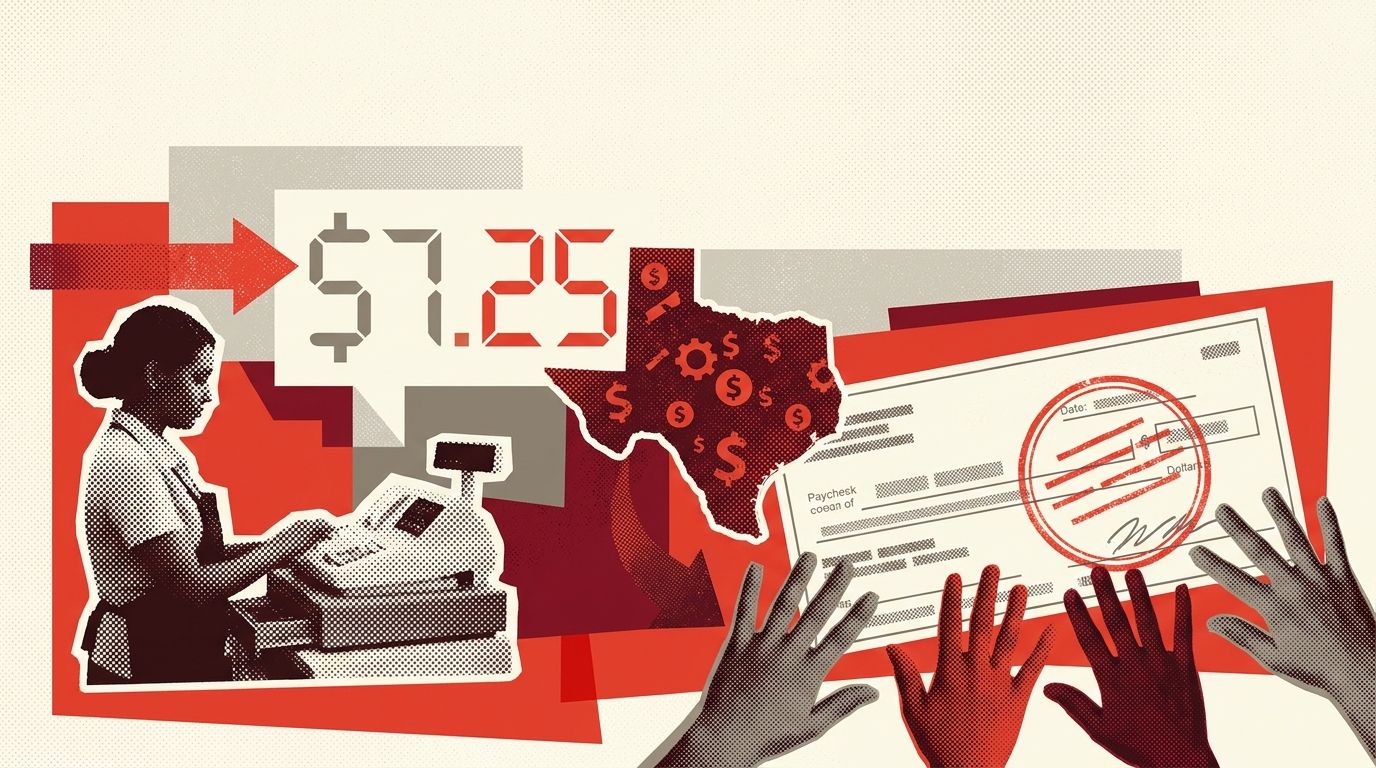
The Texas Minimum Wage Act contains no dollar amount. The statute adopts the federal minimum wage rate by reference, making the state of Texas minimum wage identical to the federal floor: $7.
Public Act 19-4 transformed Connecticut's minimum wage from a number set by legislators into a self-adjusting rate indexed to the federal Employment Cost Index. For 2024, that mechanism pushed the state of Connecticut minimum wage from $15.00 to $15.
M.G.L. Chapter 151, Section 1 sets the minimum wage in Massachusetts at $15.00 per hour and contains no indexing formula, no inflation trigger, and no scheduled future increase.
Connecticut's minimum wage is an annually auto-adjusting rate tied to the federal Employment Cost Index (ECI), set at $15.69 per hour for 2024 and currently $16.94 as of January 2026.
The mass minimum wage held at $15.00 per hour throughout 2024, unchanged for the first time in five years, after the final scheduled increase under the state's 2018 "Grand Bargain" legislation took effect on January 1, 2023.
$12.41 plus ($12.41 × 0.029) equals $12.77. That one-line formula, published by the Virginia Department of Labor and Industry, determines the minimum wage in the state of Virginia taking effect January 1, 2026.
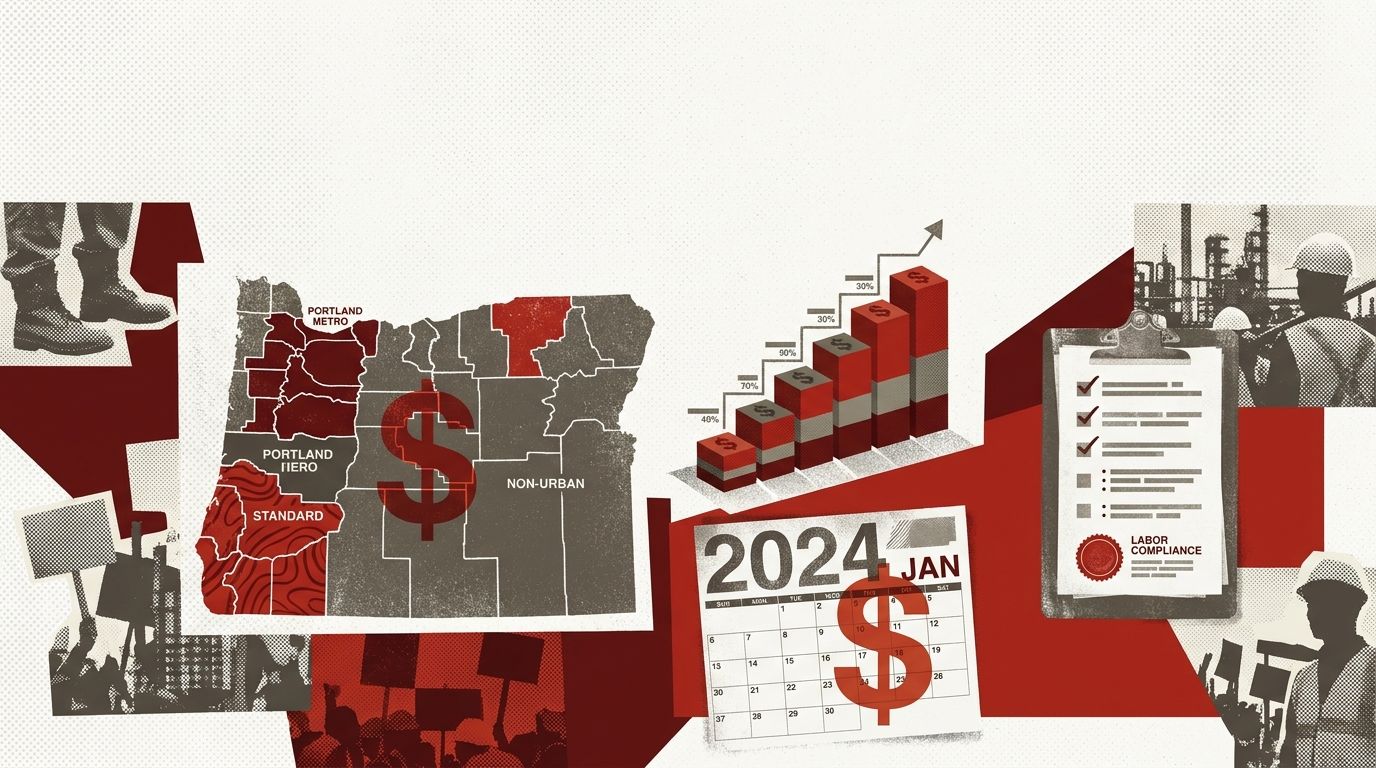
Oregon's minimum wage is set by a CPI-indexed formula that automatically adjusts three separate geographic rates every July 1, making it one of the few state wage systems that tracks inflation without requiring annual legislative action. As of July 1, 2024, those rates stand at $15.
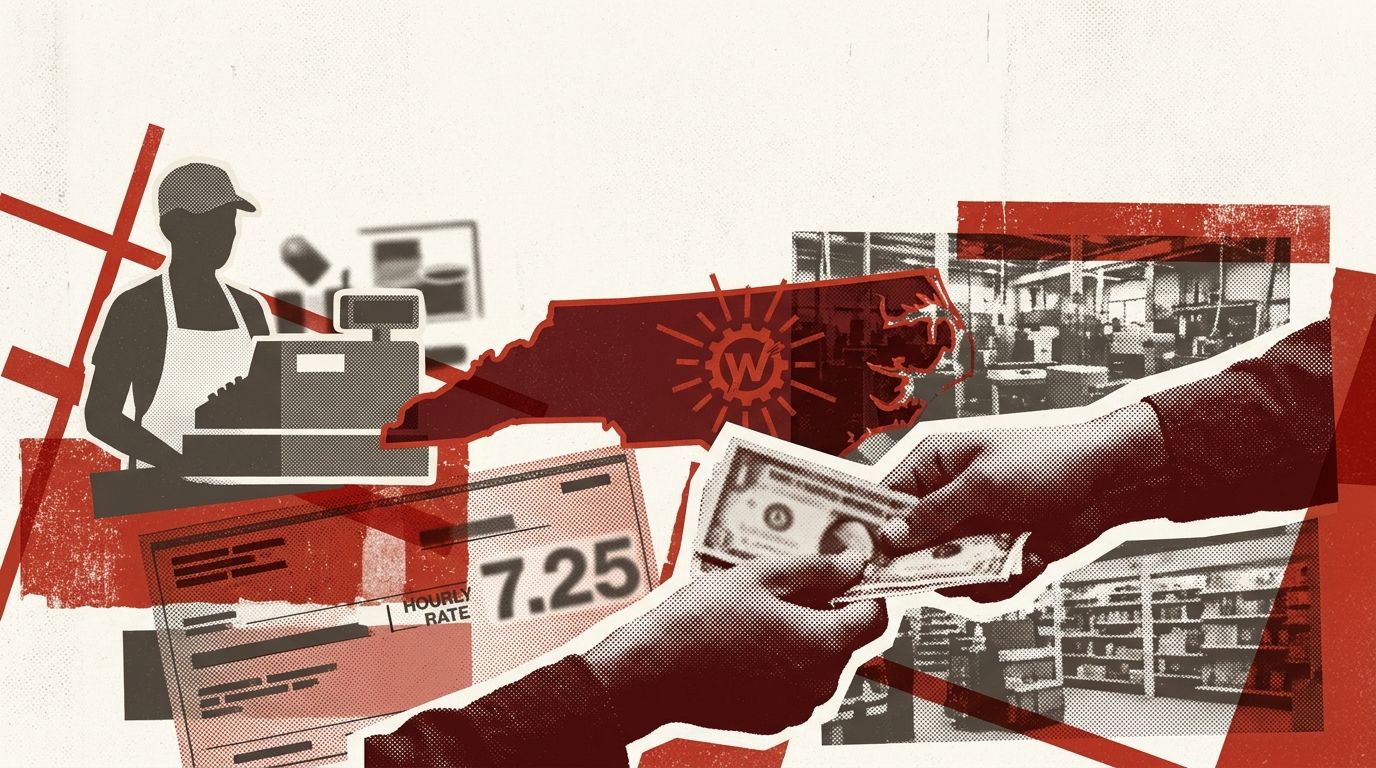
North Carolina is one of 25 states where the minimum wage sits at the federal floor of $7.25 per hour, unchanged since July 2009, with a preemption law that blocks every one of its 553 municipalities from setting a higher rate for private-sector workers.
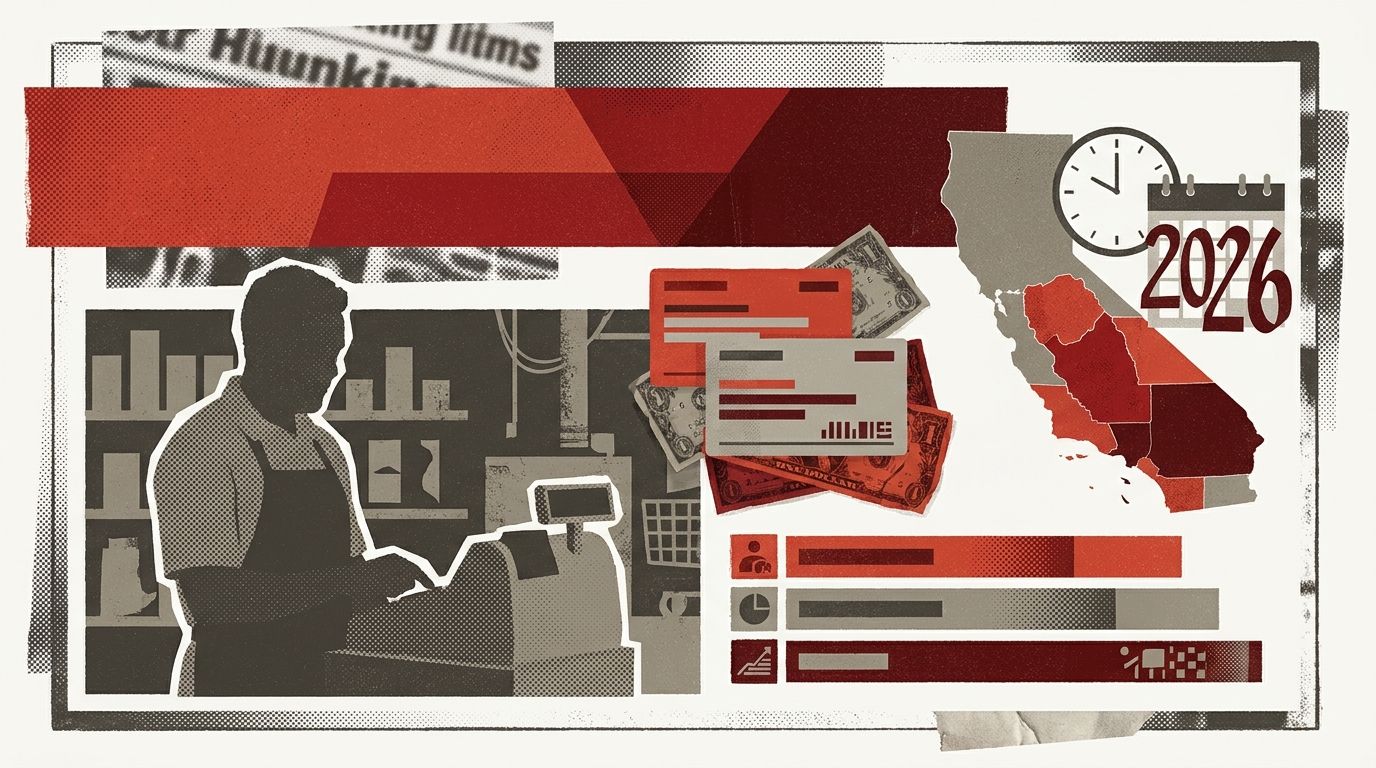
California's minimum wage in 2026 operates as a three-tier system: a CPI-indexed statewide floor of $16.90 per hour, local city and county rates reaching $20.34 in Emeryville, and industry-specific mandates pushing healthcare workers to $25.00 per hour.