
Apple Closes Three U.S. Stores Including First Unionized Location as Union Accuses Company of Unequal Treatment
Apple permanently closed three U.S. retail stores on June 20, 2026, including its Towson Town Center location in Maryland, the company's first unionized store, prompting accusations from the International Association of Machinists and Aerospace Workers that Apple is denying union members transfer ri

Apple Closes Three U.S. Stores Including First Unionized Location as Union Accuses Company of Unequal Treatment
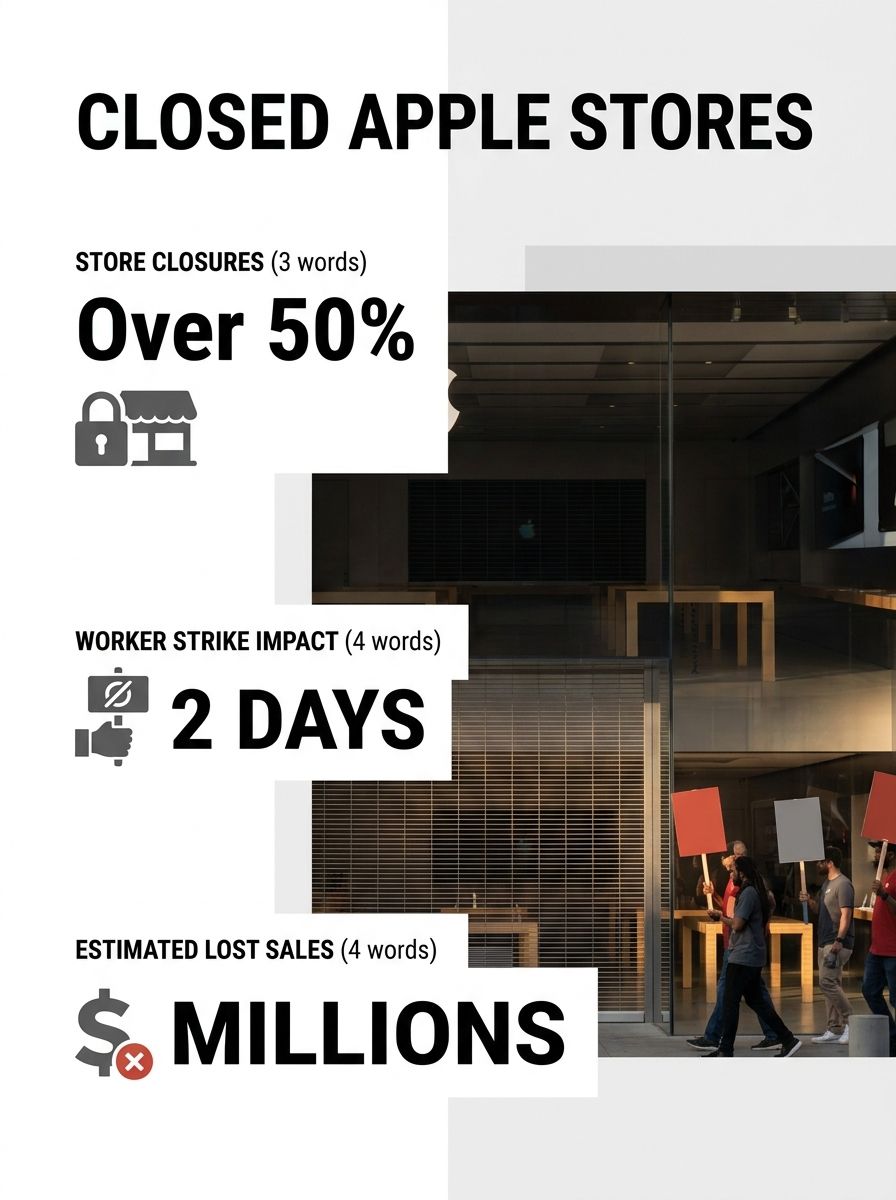
Apple permanently closed three U.S. retail stores on June 20, 2026, including its Towson Town Center location in Maryland, the company's first unionized store, prompting accusations from the International Association of Machinists and Aerospace Workers that Apple is denying union members transfer rights offered to non-union workers at the other two closing locations, according to International Business Times Australia.
The closures affect Apple Trumbull in Trumbull, Connecticut; Apple North County in Escondido, California; and Apple Towson Town Center. Apple announced the decision in April, citing "declining conditions" at the shopping malls housing the stores.
Disparity in Transfer Offers Triggers Union Response
Apple allowed employees at the non-unionized Connecticut and California stores to transfer to nearby locations but did not extend the same offer to the 111 unionized workers at Towson Town Center. The Towson staff joined IAM's Coalition of Organized Retail Employees (IAM CORE) in 2022 and ratified a collective bargaining agreement with Apple in 2024.
"Apple workers in Towson voted to join the IAM, fought for and won a contract, and are now being punished for it," IAM President Brian Bryant said in a statement. "Apple signed a collective bargaining agreement that requires equal treatment."
Apple countered that it is following the contract terms the union negotiated. According to the company, the agreement stipulates that in the event of a store closure, Apple would transfer or rehire employees only if it opened a new store within 50 miles of Towson Town Center. With no current plans for a new location in the area, Apple is providing severance instead, per the contract. The agreement also grants affected employees right of first refusal if Apple opens a store within 18 months after the contract's ratification.
First Unionized Store Carries Symbolic Weight
The Towson Town Center store made labor history in June 2022 when its employees became the first Apple retail workers in the United States to form a union. The successful union drive inspired organizing efforts at other Apple retail locations nationwide and drew attention from workers at other tech companies monitoring the American labor movement in retail and service sectors.
Towson workers ratified their three-year contract with Apple in August 2024, securing wage increases, job protections, and severance provisions. The store's closure less than two years after the historic union vote creates a precedent that labor advocates worry could discourage organizing at other Apple locations.
Mall Decline Provides Economic Cover
Towson Town Center has experienced genuine retail deterioration in recent years, losing multiple anchor tenants and other major retailers. The mall's documented decline provides Apple with an economic rationale for the closure separate from the unionization issue.
However, the timing and the differential treatment of union versus non-union workers have boosted scrutiny of Apple's motives. Maryland politicians voiced support for the Towson workers as the closure date approached, though their statements did not prevent the June 20 shutdown.
The union has not ruled out pursuing unfair labor practice charges, and the 18-month window during which Towson workers retain transfer rights if Apple opens a nearby store remains a potential flashpoint. Labor law experts note that employers cannot legally close facilities solely to retaliate against union activity, but proving anti-union motive when legitimate business reasons exist requires evidence of discriminatory intent.
Why This Matters Now
This closure tests whether newly won union contracts protect retail workers during restructuring. Apple's differential treatment of union versus non-union employees during the same closure round sets a precedent other retailers will watch closely, particularly as service-sector organizing accelerates following high-profile campaigns at Starbucks, Amazon, and REI.
For the 111 Towson workers, the severance offers limited protection compared to the lateral transfers non-union employees received, highlighting how contract language around closures determines actual security. Union organizers at other Apple stores, and at tech retailers nationwide, now face a harder pitch when management can point to Towson as evidence that unionization doesn't guarantee job continuity during economic shifts.
The outcome also matters for broader retail union strategy. If the IAM succeeds in demonstrating unequal treatment violated the contract's equal-treatment clause, it strengthens the legal framework for challenging employer closure decisions that disproportionately affect organized workplaces. If Apple's interpretation prevails, unions will need to negotiate more explicit transfer rights in future first contracts to prevent employers from using facility closures as a workaround to employment protections.
The Union Edge Staff
Related Articles
Eleven Greenlight Dispensary Workers in Missouri Allege Firing for Union Organizing
Eleven employees at a Greenlight Dispensary in Springfield, Missouri, were terminated in late September 2026 after meeting to discuss unionization, according to statements the workers gave to local media.

Productivity Tracking Isn't a Safety Tool — It's a Discipline System, and Workers Should Treat It That Way
Amazon's fulfillment centers track a metric called "time off task" down to individual seconds. The system logs every pause a warehouse worker takes, generates automated warnings, and can produce termination paperwork without a single manager making the call.

From First Contact to First Contract: The Hidden Gaps in Union Organizing Timelines and How to Navigate Them
Winning a union election takes weeks. Reaching a first contract takes 465 days on average, according to Bloomberg Law's analysis of federal labor databases.
Also in the paper