
From First Contact to First Contract: The Hidden Gaps in Union Organizing Timelines and How to Navigate Them
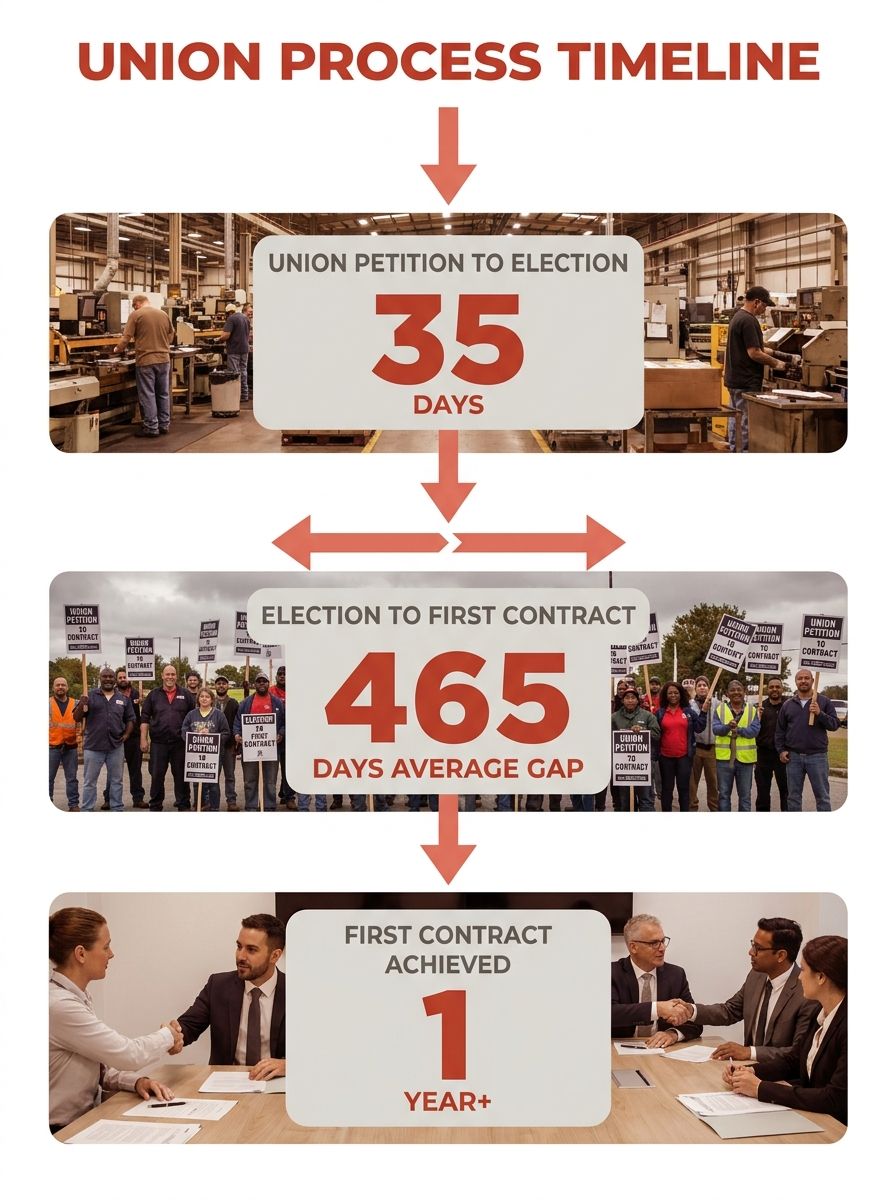
Winning a union election takes weeks. Reaching a first contract takes 465 days on average, according to Bloomberg Law's analysis of federal labor databases.

From First Contact to First Contract: The Hidden Gaps in Union Organizing Timelines and How to Navigate Them
Winning a union election takes weeks. Reaching a first contract takes 465 days on average, according to Bloomberg Law's analysis of federal labor databases. The Starbucks Workers United campaign, where over 500 stores organized but waited years for contracts, is the sharpest modern dissection of where the union organizing timeline breaks down and what it costs workers.
The Buffalo Vote and the 500-Store Wave
On December 9, 2021, workers at a Starbucks location on Elmwood Avenue in Buffalo, New York, voted 19-8 to form the first union at a company-operated Starbucks store in the United States. Within six months, dozens of stores had filed petitions. Within two years, more than 400 had voted to organize under the Starbucks Workers United banner, affiliated with the Service Employees International Union (SEIU). By early 2026, the count exceeded 500.
The speed of the election wave was genuinely unusual. Starbucks stores are small bargaining units, typically 20 to 30 workers, and the campaign spread through social media, shared grievances about scheduling and pay, and a decentralized organizing model where baristas at one store coached workers at the next. Brookings tracked the broader wave: in RC (Certification of Representative) cases alone, more than 84,000 employees gained union representation through the first eight months of 2025, compared to 128,000 in all of 2024 and 190,000 in 2023. The Starbucks campaign accounted for a significant share of those filings during the peak years.
But an election win is a starting line, and Starbucks Workers United discovered what labor researchers have documented for decades: the real fight begins afterward. Winning the NLRB vote gives workers the legal right to bargain collectively. It does not give them a contract, a raise, or a grievance procedure. Those come only when a first contract negotiation concludes successfully. And that process has a timeline problem the election itself never prepares workers for.
The 409-Day Average That Hides the Worst Outcomes
"After a union wins an election, the average number of days to get to a contract is 409 days," Sen. Tim Kaine (D-Va.) stated during congressional debate on the first contract arbitration bill. Bloomberg Law's updated analysis calculated that number by cross-referencing two databases in its Labor PLUS resource, and the most recent figure has risen to 465 days.
Those are averages. They include cases where cooperative employers settled in three months and cases where hostile employers dragged bargaining out for three years. For Starbucks workers, the timeline skewed heavily toward the longer end. The company filed objections to election results, challenged bargaining unit compositions, and was charged with hundreds of unfair labor practice complaints by the NLRB. A framework agreement between Starbucks and Workers United wasn't announced until February 2024, more than two years after the first election. Individual store-level contracts took even longer to materialize.
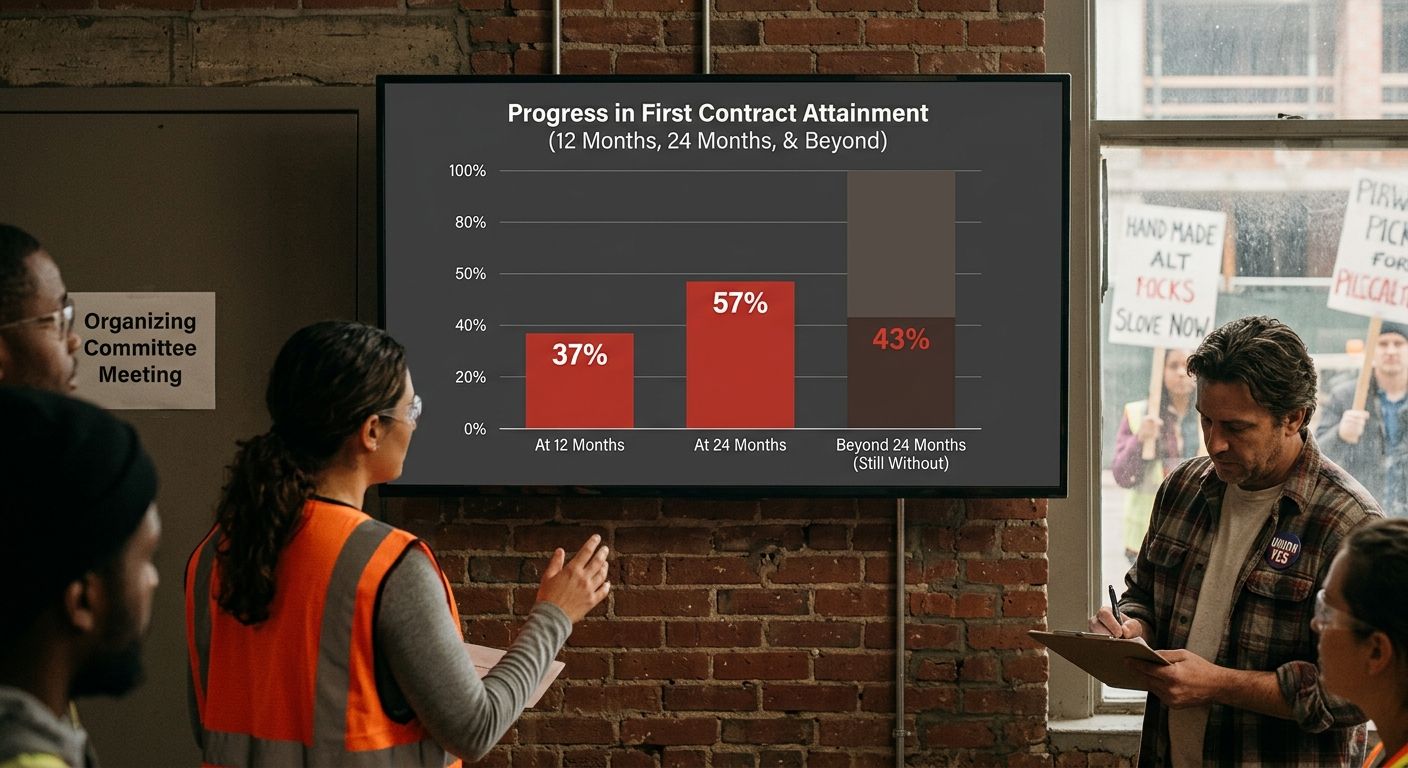
The Economic Policy Institute's research on first contracts provides the broader context: only 37% of newly certified unions reach a first contract within 12 months of recognition. That number rises to 57% by the 24-month mark. The remaining 43% either continue bargaining beyond two years or never reach a contract at all.
Why does this matter for workers' material outcomes? Each month of delay between petition filing and the election itself decreases workers' chances of winning that election by 2.5%, according to EPI's analysis of the research. The same corrosive logic applies after the election. Workers who organized to fix specific problems—unpredictable scheduling, stagnant wages, arbitrary discipline—watch those problems persist month after month while bargaining crawls forward. Turnover at Starbucks stores, already high in food service, meant that many workers who voted to unionize had left the company before any contract was ratified.
The NLRB delays compound the problem. The Center for American Progress documented that NLRB-overseen union elections fell in 2025 amid administrative disruption, and the Bureau of Labor Statistics delayed its annual union membership data release until February 18, 2026, due to the government shutdown. When the agency responsible for enforcing bargaining obligations is itself under-resourced and politically targeted, employers gain additional room to stall.
The Employer Playbook Between the Election and the Bargaining Table
Starbucks didn't invent employer delay tactics, but the company's response to 500-plus union elections provided a public, real-time case study in how those tactics work at scale. The playbook includes several documented moves.
Challenging election results. After losing votes at individual stores, Starbucks filed objections with the NLRB contesting election procedures, voter eligibility, and alleged union misconduct. Each objection triggers a review process that can take months to resolve before bargaining is even legally required to begin.
Refusing to bargain in good faith. The National Labor Relations Act requires employers to bargain in good faith once a union is certified, but "good faith" is difficult to enforce in practice. Showing up to sessions, making proposals the union will reject, and requesting information that takes weeks to compile all satisfy the technical requirements while achieving nothing at the table. As one collective bargaining strategy guide notes, experienced negotiators know to "build momentum through small agreements" and "preserve the authority and credibility of the chief negotiator." Employers who want to stall do the opposite: they avoid any tentative agreements, rotate their bargaining representatives, and treat each session as a standalone event with no continuity.
Changing workplace conditions unilaterally. Starbucks rolled out new benefits and wage increases at non-union stores while withholding them from unionized locations, arguing that changes at union stores required bargaining. The practical effect was that workers who organized saw their non-union coworkers get raises while they waited at the table. The NLRB filed complaints over this practice, but the remedies took years to materialize.
Targeting organizing leaders. The NLRB issued more than 100 complaints against Starbucks alleging retaliatory firings of union supporters. The legal process for resolving those complaints runs on its own slow timeline, separate from the bargaining process. A fired organizer might eventually get reinstated with back pay, but by then the organizing committee has lost a key leader during the most critical period.
The core dynamic is asymmetric patience. Starbucks, as a corporation with annual revenues exceeding $35 billion, can sustain years of labor litigation as a cost of doing business. Individual baristas earning $15 to $18 per hour cannot. The strategy of delay is itself the employer's weapon, and the current legal framework provides limited tools to counteract it. That's why legislation like the binding arbitration bill that passed the House matters so much: it would impose deadlines and require arbitration when bargaining stalls, removing the employer's ability to simply run out the clock.
Organizing Momentum After the Certificate Arrives
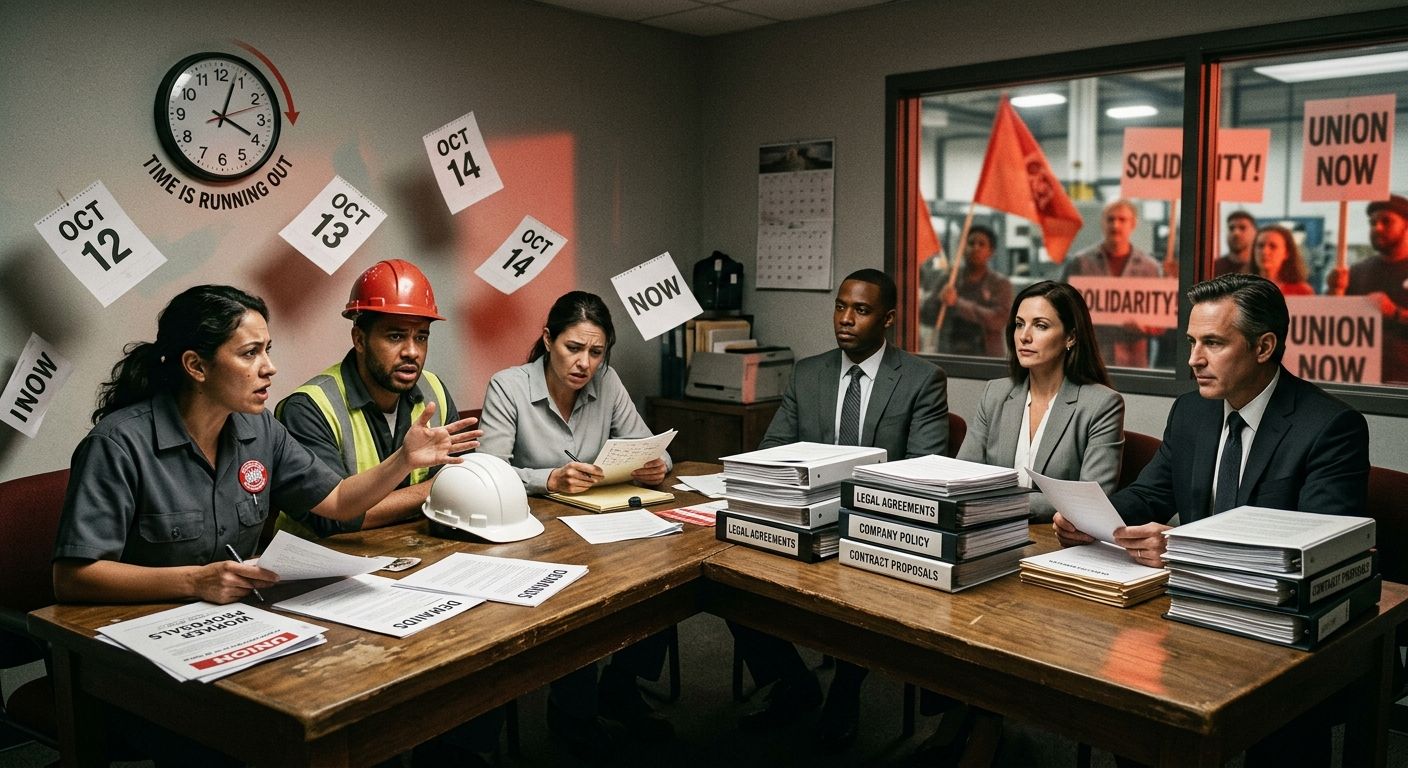
The period between election certification and first contract ratification is where organizing campaigns go to die or to deepen. Starbucks Workers United survived it better than most, but the campaign still illustrates the specific pressure points where organizing momentum erodes.
The Office and Professional Employees International Union (OPEIU) Local 2 has documented methods for keeping workers engaged during drawn-out bargaining: regular membership meetings to report on negotiation progress, escalating workplace actions like petition drives and informational picketing, and digital communication channels that keep workers connected even when formal bargaining sessions are weeks apart.
Starbucks Workers United adapted these approaches to a geographically dispersed, high-turnover workforce. The union used social media to publicize bargaining sessions, organized coordinated strikes at multiple stores on specific days to generate media attention, and relied on a decentralized leadership structure where each store had its own bargaining committee rather than depending on a single national negotiating team. Building this kind of rank-and-file leadership pipeline is what separates campaigns that survive the first-contract desert from those that collapse.
Three specific practices emerged from the Starbucks campaign that other organizing drives have begun to replicate:
Bargaining for the public. Rather than conducting negotiations behind closed doors, Workers United pushed for open bargaining sessions where members and media could observe. This kept pressure on the company and kept workers informed without relying solely on union communications.
Strike actions during bargaining. Workers at dozens of stores staged one-day and multi-day strikes during the bargaining period, timed to high-traffic holidays and corporate earnings announcements. These actions served dual purposes: they maintained worker solidarity during a long negotiation, and they imposed direct economic costs that incentivized the company to reach agreements faster.
Legislative pressure as a bargaining tool. The campaign actively supported federal legislation that would impose first contract arbitration deadlines. The Teamsters-backed first contract bill that passed the House drew significant support from Starbucks workers and organizers who framed their own experience as evidence of why the law needed to change. Using real worker stories from the campaign made abstract policy debates concrete for legislators.
The collective bargaining strategy that works during the 465-day gap looks different from the strategy that wins an election. Election campaigns are short, intense, and emotionally driven. Contract campaigns are long, procedural, and require sustained institutional discipline. Workers need different skills for each phase, and unions that don't invest in that transition pay for it in abandoned campaigns and decertification petitions. Understanding how collective bargaining agreement contracts actually get built helps committees prepare for the procedural grind before it begins.
The Starbucks Arithmetic and the Contracts Still Being Counted
The Starbucks Workers United campaign did eventually produce movement. By early 2026, the framework agreement had led to active bargaining at hundreds of stores, and some locations had reached tentative agreements on first contracts. But the timeline tells the real story: workers who voted in December 2021 waited more than four years before any contract language governed their workplace. Many of the original organizers had moved on to other jobs.
The arithmetic of the campaign reveals a structural problem that goes beyond any single employer. The NLRB's own data shows representation elections declining: 84,000 workers gained representation through August 2025, down from 190,000 at the same point in 2023. Some of that decline reflects reduced NLRB capacity under political pressure. Some reflects workers watching the Starbucks campaign and concluding that winning an election doesn't translate into winning a contract within any reasonable timeframe.
The gap between election and contract is where the labor movement's credibility is tested most directly. Workers organize because they want specific changes to their working conditions. Every month that passes without a contract is a month where the employer's implicit argument gains weight: "The union can't deliver." Closing that gap requires better law, like mandatory first contract arbitration with enforceable deadlines. It requires better union infrastructure, including dedicated first-contract campaign staff who specialize in the post-election phase. And it requires workers who understand, before they ever sign an authorization card, that the fight doesn't end on election night.
The Starbucks campaign proved that service-sector workers in small bargaining units can organize at historic scale. It also proved that scale without contracts is an incomplete victory. The 465-day average is a national disgrace masquerading as a statistic. Workers who win elections deserve the contracts those elections were supposed to produce, and the legal and organizational systems that stand between them and those contracts need to be rebuilt around a simple principle: a right to bargain means nothing without a reasonable deadline to finish.
The Union Edge Staff
Related Articles

5 First-Contract Bargaining Mistakes That Destroy New Unions — and How to Recover From Them
Workers at The New Yorker, Pitchfork, and Ars Technica voted to join the NewsGuild of New York in 2018. Their first contract didn't arrive until June 2021.

How Starbucks Workers United Turned Social Media Into a Bargaining Pressure Tool — and What Other Unions Can Learn
Starbucks Workers United's social media campaign didn't succeed because it generated public sympathy.

From Recognition to Results: The Post-Election Bargaining Roadmap Unions Get Wrong
Forty-four percent of newly certified unions between 1999 and 2004 never reached a first contract, according to a study of more than 8,000 successful elections by sociologist John-Paul Ferguson. The election was the easy part.
Also in the paper