
The Complete Strike Fund Readiness Checklist: What Locals Must Have in Place Before Authorizing a Work Stoppage
The Teamsters' national strike fund holds over $300 million, according to Civic Media. That figure gives the impression of invincibility.

The Complete Strike Fund Readiness Checklist: What Locals Must Have in Place Before Authorizing a Work Stoppage
The Teamsters' national strike fund holds over $300 million, according to Civic Media. That figure gives the impression of invincibility. But strike fund preparation requires four distinct operational layers (financial runway, benefit continuity, legal compliance, and hardship infrastructure), and a gap in any one of them can end a walkout before it gains traction.
The Financial Runway Nobody Calculates Honestly
The single most common failure in work stoppage planning is overestimating how long members can hold out. Research from financial planning experts shows that people underestimate their true monthly spending by 20-30% when asked to estimate from memory. For a local planning a strike authorization vote, that gap is devastating. Members who think they can last six weeks actually run dry in four.
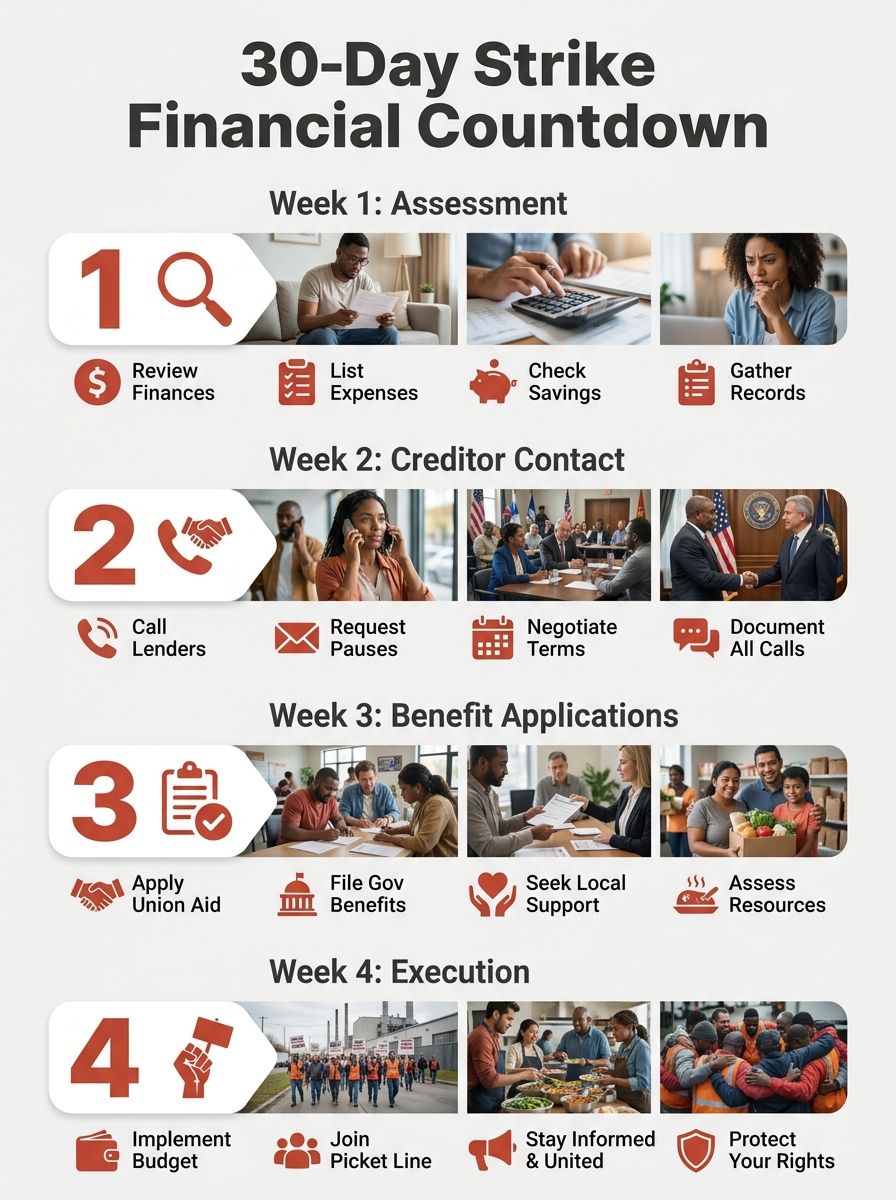
The fix requires a structured, individual-level financial inventory at least 30 days before the vote. Every member should pull three months of bank and credit card statements and add up actual spending, not estimated spending. The 30-day financial countdown framework breaks this into weekly milestones: week four out is for assessment, week three for creditor contact, week two for benefit applications, and week one for execution.
Here's what the inventory should capture:
Total liquid savings divided by actual monthly expenses. That number is your runway in months.
All debt obligations, sorted into secured (mortgage, auto) and unsecured (credit cards, personal loans).
Expected strike pay amount and start date, which varies dramatically by union and is often misunderstood.
Household income from other sources, including a spouse's employment, disability payments, or side work.
The reason this matters at the local level, not just the individual level, is that strike readiness is a collective calculation. If 40% of your bargaining unit can't survive past 14 days, your employer knows it. They'll stall. Financial fragility data (kept anonymous and aggregated) should inform your bargaining committee's timeline strategy. With 57% of Americans unable to cover a $1,000 emergency expense, most locals will find their membership more financially vulnerable than leadership assumes.
How Strike Pay Administration Differs by Union
Strike pay is the backbone of local union strike readiness, and yet we've watched locals go into authorization votes where the membership didn't know their own union's weekly amount or waiting period. This is an institutional failure that's entirely preventable.
The variation across unions is wide enough that blanket assumptions are dangerous:
Union | Weekly Strike Pay | Waiting Period | Notable Conditions |
|---|---|---|---|
UAW | $500 | Immediate upon authorization | Must perform picket duty |
Teamsters | $200–$525 | Varies by local | Scaled by tenure and local supplement |
UFCW | $250 | Starts on day 8 | No pay for first full week |
AFT affiliates | Varies by local fund | Varies | International provides training and legal support, not direct pay |
That UFCW waiting period is a perfect example of the kind of detail that sinks unprepared locals. A member who expects income from day one and gets nothing for seven days will face an immediate cash crisis. Multiply that across hundreds of workers, and you've got a morale emergency before the second week of picketing.
Tom Strickland, secretary-treasurer of Teamsters Local 662 in Green Bay, has noted that "a robust strike fund sends a message to employers." That message works in both directions, though. When your membership knows exactly what they'll receive and when, their confidence on the picket line holds. When they don't, every rumor about the fund running low becomes a crack in solidarity. The recent DART paratransit workers' 160-1 strike authorization vote demonstrated what happens when a local gets this communication right: near-unanimous confidence because members knew precisely what they were voting for.
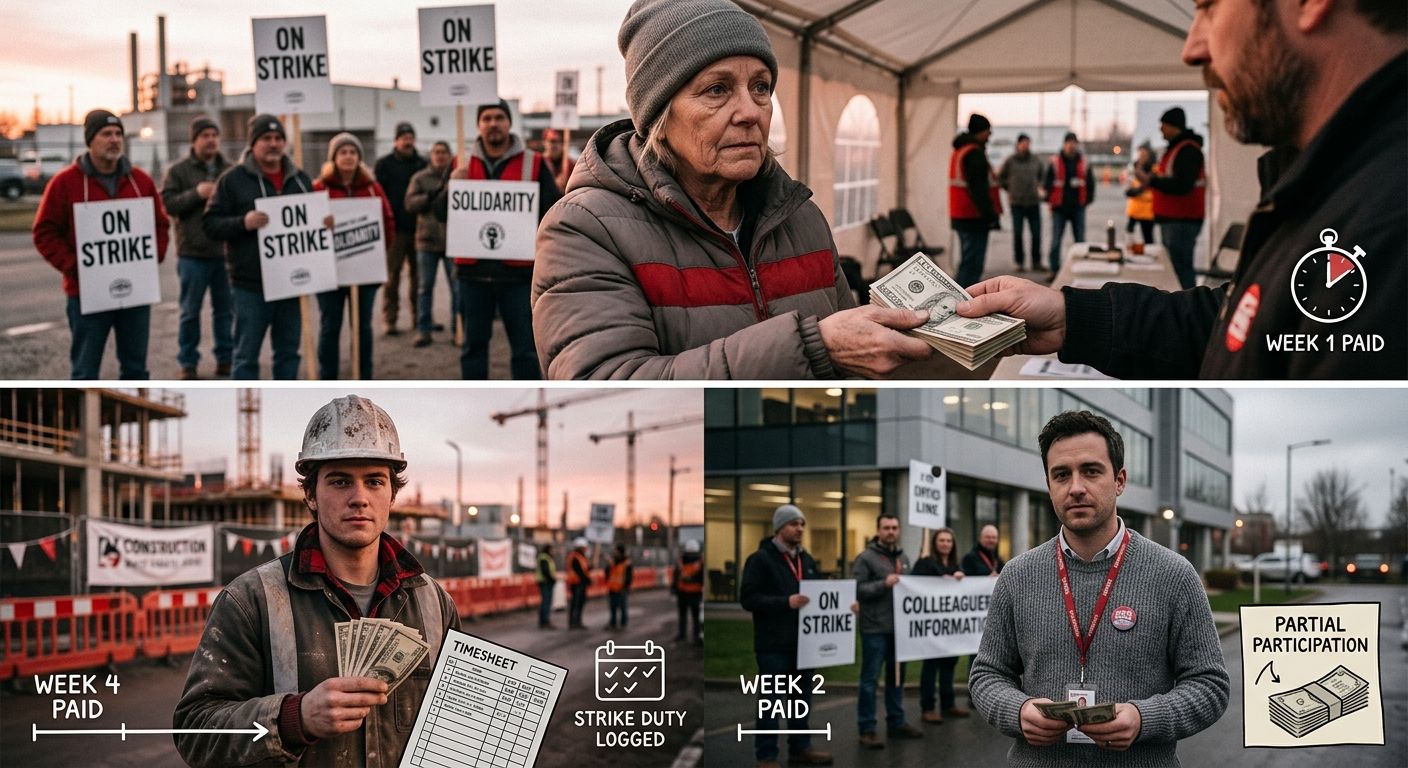
Administration of the fund itself requires designated stewards who handle distribution, track picket line participation (most unions require it for eligibility), and maintain records that can withstand an audit. A local that hasn't identified these roles before the vote will be scrambling to build administrative infrastructure during the most high-pressure days of the campaign.
Benefit Continuity and the COBRA Trap
Health insurance is the single largest source of fear among members considering a strike, and that fear is justified. The mechanism for maintaining coverage during a work stoppage depends on your union's structure, your employer's posture, and your state's insurance marketplace rules. Getting any of these wrong creates a gap in coverage that can financially destroy a family.
Some unions maintain health coverage during authorized strikes through their own health funds. This is the best-case scenario, and your local's representatives should be able to tell members definitively whether this applies. If coverage runs through the employer's plan, it stops when paychecks stop, and members face COBRA continuation coverage at the full monthly premium price, which often shocks workers who've only seen the employee-share deduction on their pay stubs. A family plan that cost $200 per paycheck might actually cost $1,800 per month at full COBRA rates.
The checklist for benefit continuity should include:
Confirm whether your union health fund covers authorized strikes (ask your representative directly, in writing).
Obtain the full COBRA premium cost for every coverage tier (individual, individual plus spouse, family).
Research Marketplace plan eligibility. Loss of employer coverage qualifies as a life event for special enrollment, and income reduction during a strike will shift many members into subsidy-eligible brackets.
Identify Medicaid eligibility thresholds in your state, since striking workers' temporary income reduction brings many families below the cutoff.
Compile a list of community health resources, free clinics, and prescription assistance programs.
Members with ongoing medical treatments, prescriptions, or scheduled procedures need individual consultations during the preparation phase. A 90-day prescription fill before the strike begins is standard advice from financial planning experts, and it's one of the most concrete steps a local can recommend. We've seen members forced back to work because a child's medication ran out, and that's a preparation failure that falls squarely on leadership.
Legal Tripwires That Kill Work Stoppages
Section 7 of the NLRA protects the right to strike as a concerted activity for collective bargaining or mutual aid. But that protection is conditional, and the conditions are where locals get into trouble.
The distinction between an unfair labor practice strike and an economic strike determines whether your members can be permanently replaced. In an economic strike (over wages, hours, or conditions at the bargaining table), employers can hire permanent replacements. In an unfair labor practice strike (triggered by the employer's violation of labor law), they cannot. Your local's legal counsel should classify the strike before the authorization vote, because this classification shapes everything from your messaging to your return-to-work rights.
Contract language adds another layer. Many collective bargaining agreements contain no-strike clauses that prohibit work stoppages during the term of the contract. If your CBA is still in effect, a strike will likely be unprotected. UFCW Local 400 has specifically noted that contract extensions require 72 hours' notice by either party before cancellation, establishing the legal window for a work stoppage. Locals that haven't reviewed their contract's expiration provisions, successor clauses, and notice requirements are walking into a minefield.
Right-to-work states introduce additional complexity. In states like Texas or Virginia, members can resign from the union and return to work while a strike is ongoing. Your strike readiness plan must account for this attrition and build solidarity structures strong enough to minimize it. The recent SoFi Stadium strike authorization over pay and ICE protections showed how locals operating in politically complicated environments need messaging that addresses members' specific vulnerabilities, not generic solidarity language.
Your legal checklist before authorization should include written confirmation of the strike's classification, a review of the CBA's no-strike clause and expiration terms, injunction defense preparation, and coordination with your international's legal department. If you don't know how to file an unfair labor practice charge when the employer retaliates during the run-up to a vote, that gap in your knowledge is a gap in your protection.
Hardship Infrastructure on the Ground
The AFT has resolved to bring "all necessary resources to bear" for affiliates preparing for work stoppages, including training, legal support, and organizational tools. But international support takes time to mobilize. The local-level hardship infrastructure has to exist before the vote, not after.
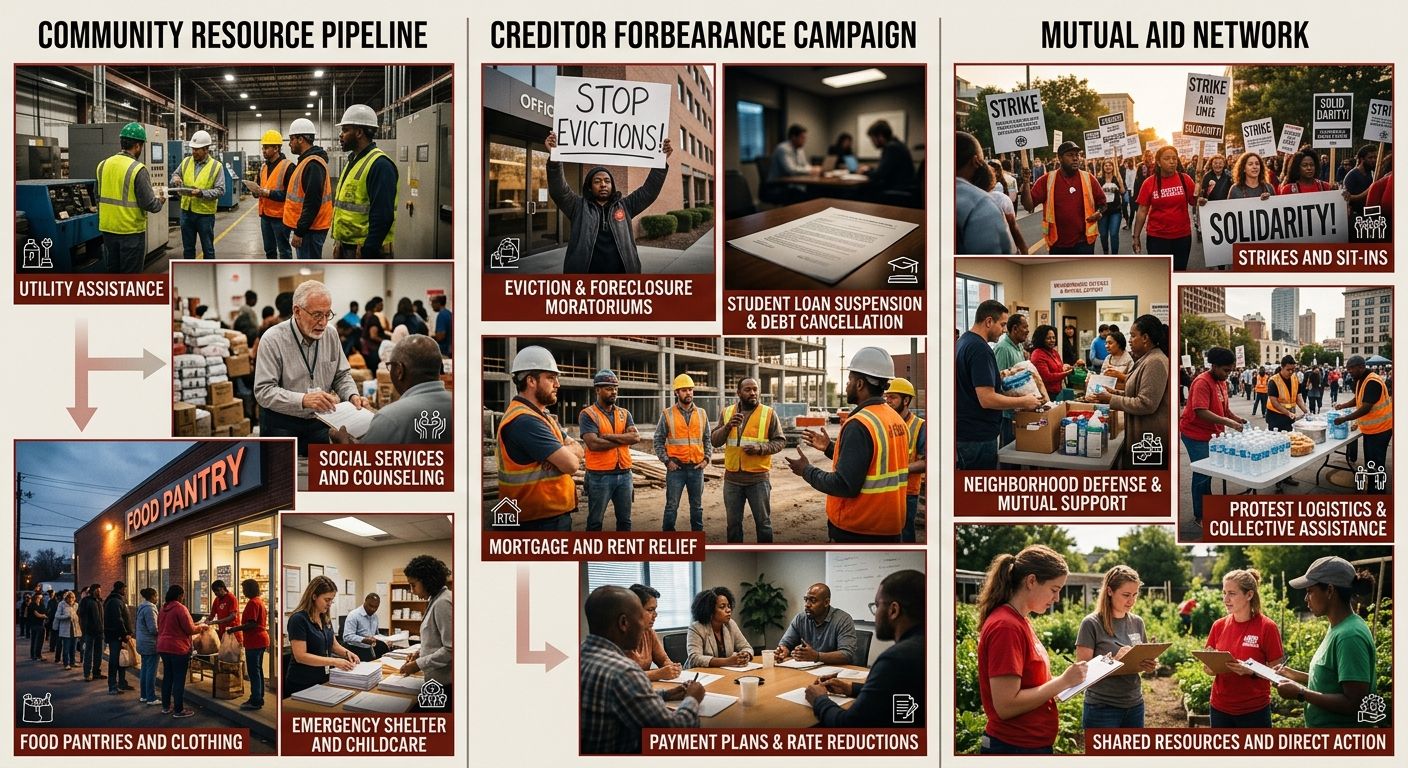
This infrastructure has three components:
A community resource pipeline. Members need immediate access to SNAP applications (income-based eligibility shifts during a strike, and applications take time to process), LIHEAP heating and cooling assistance, and the 211 helpline for localized emergency services. Your strike preparation committee should compile these resources into a single document, translated into every language spoken in your bargaining unit. Locals that struggle with multilingual organizing communication will find that struggle amplified tenfold during a strike, when stress is high and misinformation spreads fast.
A creditor forbearance campaign. Financial advisors consistently emphasize that members must contact mortgage companies, credit card issuers, and auto lenders before missing any payments. Hardship forbearance programs exist at most major financial institutions, but they require proactive outreach. CNBC's reporting on strike financial management stresses that talking to financial institutions before due dates is the difference between a temporary pause and a credit score disaster. Your local should provide members with scripts and talking points for these calls.
A mutual aid network. Food banks, childcare cooperatives, and emergency housing contacts should be organized before the first picket sign gets painted. Some locals establish their own food pantries funded by community donations. Others coordinate with allied unions and community organizations. The key is that these resources exist on day one of the work stoppage, because day one is when members' anxiety peaks and employer pressure to settle cheap is strongest.
Where The Model Breaks
The four-layer framework (financial runway, strike pay administration, benefit continuity, hardship infrastructure) works when a local has lead time, engaged membership, and institutional support from its international. It fails in three predictable ways.
First, it fails when leadership treats the authorization vote as the beginning of preparation rather than the culmination of it. The 30-day countdown exists because this work cannot be compressed into a weekend. A local that holds a surprise authorization vote without running members through financial preparation is setting itself up for a short, weak strike followed by a concession-heavy settlement.
Second, it fails when the employer's timeline doesn't match yours. Employers facing organized locals have their own preparation playbooks. They stockpile inventory, cross-train management to cover production roles, and retain temporary staffing agencies. If your employer starts these preparations and your local hasn't begun its own, you've already lost the timeline advantage. The first-contract bargaining mistakes that destroy new unions often originate here, in the gap between employer preparation and local readiness.
Third, it fails when member communication breaks down during the strike itself. The pre-strike checklist is only as good as the communication infrastructure that sustains it. Daily updates on fund disbursement, benefit status, bargaining progress, and community resource availability aren't optional. They're the mechanism that keeps the four layers functioning under pressure. Without them, rumors fill the vacuum, and solidarity erodes from the inside.
The honest assessment for any local considering a strike authorization vote is this: if you can't answer every question on this checklist with specifics (dollar amounts, dates, names of responsible stewards, written legal opinions), you aren't ready. That doesn't mean you shouldn't strike. It means you should take the 30 days, build the infrastructure, and walk into the vote with a membership that knows exactly what they're authorizing and exactly what will hold them up when the paychecks stop.
The Union Edge Staff
Related Articles

5 First-Contract Bargaining Mistakes That Destroy New Unions — and How to Recover From Them
Workers at The New Yorker, Pitchfork, and Ars Technica voted to join the NewsGuild of New York in 2018. Their first contract didn't arrive until June 2021.

From Recognition to Results: The Post-Election Bargaining Roadmap Unions Get Wrong
Forty-four percent of newly certified unions between 1999 and 2004 never reached a first contract, according to a study of more than 8,000 successful elections by sociologist John-Paul Ferguson. The election was the easy part.

When Employers Fight Back: Recognizing and Countering Union-Busting Tactics During Your Organizing Campaign
U.S. employers are charged with violating federal law in 41.5% of all union election campaigns, according to a study from the Economic Policy Institute. The violations follow a predictable script.
Also in the paper