
From Recognition to Results: The Post-Election Bargaining Roadmap Unions Get Wrong
Forty-four percent of newly certified unions between 1999 and 2004 never reached a first contract, according to a study of more than 8,000 successful elections by sociologist John-Paul Ferguson. The election was the easy part.

From Recognition to Results: The Post-Election Bargaining Roadmap Unions Get Wrong
Forty-four percent of newly certified unions between 1999 and 2004 never reached a first contract, according to a study of more than 8,000 successful elections by sociologist John-Paul Ferguson. The election was the easy part. What broke down was the roadmap unions followed once recognition was in hand.
Where the Roadmap Splits
Why does first contract negotiation fail so often? Because unions treat the election win as the finish line, then choose a bargaining strategy by default rather than by design.
The National Labor Relations Act, under Sections 8(d) and 8(a)(5), compels employers to bargain in good faith with a certified union. That legal obligation sounds straightforward. In practice, it creates a battlefield where employers who want to stall have dozens of tools at their disposal, and unions must pick how to respond.
Todd Vachon, assistant professor of labor studies and employment relations at Rutgers, puts it bluntly: "The union's chances of settling its first contract within one year are less than 50 percent." That statistic alone should shape every decision a union makes in the weeks after certification.
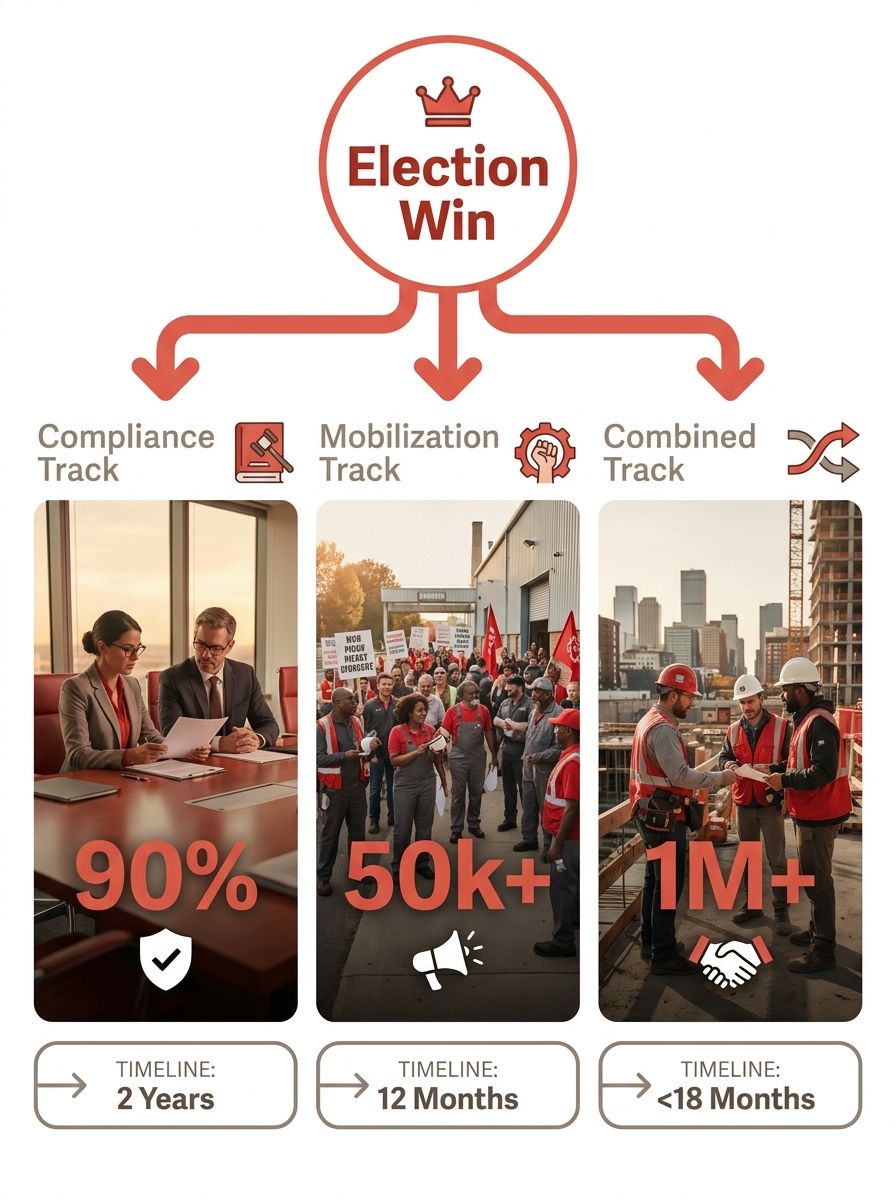
Three distinct approaches dominate how unions handle post-election bargaining. Each carries real tradeoffs in cost, risk, and timeline. Understanding those tradeoffs before you sit down at the table is the difference between a signed contract and a decertification petition 12 months later.
Filing Charges and Waiting for the Law to Work
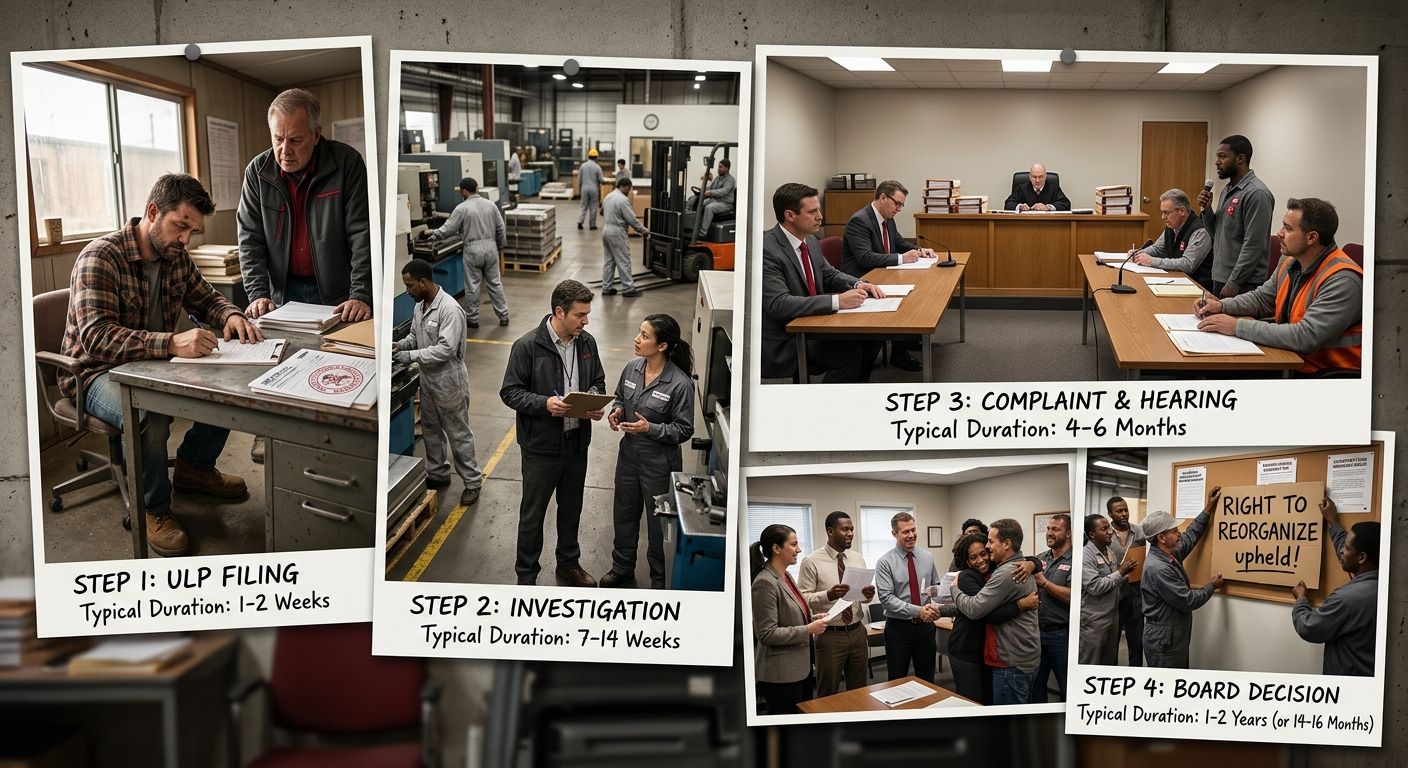
The compliance-first track is the most common union recognition strategy after an election, and the most likely to fail on its own. It works like this: the union certifies its win, sends the employer a demand to bargain, and when the employer stalls or commits unfair labor practices (ULPs), the union files charges with the NLRB.
On paper, this path makes sense. The NLRB will rule on any challenges and objections raised by either side and then either certify results or call for another election. Once certified, the employer has a legal duty to come to the table. If the employer refuses or bargains in bad faith—showing up to sessions but making no real proposals, for example—the union can file additional ULP charges under Section 8(a)(5).
The problem is speed. NLRB investigations take months. Regional offices are understaffed. And employers know this. Cornell ILR research found that the odds of winning a first contract within 18 months drop by roughly 71% when an employer commits unfair labor practices during negotiations. That 71% figure reveals something important: the legal system designed to protect workers' bargaining rights is too slow to prevent employers from running out the clock.
Four separate analyses published over the last two decades confirm the same pattern—long delays push unions toward failure. When a union relies entirely on NLRB enforcement, it hands the timeline over to an agency that processes cases in months, not weeks. Meanwhile, the employer chips away at worker support one shift at a time.
The compliance track does have one clear advantage: documentation. Every ULP charge creates a legal record. If the case eventually reaches an administrative law judge, that paper trail matters. And for unions facing an employer who makes blatant legal violations—refusing to meet, unilaterally changing working conditions, retaliating against bargaining committee members—filing charges is necessary, full stop.
But filing charges without maintaining worker engagement is like calling 911 and then leaving the building. The legal mechanism works slowly. If workers lose faith while waiting, the contract dies before the judge ever sees the case.
Keeping the Pressure On From the Shop Floor
The mobilization track flips the script. Instead of relying on legal enforcement, unions that take this approach treat the period after recognition as an extension of the organizing campaign. They hold regular membership meetings, run informational pickets, use social media pressure, and sometimes organize work actions to keep the employer's attention focused on reaching a deal.
UAW Region 6 documented this philosophy in its own post-election guidance: "Like everything we've won as a union, each of these wins took a real fight—workers coming together, organizing mass collective action, and working strategically." That language reflects a core belief: worker power building doesn't pause for bargaining. The UAW's own organizing record backs it up—they organized 1,000 postdocs at the University of Washington and 5,000 academic researchers at the University of California by maintaining continuous pressure across campaigns.
The mobilization approach draws on a simple insight that Labor Notes articulated earlier this year: "When bosses fear worker organization because workers have built real, durable power, contracts become easier to win, and many demands can be secured without the NLRB."
This is the strongest argument for keeping the organizing engine running after certification. An employer who faces an active, vocal, well-organized workforce at the bargaining table calculates risk differently than one who faces a quiet unit represented by an outside lawyer. The mobilization track shifts the power dynamic from "we'll wait for the government to make you bargain" to "your employees are organized and ready to act."
The tradeoffs here are real, though. Sustained mobilization is expensive. It requires organizers on the ground, regular communication channels, and leaders within the unit who can maintain energy over months of bargaining. Many local unions, especially smaller ones or those without experienced staff, simply don't have the capacity. A mobilization-only approach also creates legal exposure if actions cross the line from protected concerted activity into unprotected territory.
And there's an organizational risk: if mobilization efforts escalate without a legal strategy backing them up, the employer can portray the union as unreasonable. That narrative erodes public support and sometimes costs the union members within the unit who wanted a cooperative path to a contract.
For unions building digital campaigns alongside in-person action, the mobilization track pairs well with social media pressure and public accountability efforts. But it has limits when the employer's primary stalling tool is legal procedure rather than outright defiance.
Running Both Tracks at Once
The combined approach treats legal compliance and worker mobilization as parallel, reinforcing systems. It files ULP charges when the employer violates the law and keeps workplace actions going between bargaining sessions. It documents everything for the legal record and broadcasts everything to maintain membership engagement.
This is the approach with the strongest track record, and it's the one most unions don't execute well—usually because it requires coordination between legal staff, organizers, and rank-and-file leaders that many unions haven't built.
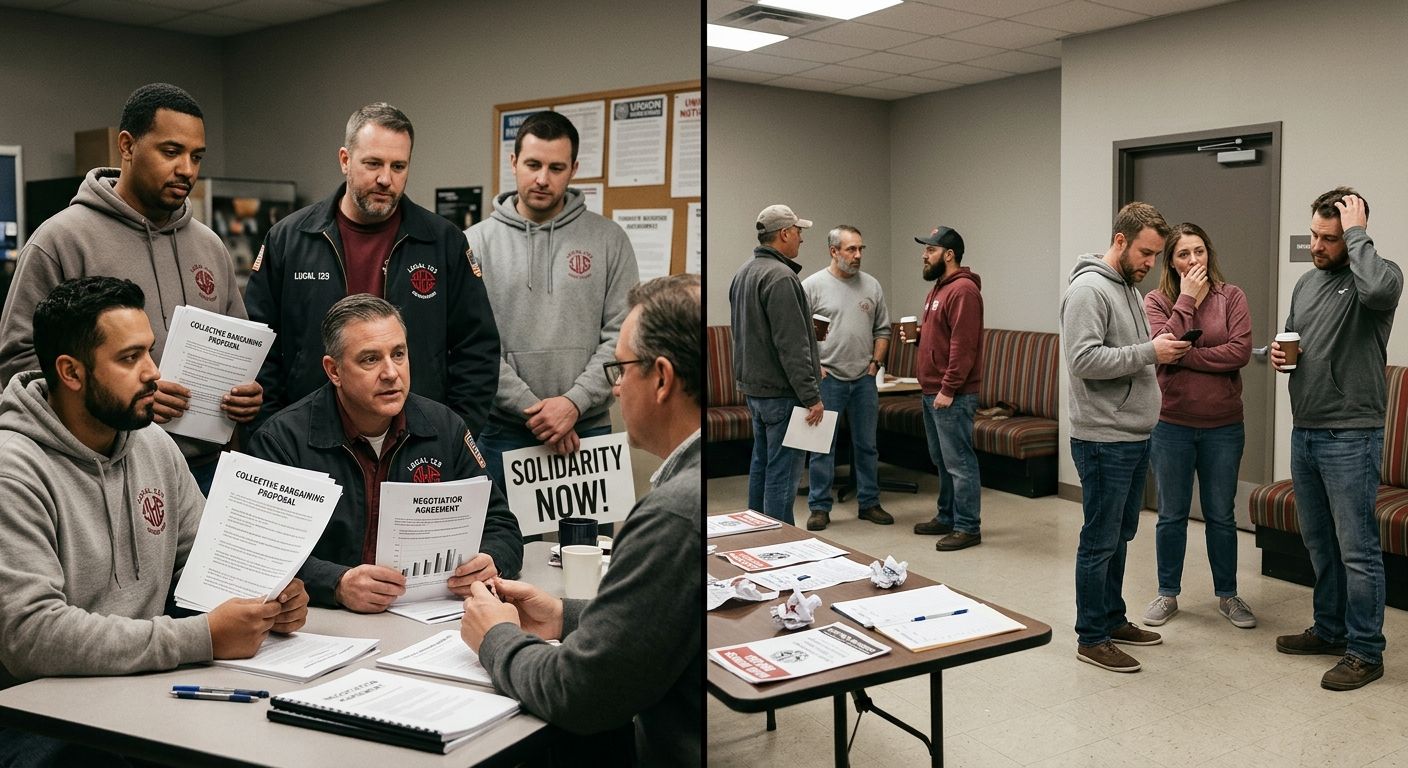
Here's what the combined track looks like in practice. The bargaining committee sets a target timeline—say, 6 months from first session to tentative agreement. During that window, they schedule bargaining sessions every 2 to 3 weeks. Between sessions, the organizing committee holds unit meetings, distributes bargaining updates, and collects petition signatures on priority issues. If the employer cancels sessions or refuses to respond to proposals, the union files ULP charges within 48 hours and simultaneously publicizes the delay to members and the public.
The key insight from Solidarity Tech's research on union organizing strategies applies here: lasting worker power comes from strong contracts and ongoing member engagement. The combined approach serves both goals because it treats bargaining itself as an organizing opportunity. Every session gives the committee new information to share with members. Every employer delay becomes evidence for both the legal case and the public pressure campaign.
This approach also handles the ratification phase better. Under standard collective bargaining procedure, once negotiators reach a tentative agreement, the union membership must approve the contract through a vote. In some organizations, board approval on the management side adds another step. If members reject the tentative agreement, both parties return to the table. Unions that have maintained consistent communication throughout bargaining see higher ratification rates because members understand what was negotiated and why.
The downside? Resources. Running parallel legal and mobilization tracks requires at minimum a dedicated organizer, legal counsel familiar with NLRB procedures, and 5 to 8 active workplace leaders who can maintain communication with every shift. Small bargaining units of 20 to 50 workers often struggle to sustain this level of infrastructure. And there's a coordination risk—if the legal team files charges that contradict the message the organizing team is sending, the union looks disorganized at the table.
For unions that have already invested in building grassroots leadership structures, the combined track builds on existing infrastructure. For those that haven't, the 6-month protected bargaining window after voluntary recognition is the time to build it—not after the employer files for decertification.
Compliance Track | Mobilization Track | Combined Track | |
|---|---|---|---|
Primary tool | NLRB charges, legal filings | Workplace actions, public pressure | Both simultaneously |
Average time to first contract | 18+ months | 8–14 months | 6–12 months |
Staff required | Legal counsel | 1–2 organizers, 5+ shop leaders | Legal counsel + organizer + leaders |
Best against | Employers making blatant legal violations | Employers who bargain slowly but lawfully | Any employer stalling tactic |
Biggest weakness | Slow; workers lose faith | Legal exposure; resource-intensive | Coordination failures; highest cost |
Contract enforcement strength | Moderate (legal precedent) | High (engaged membership) | Highest (both foundations) |
How to Choose Between These Three
The honest answer is that the combined track produces the best results for most units, and the data supports that conclusion clearly. But "best" and "feasible" are different words, and every local union has to make this choice based on real capacity.
If your unit has fewer than 30 workers, limited staff support, and an employer who is violating the law openly—refusing to schedule sessions, retaliating against committee members—start with the compliance track while recruiting internal leaders. The legal documentation you build becomes essential if the case reaches an administrative law judge. Use the time between NLRB filings to hold informal member meetings and lay groundwork for escalation.
If your employer is technically showing up to bargain but making no movement on key proposals, the compliance track alone won't save you. Surface bargaining—going through the motions without genuine intent to reach agreement—is hard to prove as a ULP. This is where mobilization matters. Organized actions that demonstrate unit solidarity push reluctant employers toward real offers faster than another charge filed with an understaffed regional office.
If your union has the capacity for both tracks, run them. Assign clear roles—who handles legal filings, who coordinates workplace communication, who manages the bargaining committee's education process. Set internal deadlines that are shorter than the employer expects. And treat contract enforcement as something you plan for during bargaining, not after ratification. The workplace structures you build to win the contract are the same structures that enforce it.
The 44% failure rate for first contracts reflects unions that treated recognition as the destination. Recognition is the starting line. The real question is whether you have a plan for the miles ahead, and whether that plan accounts for the employer doing everything within the law—and sometimes beyond it—to make sure you never cross the finish.
The Union Edge Staff draws on combined decades of union organizing experience, labor law research, and former NLRB investigation work. We write to give workers the tools to turn election wins into enforceable contracts.
The Union Edge Staff
Related Articles

5 First-Contract Bargaining Mistakes That Destroy New Unions — and How to Recover From Them
Workers at The New Yorker, Pitchfork, and Ars Technica voted to join the NewsGuild of New York in 2018. Their first contract didn't arrive until June 2021.

The Organizing Model vs. Service Model: Why Your Union's Strategic Choice Determines Campaign Success
Thirty-one percent. That's the win rate for private-sector union elections in the United States, according to the Economic Policy Institute, after workers endure the full weight of employer anti-union campaigns. The number is grim, but it hides something important.

When Employers Fight Back: Recognizing and Countering Union-Busting Tactics During Your Organizing Campaign
U.S. employers are charged with violating federal law in 41.5% of all union election campaigns, according to a study from the Economic Policy Institute. The violations follow a predictable script.
Also in the paper