

NLRB Wagner Act: What You Need to Know
The National Labor Relations Act of 1935, commonly called the Wagner Act, is the federal statute that guarantees private-sector employees the right to organize unions, bargain collectively, and strike.
Tag
67 articles
The National Labor Relations Act of 1935, commonly called the Wagner Act, is the federal statute that guarantees private-sector employees the right to organize unions, bargain collectively, and strike.

New York's minimum wage operates through a three-layer structure: a regional hourly floor ($17.00 downstate, $16.00 upstate as of January 1, 2026), a set of sub-rates for tipped and salaried workers, and starting in 2027, an automatic inflation-indexing formula.
The minimum wage in Los Angeles is $17.28 per hour for workers within city limits, effective July 1, 2024. That rate comes from a city ordinance layered on top of California's $16.00 statewide floor and the federal minimum of $7.
The Texas Minimum Wage Act contains no dollar amount. The statute adopts the federal minimum wage rate by reference, making the state of Texas minimum wage identical to the federal floor: $7.

M.G.L. Chapter 151, Section 1 sets the minimum wage in Massachusetts at $15.00 per hour and contains no indexing formula, no inflation trigger, and no scheduled future increase.
The mass minimum wage held at $15.00 per hour throughout 2024, unchanged for the first time in five years, after the final scheduled increase under the state's 2018 "Grand Bargain" legislation took effect on January 1, 2023.
$12.41 plus ($12.41 × 0.029) equals $12.77. That one-line formula, published by the Virginia Department of Labor and Industry, determines the minimum wage in the state of Virginia taking effect January 1, 2026.
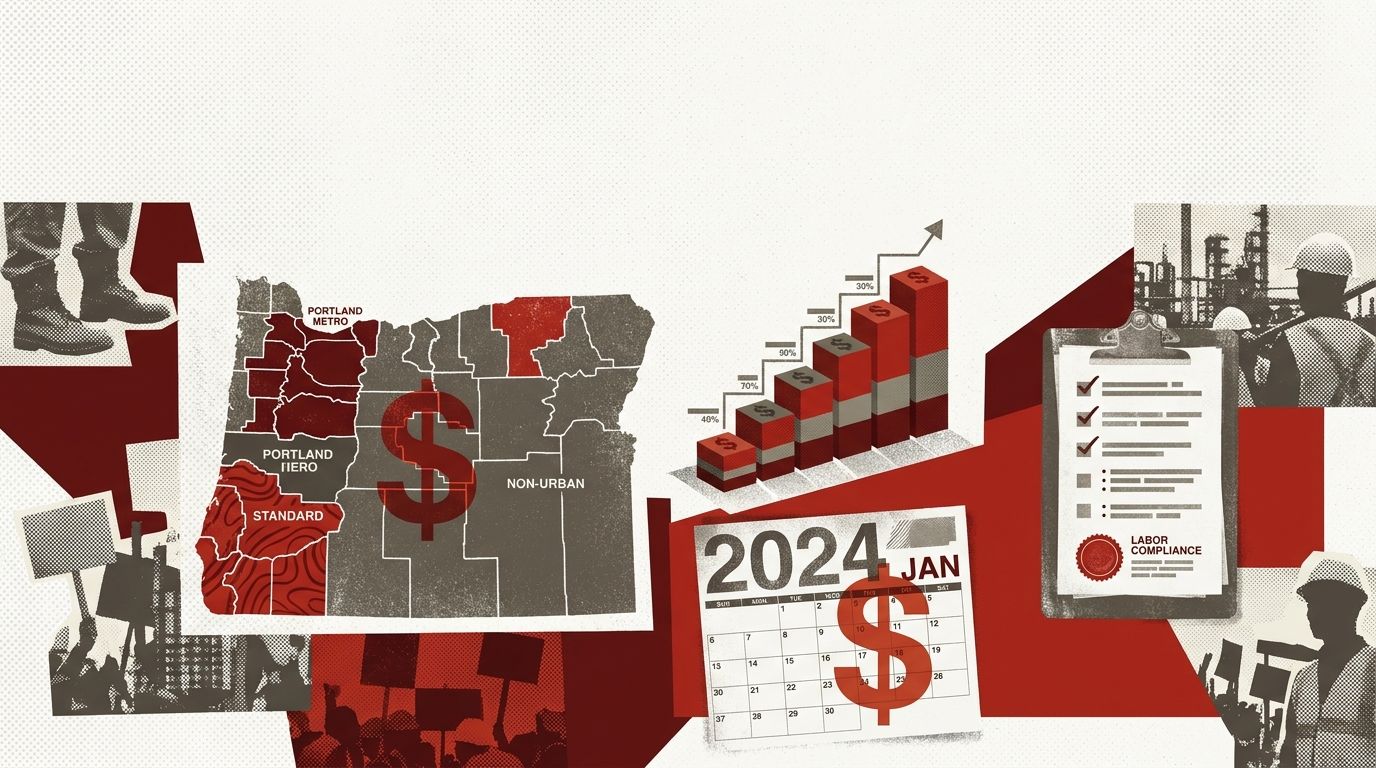
Oregon's minimum wage is set by a CPI-indexed formula that automatically adjusts three separate geographic rates every July 1, making it one of the few state wage systems that tracks inflation without requiring annual legislative action. As of July 1, 2024, those rates stand at $15.
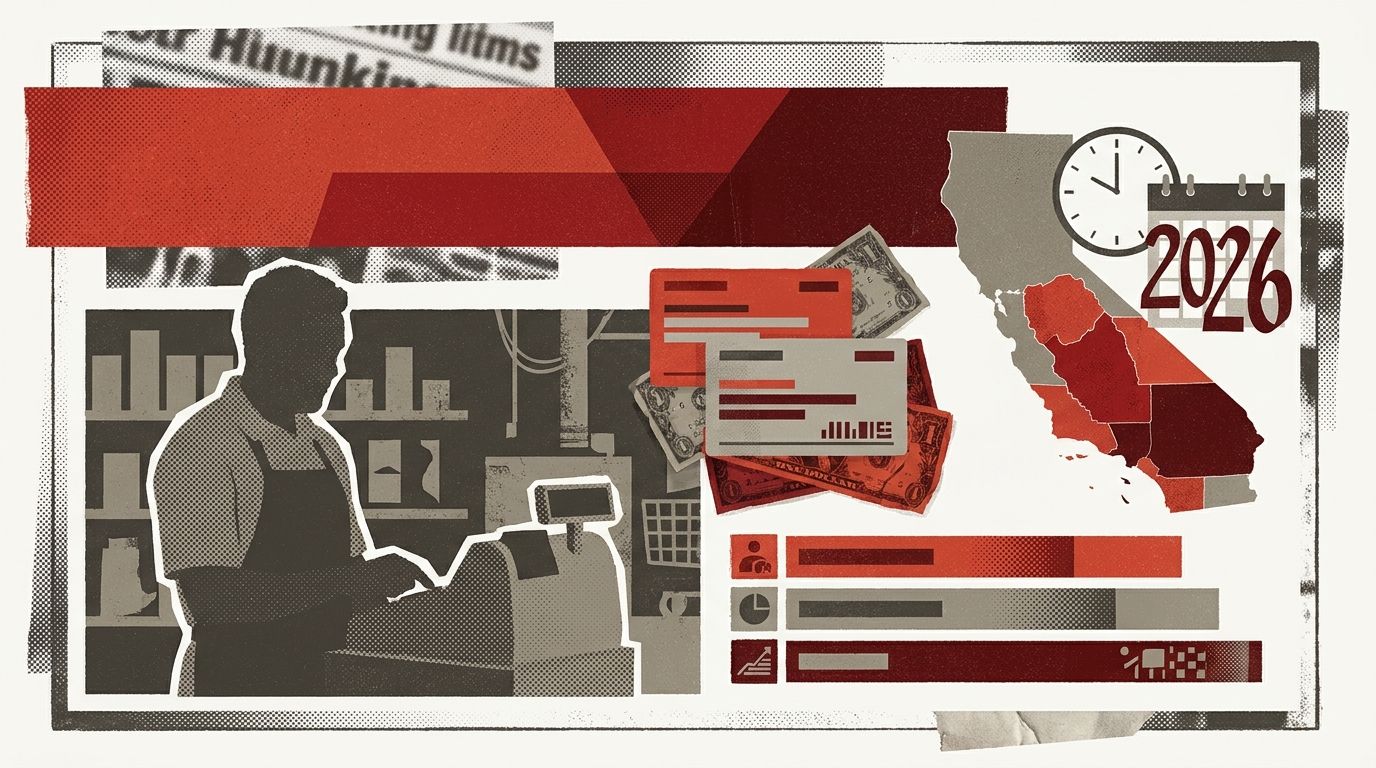
California's minimum wage in 2026 operates as a three-tier system: a CPI-indexed statewide floor of $16.90 per hour, local city and county rates reaching $20.34 in Emeryville, and industry-specific mandates pushing healthcare workers to $25.00 per hour.
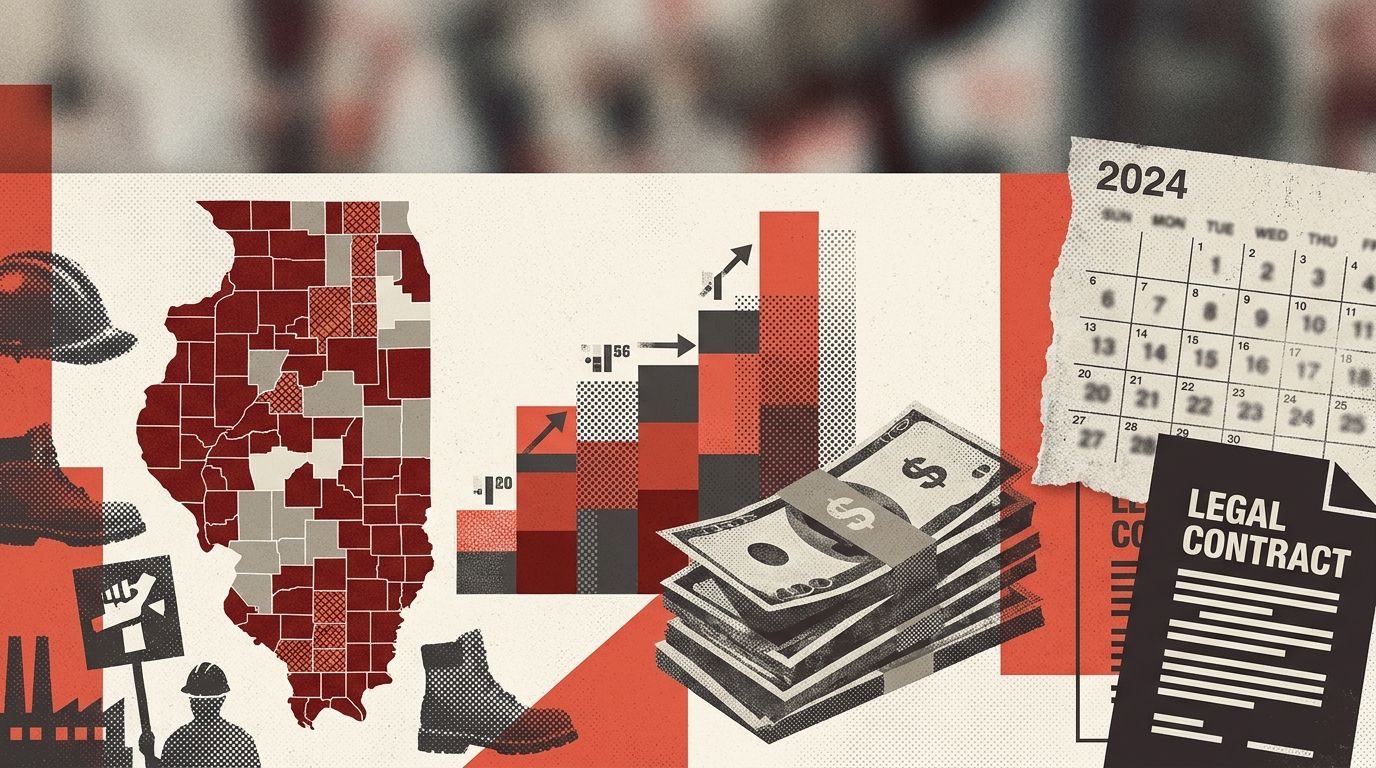
The minimum wage in the state of Illinois is $15.00 per hour for workers 18 and older, the rate that took effect January 1, 2025, completing a phased schedule of six annual increases. But Illinois doesn't operate on a single number.

Maryland's minimum wage is $15.00 per hour for every employer in the state, regardless of business size, a rate that took effect January 1, 2024 under the Fair Wage Act of 2023.

Texas does not set its own minimum wage dollar amount. The state's minimum wage law, administered by the Texas Workforce Commission, defers entirely to the federal Fair Labor Standards Act, which means workers in Texas earn a floor of $7.25 per hour, a rate unchanged since July 24, 2009.